
Home > Camino de Santiago Guide > Accommodation with Communal Pilgrim Meals
20 Camino Frances Accommodation with Communal Pilgrim Meals
Some of my links may be affiliate links. If you make a purchase, I might earn a small commission at no cost to you. See our Privacy Policy for details. And this post was crafted with care and occasional typos by Colleen (and not AI)
Did you know that in French, the word for friend is copain — literally, “with whom I break bread”? I love that. And I love sitting down and breaking bread with fellow pilgrims at the end of a long day walking.
One of the great joys of walking the Camino is meeting other pilgrims. But where are those special albergues — the ones where you can sit down together, share a simple meal, drink local wine, and enjoy the kind of camaraderie that only those who’ve walked your path really understand?
But are you wondering what makes a great communal dinner on the Camino? Is it the food, the company, the setting — or something harder to describe?
After more than a decade of walking the Camino, and countless nights in albergues, I’ve narrowed down my favourite accommodation on the Camino Francés which offer communal pilgrim meals. It’s not a complete list — how could it be? But these are the ones that spring to mind instantly; where the food is good, the welcome warmer, and the evenings are full of laughter and sometimes even song.
Keep reading — I’ll guide you along a path of glorious evenings on the way to Santiago.

What Is a Communal Pilgrim Dinner?
Not all evening meals on the Camino are created equal and not all Camino dinners are the same.
Some albergues and hotels offer a standard menu del día where you might eat alongside other pilgrims — but it’s more like dining in a restaurant. Others offer true communal experience: one big table (or two), one shared meal, and a sense of Camino family.
Some of the albergue I’ve listed expect all pilgrims to help and assist, like a community, feeding the community – others bring the food to the table. Some are much more spiritual in nature and others all about people and Camino. There is something for everyone.
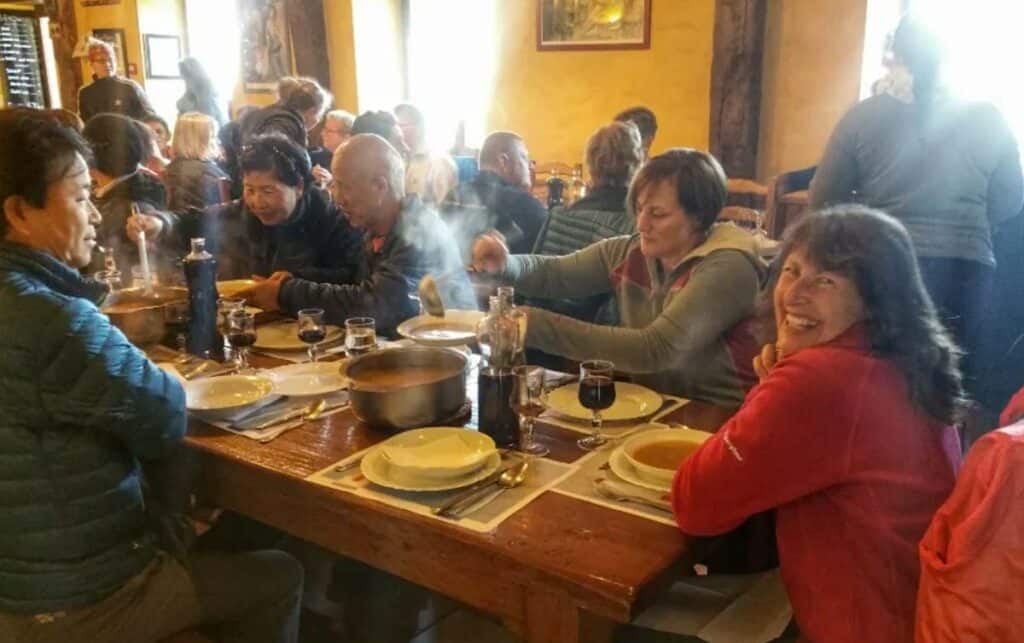
These meals are often home-cooked, served at a set time, and come with a generous side of storytelling and occasionally a splash of wine. You might help peel the carrots, pour the drinks, or pass the bread. Some are vegetarian, some include local specialties, and a few even have post-dinner music or candlelit blessings.
Top Tip : If you’re wondering where to find the best communal pilgrim dinners on the Camino Frances — this list is full of my personal favourites, each offering something special. If you start in St Jean Pied de Port then visit the Pilgrim Office as they have a list of all accommodation and communal dinners are noted in the information for each.

Communal Dinners on the Camino Frances
I considered listing these alphabetically, but in the end, decided to follow the Camino itself — so we begin in Saint-Jean-Pied-de-Port and keep walking westward.
If you think I’ve missed somewhere amazing, please do message me or join my Walking the Camino Facebook group — I’d love to keep this resource growing for future pilgrims!
1. Gîte de la Porte Saint Jacques (Saint Jean Pied de Port)
I stayed here in March, so it wasn’t too busy, but in high season it’s best to request dinner when you book your bed. My bunk had a curtain and locker too, and we were sent off on our Camino with a beautiful communal farewell in the morning. I’d happily stay again!
2. Gîte Beilari (Saint Jean Pied de Port)
Beilari is special. Joseph and Jacqueline have created a space that calms the nerves of even the most anxious pilgrim. It’s a home as much as an albergue — full of kindness and connection. If you can get a bed here, take it. You’ll make friends right at the start of your journey and, as a bonus, the camino is just outside the front door.
Read More About St Jean Pied de Port :
3. Auberge d’Orisson (Orisson)
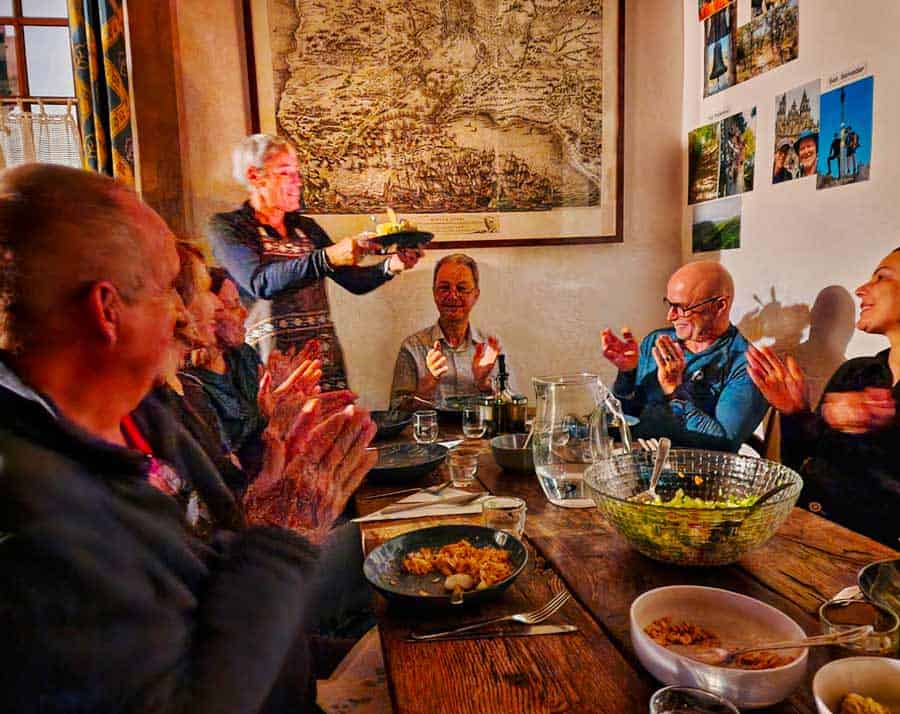
The views from the terrace are spectacular, and the joy (and sheer relief) of seeing the albergue come into view after the steep climb is something most pilgrims will remember.
After dinner, pilgrims are invited to introduce themselves — and while it can take a while with so many around the table, it’s always a joyful moment. I’ve made more than a few lifelong friends here.
Orisson may not be perfect, but there’s a real magic to staying here. But book early because it does fill up!
Top Tip : I know that some folks reach Orrison having reserved a bed but decide to continue on to Roncesvalles. Because of this, It is always worth phoning ahead to see if a vacancy has opened, or asking when you arrive. Don’t count on finding a bed but you might be lucky!
4. Auberge Borda (Orisson)
You sleep in beds, not bunks (there’s even one private room). Each bed has its own curtain, socket, and reading light – It’s warm, clean and restful. Most of your kit needs to stay in the boot room — so pack with that in mind the night before— but this helps keep the bedrooms tidy for the next pilgrim!
I’ve stayed here many times with my groups, and I guarantee every single person remembers this dinner. Gerry and I watched the renovations take shape and I think I’ve stayed every year since. There’s something just perfect about Borda — not just the accommodation, but the way dinner draws pilgrims together. Introductions and friendships are made here and sunrise is pretty magical too! Just writing this makes me want to walk the Frances again!
5. Roncesvalles Albergue and Hotels
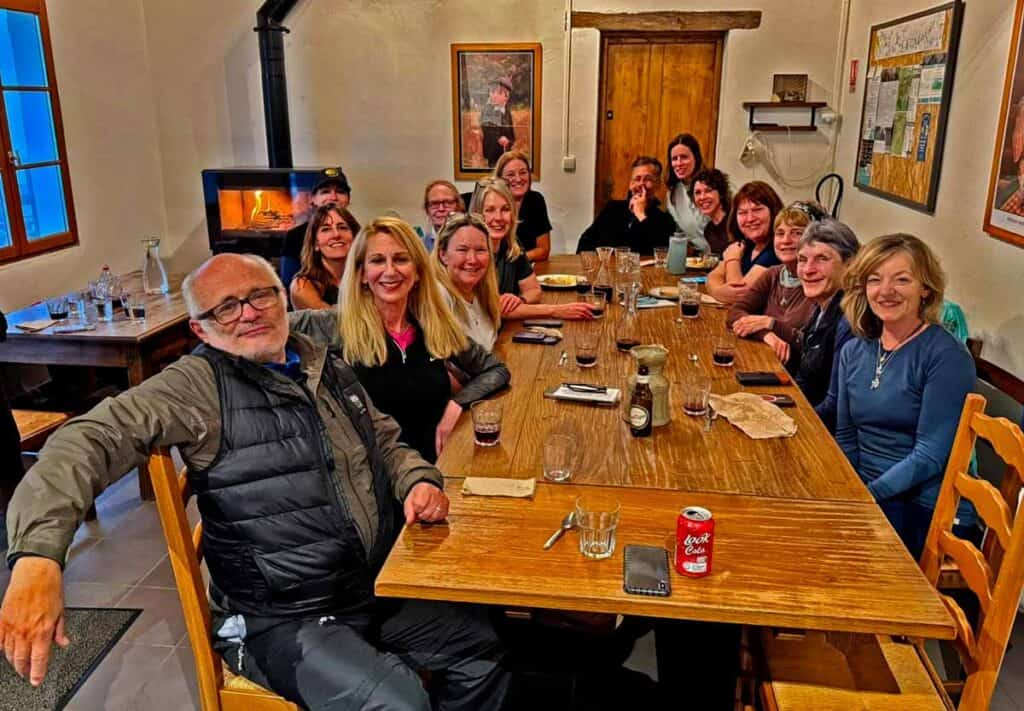
Do expect a quick service for dinner — there are a lot of people to feed over two sittings! On my most recent stay, we ate in the hotel restaurant, where the food was really excellent but the atmosphere a little quieter, and I did miss the buzz of the pilgrims.
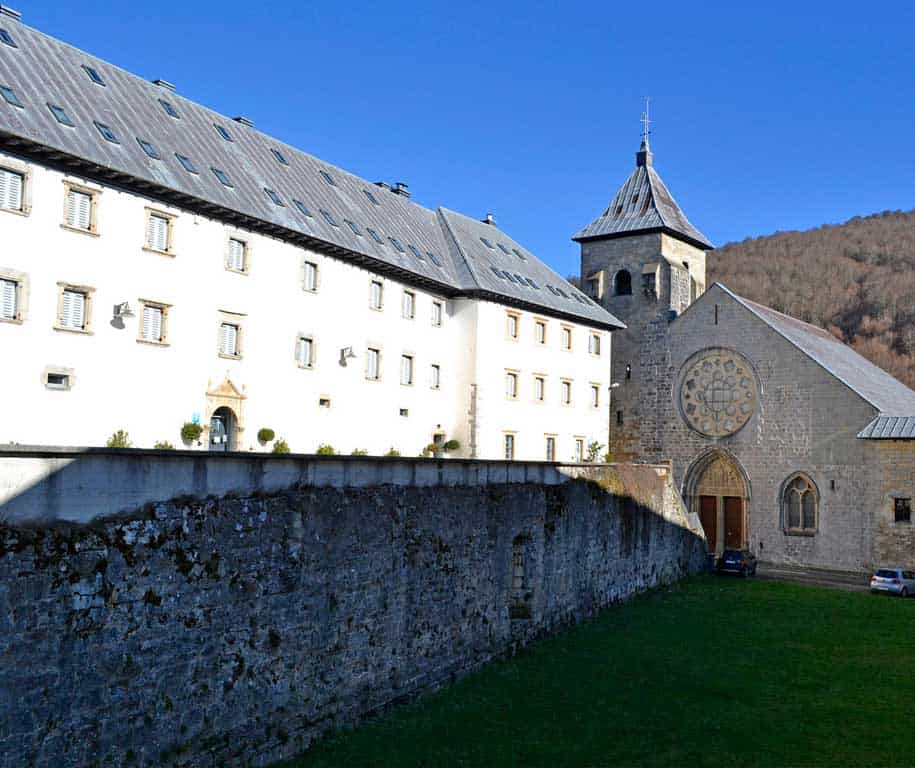
I’ve stayed here many times over the years, and it remains a wonderful experience. The building is beautiful, the facilities are excellent, and the atmosphere is of course, steeped in Camino tradition.
Roncesvalles is historic, and magnificent and for me, no Camino Frances would be complete without a stay here. It just feels right to end the mountain stage within these hallowed walls. These days, I prefer a private room — but I’d still choose the pilgrim menu over the hotel dinner. Folks from all over the world sit down together at Roncesvalles – tired but glowing after that epic day over the mountains.
Top Tip: There are two sittings for dinner. We always go for the early one but it’s the most popular, so I’d recommend booking ahead to secure your place!
Read More About Day One and Roncesvalles :
6. Albergue El Palo de Avellano (Zubiri)
This is a very easy and welcoming stop. It you enjoy communal dinners this is a fine choice. I’ve had many laughter filled evenings here. Good food, comfortable bed, warm hospitality, and a good location is all that we could ask for!
7. Albergue Suseia (Zubiri)
Suseia is the quieter counterpart to El Palo de Avellano. If you’re looking for a more peaceful evening, this is the place to stay. The ambience is relaxed, the hospitality is excellent, and if it’s hot, the local swimming pool is a bonus treat!
Read More About Day Two To Zubiri :

8. Albergue Parroquial de Zabaldika
I have such warm memories of staying here. We arrived soaked to the skin after a thunderstorm — we’d walked nearly 40 km from Roncesvalles after every other bed from Zubiri on had vanished. We were welcomed with compassion, they found us space and fed us well. I ended up sharing a dorm with the cook and a couple who had married on the Camino that morning!
Zabaldika is a very special place — and I’d happily plan an extra day just to stop short of Pamplona and stay again.
Top Tip : Donative means give generously – it has never meant free. These glorious refuges survive on the donations of pilgrims. Pay a fair price for your bed and dinner – more if you can spare!
Read More about stage 3 and Pamplona :
9. Albergue Maralotx (Cirauqui)
This is such a beautiful place to stay. Lovingly restored and full of charm. You’ll find hot pilgrim showers, warm beds, and a pretty terrace where you can pause awhile and watch the pilgrims walk by. And if you’re lucky, you’ll have an evening like ours!
Read More about the Pamplona to Estella stages :

10. Albergue Parroquial San Juan Bautista (Grañón)
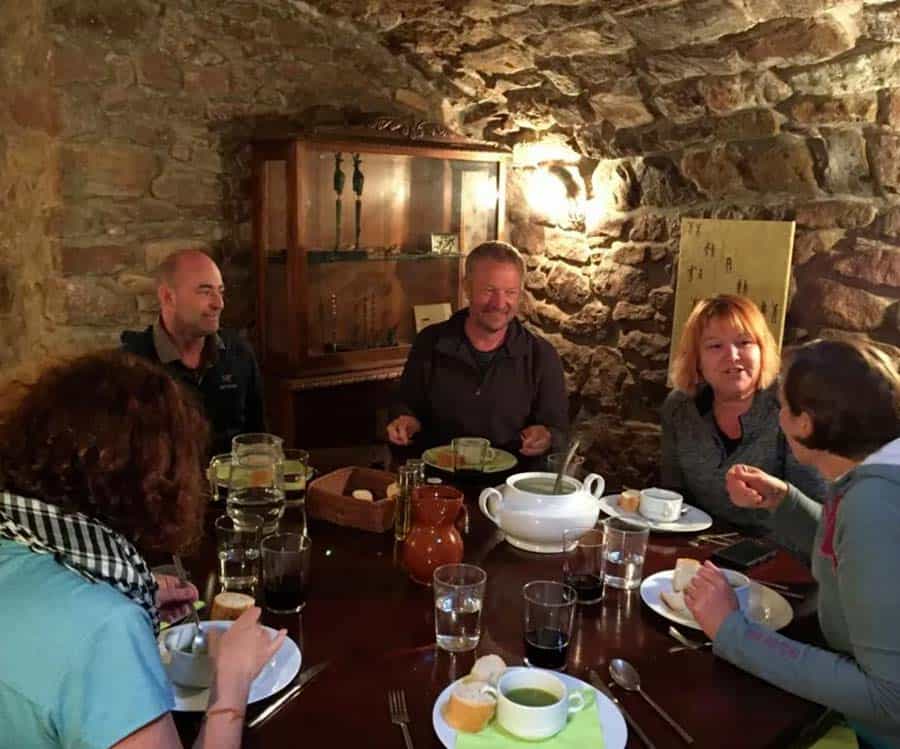
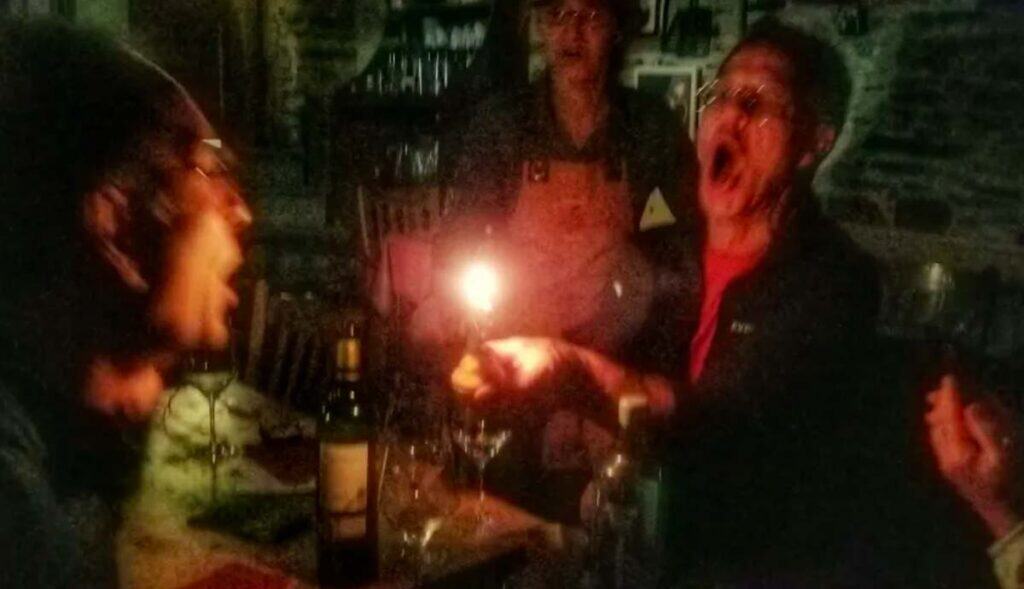
After dinner, all are invited to a candlelit blessing — and a space where pilgrims can share their thoughts and emotions. Granón is not for everyone, but for those who spend the night here, say it’s one of their standout moments on the Camino
This is traditional albergue with traditional pilgrim hospitality. If you’re open to the experience, it may just be one of your most unforgettable nights. And again – donative does not mean free. Please give generously to ensure Granon is safe for the years to come.
Read more about the stage from Santo Domingo:
11. Hotel Albergue San Antón Abad (Villafranca de Montes de Oca)
You can reserve either a hotel or albergue bed – and it’s definitely worth booking ahead as this is popular for good reason. Many pilgrims stop short here, before tackling the big hill and heading on the Ages and Atapuerca. The hotel and bar area are really lovely, the garden is also the perfect spot to chat with other pilgrims.
If you’re torn between splurging on a hotel bed or bunking in the albergue, treat yourself — the setting and company make it worth it the extra. But ensure you’re booking the hotel!!
Read more about the Belorado to San Juan de Ortega stage

12. Albergue Meeting Point (Hornillos del Camino)
This is a great little albergue in a small village. It does fill up quickly in high season, so I recommend booking ahead. The shared meal and sociable atmosphere make it a lovely stop — and a welcome change from the usual pilgrim menu.
Read more about Burgos and the stage to Hornillos
13. Ermita de San Antón (Puente Fitero)
Before the meal, the volunteers wash the feet of each pilgrim in an ancient act of humility. After the meal, there is space for sharing thoughts, reflections, or simply sitting in silence.
The albergue is not open year-round, and operates strictly on a first come, first served basis — and only for walking pilgrims.
Staying at San Antón is a gift. It feels as though you’re part of something much older, and deeper than yourself — and I wouldn’t be surprised if you leave a little changed.
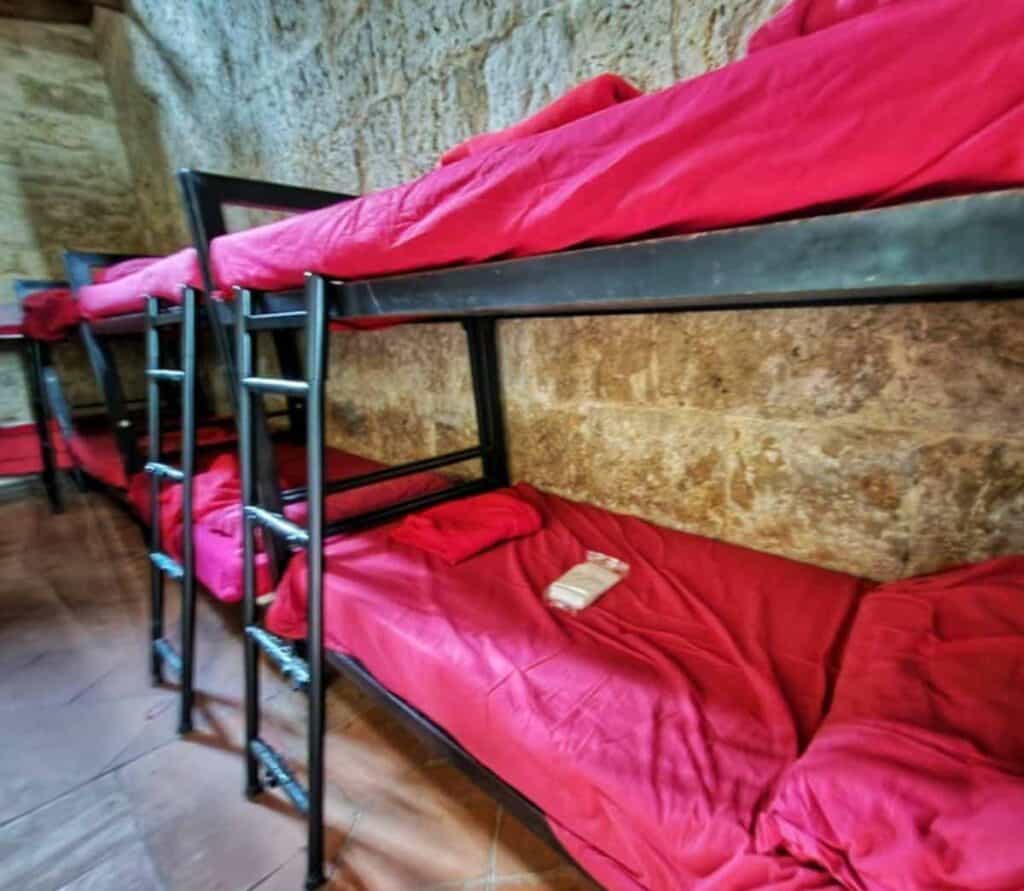
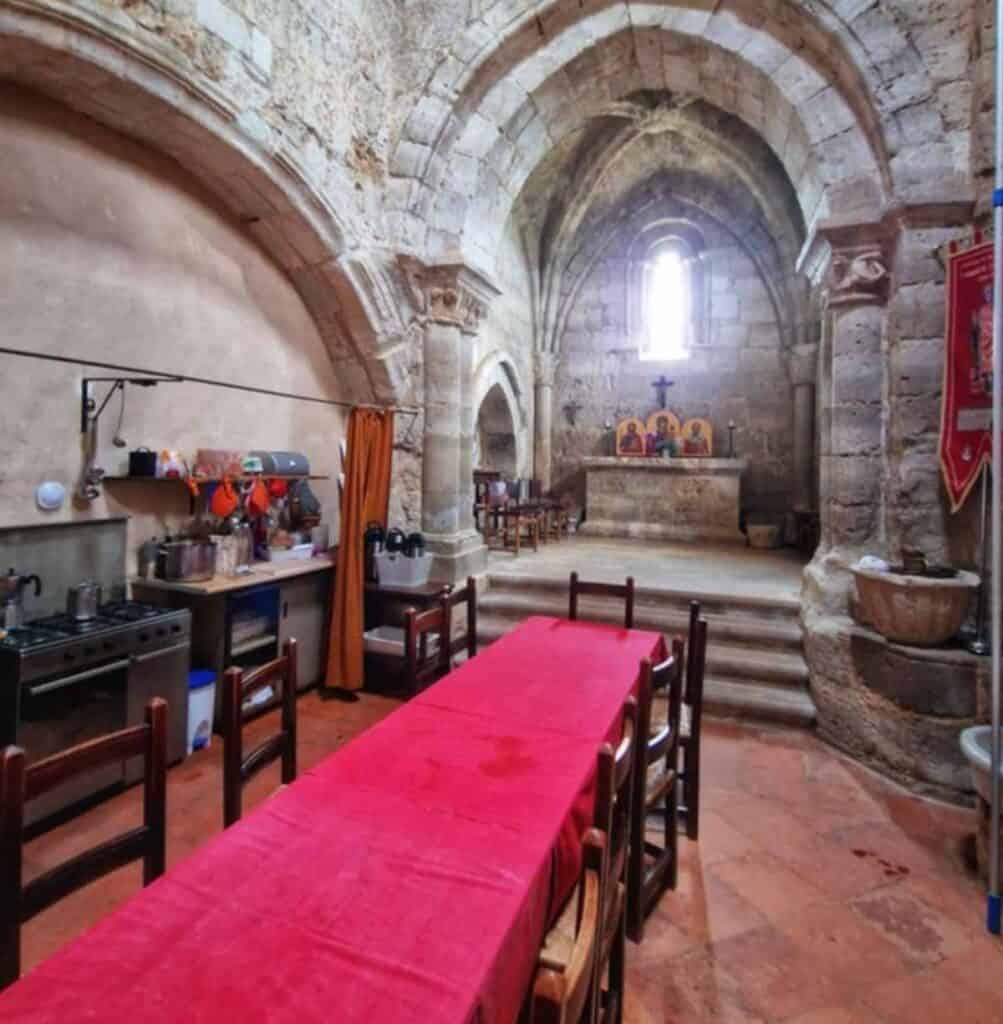
14. Albergue En el Camino (Boadilla del Camino)
I’ve stayed here solo and with my groups, and it’s always a hit. If you’re a fan of communal dinners this is your place. Breakfast is also good too and I look forward to my next visit.
If you’re debating whether to walk on to Frómista, stay here instead. You won’t regret it.
Read more about the stages from Hornillos to Fromista
15. Albergue La Morena (Ledigos)
Last time I stayed, my group ordered pizzas in the bar, while I joined three strangers for dinner in the restaurant — and it didn’t disappoint. The food is hearty, the wine flows, and there’s a buzz of conversation. Breakfast is also available before you leave in the morning.
This is such an easy place to stay. It’s not quite so traditional but they have everything you need. And they do it really well. The bunk beds have been modernised, there’s a bar and terrace, and laundry facilities. It might not be old-school but it gets a 10 out of 10 from me.
Read more about the stages from Fromista to Ledigos :

16. Molino Galochas (Villavante)
We arrived here unexpectedly after being turned away from a full albergue, and we were grateful they had space. We discovered a little reading corner, board games, tea in the garden, and a quiet charm that felt more like staying with old friends. Molino Galochas absolutely deserves its place on this list.
17. Albergue Verde (Hospital de Órbigo)
This is a special albergue — different from the many. It’s modern but still beautifully in tune with the spirit of the Camino. It’s run by an association of like-minded pilgrims and if you’re looking for a peaceful space to reflect at the end of the Meseta, this might just be your haven.
Read more about the stages from Leon to Astorga :

18. Albergue Casa Susi (Trabadelo)
Casa Susi offers ten comfortable beds (no bunks!), a small garden, a large table and the kind of welcome you hope to find on the Camino.
This is a pilgrim home from home and a little corner of Camino magic — often with music, always with joy. It’s intentionally small, intentionally welcoming, and intentionally offering comfort and good food. If you can stay here, do. You can even reserve ahead!
19: Albergue / Pensión A Reboleira / Casa Nunez (Fonfría)
It’s a joyous place to stay. Book ahead if you can — private rooms are popular, and this past year was the first time I saw a second giant table added to accommodate the growing crowd. Don’t miss this stay — it’s glorious!
Read more about the stages from Ponferrada to Fonfria :

20. San Martín Pinario (Santiago de Compostela)
I love this accommodation. It feels like the proper end of my Camino when I arrive and check in. There is a real sense of history here. Something incredible. It just whispers Camino and I could not imagine spending time in Santiago and not being here.
Read more about Santiago de Compostela here :
FAQ – Do You Still Have Questions About Communal Meals?
I get asked all kinds of questions about Camino dinners. And while this post is already long enough, here are a few of the most common ones.
But the thing is, even if you don’t eat much, or you’re shy, it doesn’t matter. Pilgrims sit at tables, and some are big characters with big stories, while others simply sit and listen. All are welcome. There’s no one-size-fits-all… and that’s part of the magic.
1. Where can I find albergues with communal dinners on the Camino Francés?
Most places will mention if dinner is available in their listing, and I often search the reviews for the word “dinner” to see if it’s mentioned. The Pilgrim Office in Saint-Jean-Pied-de-Port also offers a wonderful list of every accommodation along the Camino Francés, including whether or not they serve a communal meal. It’s a great place to start!
2. Are there any albergues that serve vegetarian or gluten-free pilgrim meals?
Yes, there are. I find gluten-free options in Spain to be easier than in many other places. Soy celíaca is a phrase you’ll use often! Whilst not every place has GF bread, many are gluten-aware and mindful of cross-contamination. Vegetarian options are often available too — though it’s always worth letting them know in advance.
3. Can you book communal meals in advance on the Camino?
Sometimes. Roncesvalles is a great example — even if you’re staying in the hotel and not the albergue, you can still book the communal dinner. In busy seasons, Roncesvalles fills with pilgrims, so if you’d like to eat at the 7pm sitting, I’d definitely book ahead.
And in many other places, if you’ve booked a bed and would like dinner (especially with dietary needs), just mention it when reserving.
4. What’s the best place for a first communal dinner on the Camino Francés?
There’s no single “best” — it depends on where you start. But often, the most memorable dinners aren’t about the food or the setting… they’re about the people. Those are the meals you’ll remember.

Which Will Be Your Favourite Communal Pilgrim Dinner?
I started this list with over 40 albergue to choose from. I cut it to 30, then again to 20. Not because I changed my mind — but because at some point, I had to stop writing!
Communal dinners, for me at least, can be the heartbeat of the Camino. I still remember how nervous I felt, sitting down in Roncesvalles as a new pilgrim. And I equally still remember the friends I met there — that became the faces who greeted me day after day as we walked to Santiago de Compostela.
Communal dinners aren’t really about the food (although that helps!). They’re about the warmth, and laughter and shared stories— They are about conversation and kindness and the joy of laughing about blisters or rain or terrible beds. It’s about the magic that happens when you break bread with strangers and they become friends.
Are communal pilgrim meals worth doing? For me, if you walk your Camino without at least a few of these, your journey might be lesser for that choice. But maybe that’s just me.
Want to learn more about the Camino? Then hop over to my Free Private Facebook Group | Walking The Camino De Santiago.
Are You Walking the Camino?
Are you walking the Camino Frances and planning your own Camino adventure? I’d love to help you prepare! And I’ve created a wide range of helpful resources to support you along the way:
Want to learn more about the Camino? Then hop over to my Free Private Facebook Group | Walking The Camino De Santiago.
Don’t Forget Travel Insurance
Whenever you travel, you should have great travel and medical insurance. None of us expect anything bad to happen, but in the event of an incident, you want to be sure that your insurance will cover you.
I’ve ended up in hospital in Peru, Indonesia, Portugal, Japan and Ireland. Every time my insurance took care of everything. I would never leave home without full and comprehensive insurance.
MondialCare : Due to increasing limitations, mainly due to age, we have recently switched to MondialCare for our travel insurance. We have taken an annual policy at a very reasonable cost that includes medical and other travel cover. There are no trip length limits and the upper age for cover is 84. For Camino walkers and travel in Europe they have a low cost Schengen policy with no age limit.
TrueTraveller : We have used this policy and were very happy with the cover, especially considering our ages and pre-existing conditions.
Globelink: We have used and recommended Globelink for years and not heard of any issues. They are a great choice for European and UK Residents.
Genki : This is an EU based company offering long term policies for nomads and travellers. Their monthly rates are very competitive for longer trips too.
Try Our Trip Planning Tools
Start here to find the best accommodation
Start here to find flights for your adventure
Start here to find the best sightseeing tours

Hey I’m Colleen. I’m married to Gerry, we’ve three fabulous kids and been living in France for almost two decades. I fell in love with Spain in the 1980s and I’ve walked 1000s of miles along the Camino de Santiago. Now we’re exploring and walking the world and I can’t wait to share what we’ve learned!