
Home > Camino De Santiago Guide > Are Camino Showers Mixed?
Are Camino Showers Mixed? Here’s What to Expect
Some of my links may be affiliate links. If you make a purchase, I might earn a small commission at no cost to you. See our Privacy Policy for details. And this post was crafted with care and occasional typos by Colleen (and not AI)
I can still remember the photo of a completely clear glass shower cubicle in an albergue in Puente la Reina on the Camino Frances. I was planning to stay there and, oh my, I did not want an audience.
You’re not alone in wondering whether Camino showers are mixed. And you are certainly not alone in feeling anxious about the possibility.
Before my first Camino, I’d read folks saying, “Don’t worry, after a day’s walk, you won’t care.” But I did care. I was 51. I was overweight. I’m British and we don’t do naked showers particularly well.
I had absolutely no desire for the world to see me wash and after more than a decade of walking the Camino, my opinion hasn’t changed.
So the simple answer is that no, you do not need to worry about mixed or communal showers on the Camino.
Most Camino albergue showers are private cubicles with doors and locks. While some bathrooms are unisex, communal open showers are thankfully extremely rare on the Camino now.

Are Camino Showers Communal?
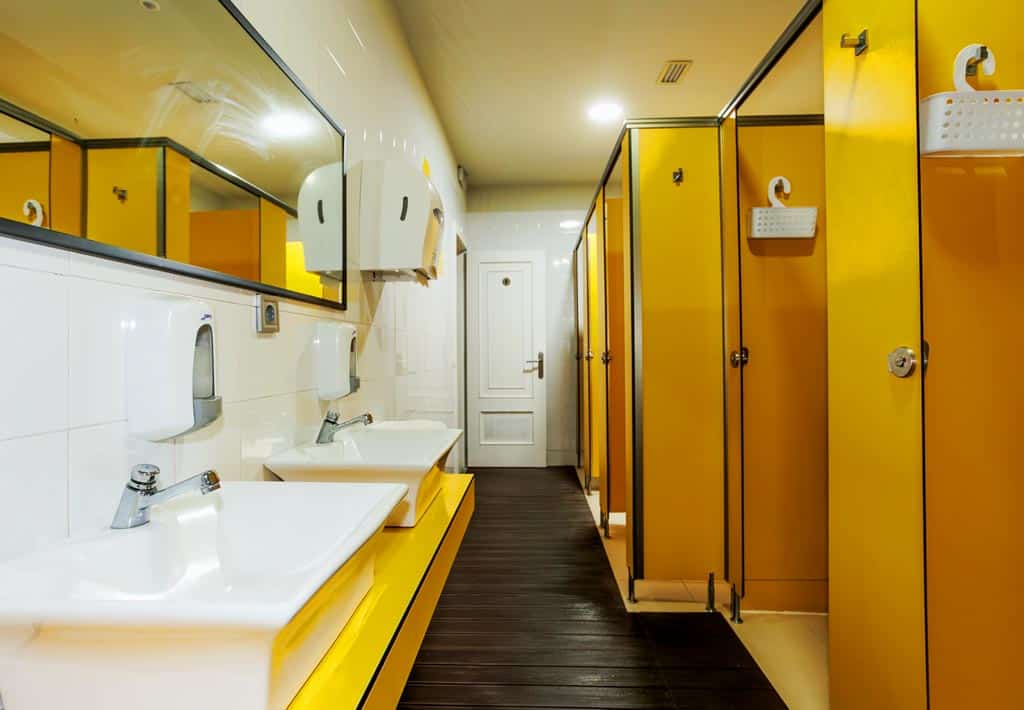
Are you picturing those school type open locker-room showers, where everyone just dives in? If so, let me put your mind at rest. Thankfully, most albergues have separate male and female bathrooms, each with private shower cubicles. If you’ve ever been camping or stayed in a hostel, you’ll recognise the kind of layout.
The idea of large, open, mixed communal showers is largely a myth on today’s Camino.
Even when bathrooms are unisex, the showers themselves are individual cubicles with doors or curtains; and those doors almost always have a lock.
I have stayed in hundreds of albergue across Spain and have only once encountered what looked like an open “school-style” shower room. It was on the Camino Sanabrés. We were walking as a small group of three; just me, Gerry, and one other pilgrim friend. There were no other pilgrims staying that night, so we simply had separate showers and locked the doors.
If you choose to stay in some of the more traditional or historic pilgrim albergues, you may encounter simpler facilities. But you will not be expected to shower in the company of other pilgrims. In all my years walking, I have never encountered mixed communal showers like that.
And if it helps, you’re not alone in worrying. There is no version of pilgrimage, no matter how spiritual, where I am going to be happy showering with a stranger. Thankfully, I don’t have to. And neither do you.
Top Tip : If you’re feeling overwhelmed by the practical details, my Camino Planning Workshops answer all of these questions and more!

Unisex vs Communal Showers: What’s the Difference?
You say potato and I say potato… so let’s call the whole this off? Well that’s what the song says at least!
Language can be surprisingly tricky, especially on the Camino. Pilgrims come from all over the world, and for many, English isn’t their first language. And even among English speakers, things don’t always mean the same thing.
On the Camino, communal shower rooms are very rare, and in my experience they’ve never been mixed. I have encountered this just one single sex communal shower, in all my thousands of kilometres walked. And even then I could lock the door and have six shower heads to myself!
Other Useful Bathroom Words On The Camino
If you’re on the trail or asking for assistance or directions, you might also see or hear:
Are Dormitories Mixed Too?
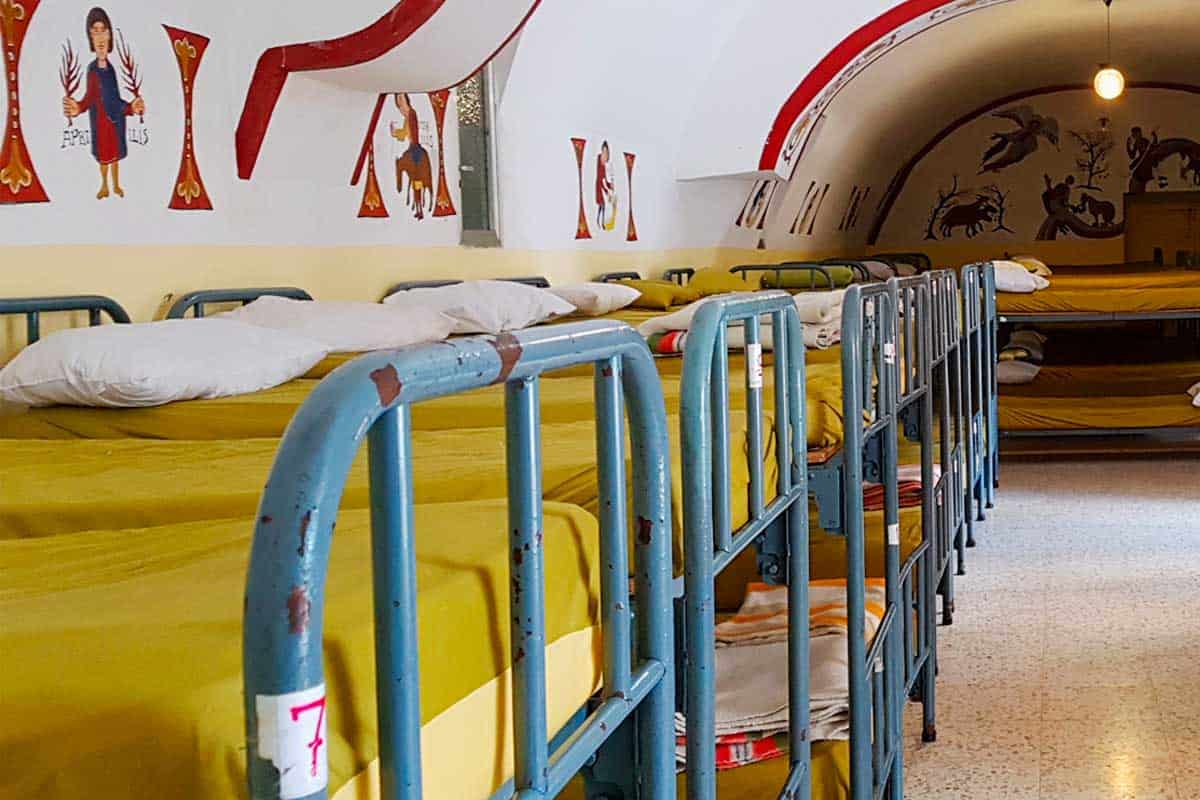
This is slightly off topic, but it often goes hand in hand with the shower question. In short, yes. Dormitories are often mixed. That can surprise some first-time pilgrims, but it’s quite normal on the Camino and indeed in hostels in general. You will quickly get used to sleeping in shared albergue dorms; although maybe not the snoring!
But sleeping arrangements and bathroom facilities are separate things. You quickly get used to shared dormitories; although if you read my Camino stage guides you’ll know I love a bunk with a curtain.
However, even after all these years, I am still not showering with an audience. And thankfully, I don’t have to.
What About Smaller, Traditional or Older Albergues?
Occasionally you may stay somewhere smaller. A converted house. A simple donativo. A very historic building that has been welcoming pilgrims for years.
In those places, there may be:
But even then, showers are usually private cubicles or in a bathroom that locks.
Even when facilities look communal, they are rarely used that way in practice. And pretty much everyone you meet will feel exactly as you do.
In one older albergue in Los Arcos on the Camino Frances, I showered in a cubicle with only a curtain for modesty. A fellow pilgrim showered next door. He loudly announced when he entered and again when he left. In short the perfect gentleman.
What If You Feel Body-Conscious or Embarrassed?
This is a very real concern.
For some younger women especially, the idea of limited privacy can feel extremely uncomfortable. For older women, there may be shyness or self-consciousness.
Men may seem less bothered, but that doesn’t mean everyone feels confident. Some are very aware that their very presence could make someone else uneasy.
Gerry has said this was a concern for him. When we walk the Camino together, we book private rooms. Shared bathrooms were simply outside his comfort zone.
If you ever find yourself feeling anxious, ask a friendly pilgrim to keep watch. I have done this for other women and I have been grateful when others have done it for me. And if you genuinely feel uncomfortable, you do not have to take a shower. Have a wash at the sink. Take your time. Shower the next day somewhere that feels better.
You are never required to push past your own boundaries in the name of pilgrimage. Trust me I’m a Princess. And I am very shy. These days I cope better but I have my limits and after all these years of walking, those boundaries have not yet been reached.
Cultural Differences
Different cultures have very different ideas of what is normal.
Gerry’s first night in an albergue was in Nájera on the Camino Frances. Five minutes after he climbed into his top bunk, an Italian cyclist cheerfully stripped down and prepared for his shower in full view. Gerry still tells that story and it’s one of the reasons he prefers a private room.
I often use my large cotton scarf or even my towel as a curtain around my bunk if I need a little quiet time. It’s also a great way of drying my towel overnight.
You will not, and should not, be placed into a situation that feels unsafe or exposed. And if you ever do feel uneasy, have a word with the hospitalero or to another pilgrim.

A Man’s Perspective
Gerry shared with me that as an older man, mixed bathrooms concerned him. When we travel, we usually book private rooms. He feels more comfortable managing bathroom routines in his own space.
But on the Camino, sharing is sometimes part of the experience.
His advice is:
Gerry’s Top Tip: A small bottle of talc weighs very little and helps prevent chafing on hot days.

How Clean Are Camino Showers And Bathrooms?
In most albergues today, bathrooms are clean and well maintained. Many of the places I stayed in over a decade ago have since been modernised and improved.
And as someone who has volunteered as a hospitalera, I can tell you that a large part of every morning is spent cleaning those bathrooms.
Every door.
Every shower cubicle.
Every sink.
Every mirror.
Every floor.
Albergues work hard to prepare facilities for the next wave of pilgrims. I would confidently say that bathrooms are cleaned daily. I would also say that if they are older, they may not sparkle but that doesn’t mean they aren’t clean.
Of course, standards vary. Occasionally someone leaves a mess behind. But that says more about individuals than about the Camino itself. Shared living works beautifully when everyone leaves the space as they found it.
Top Tip: If something breaks, leaks, or needs attention, tell the hospitalero or owner. Most issues are fixed quickly but only if we know about them.
When Do Pilgrims Shower?
Most pilgrims shower shortly after arriving. My routine is simple; Arrive. Shower. Change into clean clothes. Wash my walking clothes. Relax.
If you arrive early, you will often have the facilities to yourself. If you arrive later, you may need to wait a little.
Some pilgrims prefer to shower later in the evening when things are quieter. Gerry, creature of habit that he is, loved his after-walk shower but also enjoys an early morning rinse. That works well for him, as very few pilgrims shower first thing, and as he is never the first person up in the dorm, he wasn’t disturbing his fellow pilgrims either.
Hot water is generally available. In very busy albergues it can occasionally run low late in the evening, but this is not common.
Coin-operated showers are now rare, although places like Orisson and Borda on Stage One of the Frances, still use tokens due to their remote location and limited hot water supply. The tokens are free and give you more than enough time to shower and wash your hair.
Feeling overwhelmed with planning your Camino?
Instead of searching endlessly, take a look at my Camino Planning Workshops. I turned over a decade of experience into a library of 20+ hours of practical, short, easy-to-follow videos, answering every question a pilgrim could have and plenty you’ve not thought to ask yet!
What I Pack For Shower Comfort
Everyone has different needs. Your list will be different than mine but don’t over pack and do test your system at home before you step foot into an albergue shower.
If you are carrying your pack, weight matters. Even with bag transfer, it helps to keep things simple and lightweight.
Here’s what I carry:
Whatever you pack, test it at home first. There is nothing worse than discovering your chosen kit doesn’t suit you when you arrive on the Camino.
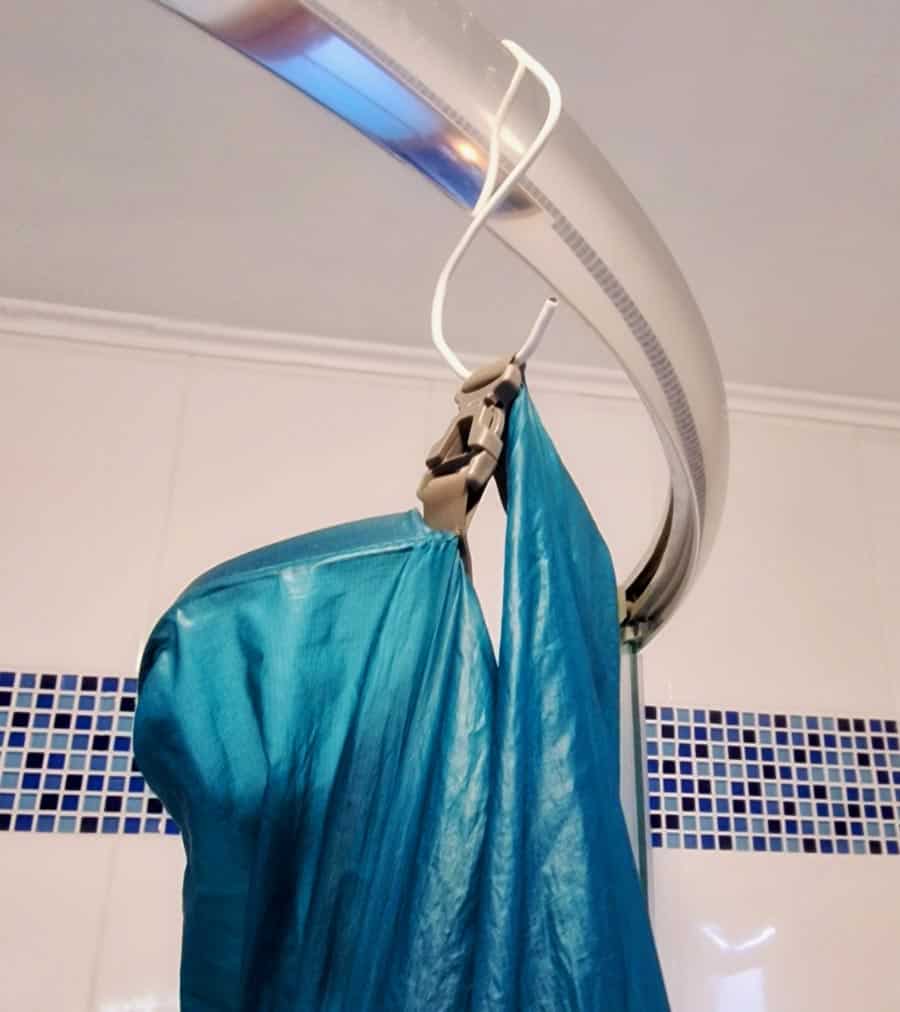
Top Tip: I also carry a small mesh bag; mine came from IKEA years ago and I use it as a laundry bag. Dirty clothes go in here. The bag is also useful on shared washes where I want to keep socks and undies together.
Frequently Asked Questions
I’ve tried to cover most concerns in detail, but here are a few questions that come up again and again.
1. Are Camino showers private?
Yes. Almost always.
Most showers are individual cubicles with doors and locks. Occasionally you may find a curtain instead of a solid door, but you will still have your own space.
2. Are bathrooms cleaned daily?
In almost every albergue, bathrooms are cleaned every day. Some may also be checked and refreshed throughout the day.
Of course, standards can vary, but in my experience, albergues take pride in their facilities and genuinely want pilgrims to feel comfortable. That includes the bathrooms.
3. Do Camino albergues have hair dryers?
Most do not.
Some private albergues or guesthouses may provide them, but it’s best not to rely on one being available.
This can matter in winter when you don’t want to sleep with wet hair. I carry a simple shower cap and avoid washing my hair if it won’t dry in time.
4. Do I need shower shoes?
No, they are not essential.
But if you feel more comfortable wearing flip-flops in shared showers, bring a very light pair. Just remember, for hygiene, don’t wear them outside the bathroom.
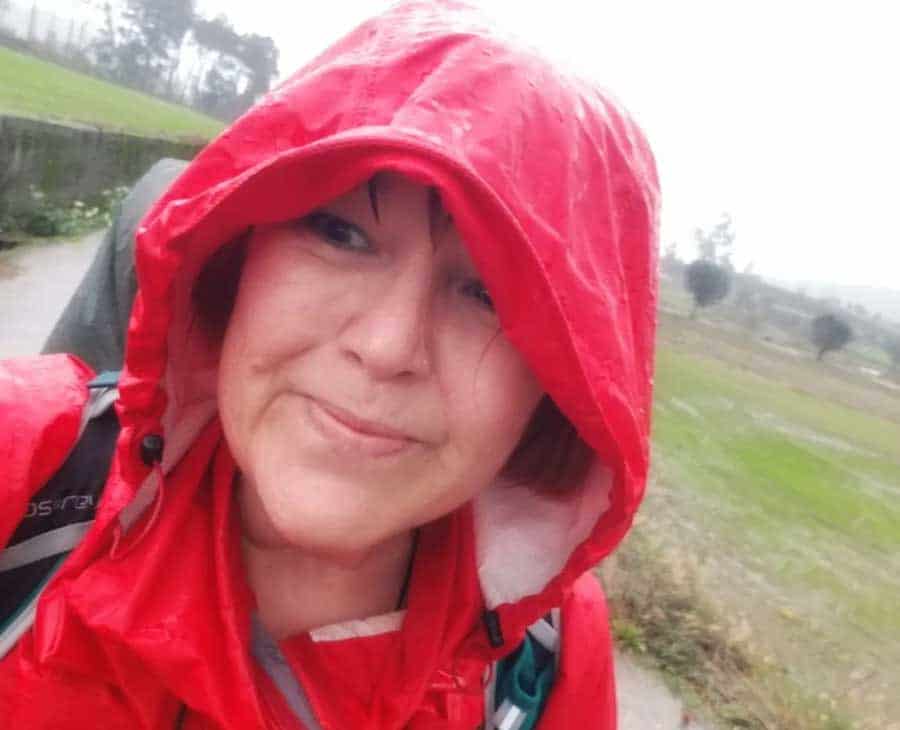
Are You Ready To Take the Plunge?
I’m pretty sure every first-time pilgrim worries about privacy, shared bathrooms, and shower etiquette. It’s human nature.
I don’t like it when this concern is brushed aside. It’s one of the most common anxieties and I know I worried too.
Yes, after a long day of walking, a hot shower feels wonderful. And once you’re in your own cubicle, the anxiety about who might be next door does tend to fade. But if you still feel unsure, it’s absolutely fine to:
No one at the Cathedral in Santiago de Compostela, nor at the Pilgrim Office when you collect your credential, has ever been asked about the kind of bed I chose and a private bathroom does not define your pilgrimage.
If you ever feel uncomfortable, choose another albergue. There have been a few times over the years where I made polite excuses and walked on. You may lose your money but you’ll feel happier. And don’t forget, if you’re travelling solo, ask a friendly pilgrim to keep watch.
Are you concerned about albergue showers? Remember, you are not alone and also remember you will be absolutely fine.

Are You Planning To Walk the Camino?
If you’re walking soon and want detailed daily guidance, I’ve written full stage-by-stage guides for several Camino routes that include practical details like stages, distances, accommodation options I know and where to find services.
You can find everything on my Camino de Santiago page or more specifically :
I Created Six Camino Planning Workshops!
I answer hundreds of your Camino questions — with videos, downloads and links covering routes, travel, stages, accommodation, daily life, and packing — all in one place. It’s like getting advice from a friend — who’s walked the Camino 23 times! All for just $35!
Don’t Forget Travel Insurance
Whenever you travel, you should have great travel and medical insurance. None of us expect anything bad to happen, but in the event of an incident, you want to be sure that your insurance will cover you.
I’ve ended up in hospital in Peru, Indonesia, Portugal, Japan and Ireland. Every time my insurance took care of everything. I would never leave home without full and comprehensive insurance.
MondialCare : Due to increasing limitations, mainly due to age, we have recently switched to MondialCare for our travel insurance. We have taken an annual policy at a very reasonable cost that includes medical and other travel cover. There are no trip length limits and the upper age for cover is 84. For Camino walkers and travel in Europe they have a low cost Schengen policy with no age limit.
TrueTraveller : We have used this policy and were very happy with the cover, especially considering our ages and pre-existing conditions.
Globelink: We have used and recommended Globelink for years and not heard of any issues. They are a great choice for European and UK Residents.
Genki : This is an EU based company offering long term policies for nomads and travellers. Their monthly rates are very competitive for longer trips too.
Try Our Trip Planning Tools
Start here to find the best accommodation
Start here to find flights for your adventure
Start here to find the best sightseeing tours

Hey I’m Colleen. I’m married to Gerry, we’ve three fabulous kids and been living in France for almost two decades. I fell in love with Spain in the 1980s and I’ve walked 1000s of miles along the Camino de Santiago. Now we’re exploring and walking the world and I can’t wait to share what we’ve learned!