
Home > Camino De Santiago > Camino Frances > Valcarlos vs Napoleon Route
Valcarlos vs Napoleon : Which Camino Route from St Jean Pied De port?
Some of my links may be affiliate links. If you make a purchase, I might earn a small commission at no cost to you. See our Privacy Policy for details. And this post was crafted with care and occasional typos by Colleen (and not AI)
Stage One of the Camino Frances, between St Jean Pied de Port and Roncesvalles, is one of the most exciting and memorable days of your pilgrimage. But which route should you choose over the mountains? And what’s the real difference between them?
I’ve walked the Valcarlos and Napoleon routes many times and have explained both options to hundreds of pilgrims while volunteering at the Pilgrim Office in St Jean.
If you’re unsure which path is right for you, then read on and I’ll guide you through the differences and help you choose the best Day 1 for you and your Camino de Santiago.

Two Routes For Stage 1 From St Jean Pied de Port
Pilgrims walk the Camino Frances year-round, but the walk from St Jean to Roncesvalles is very different in January than in July. And for this reason there are two different routes.
Both paths have their own history, beauty, and challenges and choosing the right one for you can really make or break your Camino experience. To help you choose, I’ll walk you through everything you need to know, including route comparisons, highlights, terrain, accommodation and service options along the way.

Why Are There Two Routes From St Jean Pied De Port?
It’s fair to say that when we talk about the Camino de Santiago, most people think of the Camino Frances. And many pilgrims walking the Camino Frances know there are two ways to reach Roncesvalles: the high Napoleon Route and the lower Valcarlos Route.
While today the two routes exist primarily because of weather conditions and safety concerns, the story behind these paths is far more interesting.
Historically, medieval pilgrims avoided crossing the high mountains from St Jean Pied de Port. Most early pilgrims crossed the Pyrenees much further east via the Somport Pass on the Aragonés Camino, or they would have travelled south from Bayonne through the Baztan Valley, joining the main road to Santiago at Pamplona.
While the high Napoleon Route feels adventurous today, it’s actually a relatively modern addition to the Camino Frances — more often used historically by soldiers and smugglers than by pilgrims.
There is mention of the high pass in the Codex Calixtinus, although the later diary of Domenico Laffi, suggests he likely travelled the safer, lower routes through valleys like Valcarlos.
The route we now call the Valcarlos Route, which stays lower and follows the valley, is more closely aligned with the paths medieval pilgrims would have taken.
Interestingly, the earliest pilgrim refuge in this area wasn’t even located at Roncesvalles, but further up at the Col de Ibañeta, where a small hospice once stood as shelter for travellers crossing the mountains. The grand monastery and albergue at Roncesvalles came later, becoming the main pilgrim stop that we know today.
Love History? Here’s A Little More Recommended Reading

The Napoleon Route from St Jean Pied de Port To Roncesvalles
Without doubt, the Route Napoleon is majestic. I have walked this trail eight times, and I’m about to walk it again. I’ve crossed it in rain, snow, and biting winds, as well as under clear blue skies, and every time I’ve loved it.
For as long as I’m able, I hope to continue walking this route across the mountains into Navarra. But what are the facts behind this most glorious of trails?
Napolean Route Stats
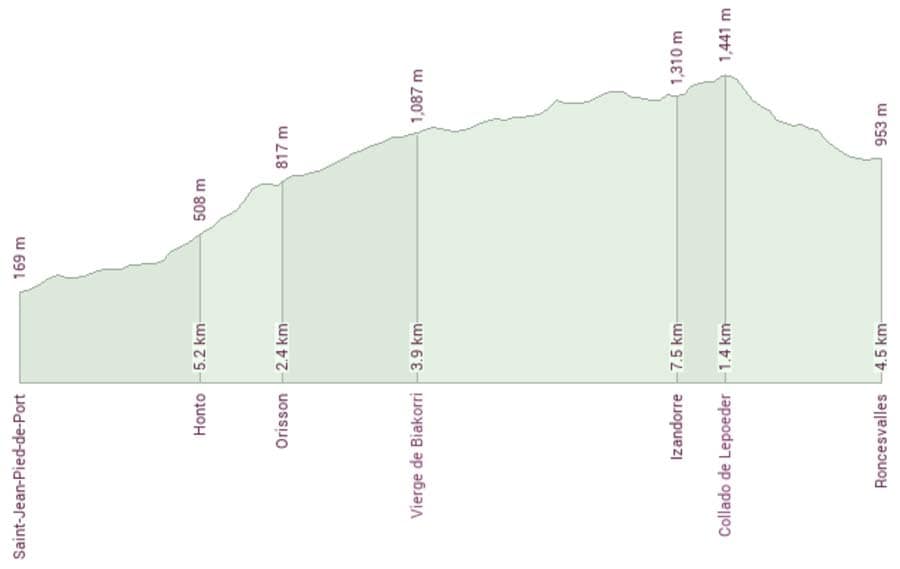
The History Of The Napoleon Route
Long before Napoleon, and long before modern Camino way-markers, this natural crossing over the Pyrenees was known locally as the Pass of Cize. It’s an old Basque and Gascon name, covering the hills and area around St Jean Pied de Port and stretching up toward the Spanish border.
The Romans used this pass, following the ancient Via Traiana from Bordeaux to Astorga, preferring the high ground to avoid ambushes. In the 12th century, the Codex Calixtinus also spoke of the dangers at the foot of the Pass of Cize, warning pilgrims of toll collectors at Ostabat, St Jean, and St Michel.
Today, if you pick up the documents at the Pilgrim Office in St Jean, you’ll still see mention of the Cize Pass. The name Napoleon Route is the more popular term used since the modern revival of the Camino Frances in the late 20th century.
The name is taken from Napoleon’s armies, who crossed the mountains during the Peninsular Wars. His troops may have been following in the footsteps of even older armies — notably those of Charlemagne and Roland, and, before them, the legions of Rome.
Beyond ambushes, medieval pilgrims faced another hazard: excessive tolls and thieves. The Codex Calixtinus rails against the evils visited upon pilgrims trying to cross into Spain, and it was a dangerous journey even before the climb began.
However, it wasn’t until relatively recently that the route we now call the Napoleon Route was clearly mapped. Friends of the Camino in both Spain and France worked together to mark out what they considered the safest and most obvious way over the pass — and it is this route that pilgrims now follow from St Jean to Roncesvalles.
When to Choose the Napoleon Route
The Camino path from St Jean to Roncesvalles is truly unique in Europe. It is the only trail where, by law, pilgrims are forbidden to cross between 1 November and 31 March. Both France and Navarre’s Department of Civil Protection enforces this law for safety.
This law was introduced to protect pilgrims from attempting the high pass during poor weather, when conditions can quickly turn dangerous. If you are walking the Camino Frances within these dates, you must take the Valcarlos Route instead.
You should be able to walk the Napoleon Route :

The Valcarlos Route from St Jean Pied de Port To Roncesvalles
I had planned to walk this route many times, but each time I arrived in St Jean, the call of the mountains was too great. But in 2025, my week volunteering at the Pilgrim Office was scheduled to start on the 31st of March.
Since I would already be in St Jean and the Napoleon Route would still be closed I thought, Why not?
So I walked the Valcarlos route and I am so glad that I was finally able to walk this trail and can now make a full comparison between the two routes.
Valcarlos Route Stats
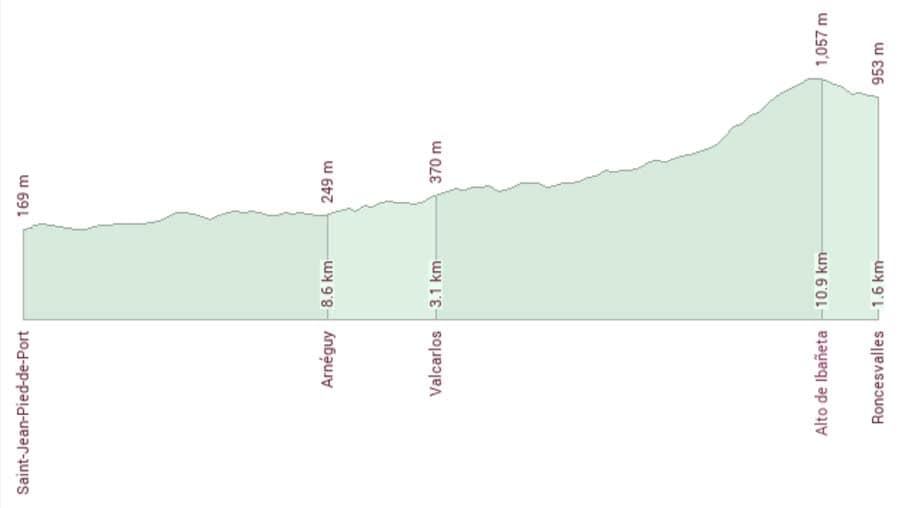
The History Of The Valcarlos Route
The Valcarlos Route is not only older than the high Napoleon route, but it’s also more historically accurate as a pilgrim path. But what are the true origins of this trail?
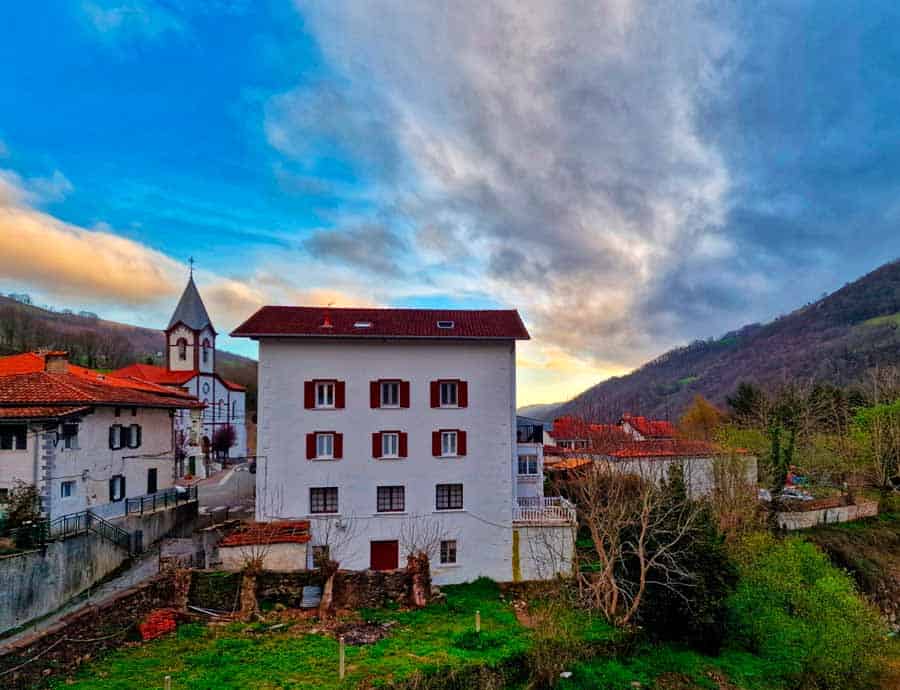
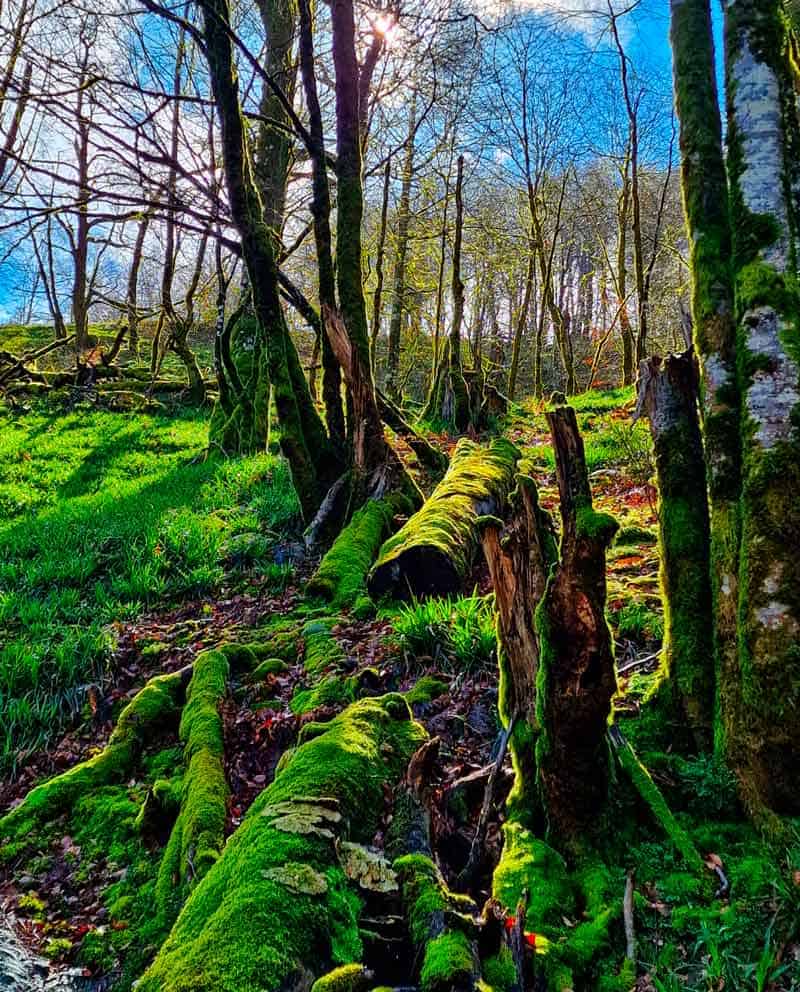
Valcarlos (or Luzaide in Basque) sits in a narrow, steep-sided valley that follows older Roman roads and pastoral routes across the Pyrenees. Just 64 kilometres from Pamplona, it’s surrounded by deep forests, with two small rivers — the Nive d’Arneguy and the Rio Luzaide — running alongside you for much of the walk.
These rivers criss-cross the valley floor, merging and splitting into brooks like the Regata Gainekoleta and Regata Zubibeltz, weaving their way toward Spain.
The valley itself is made up of eight neighbourhoods, scattered throughout the area :
The valley gained fame across Europe after the Battle of Roncesvalles in 778 AD, when Charlemagne’s army was ambushed and the heroic Roland was killed. The story was immortalised in the Chanson de Roland, and for centuries, the valley’s name echoed through Medieval Europe with the memory of this legendary defeat.
For lovers of history, the modern Valcarlos Camino Route passes through both the forests and small roads where Charlemagne’s forces once retreated and fell.
The Valcarlos trail reaches its highest point at the Col de Ibañeta, the pass just before descending into modern Roncesvalles. In medieval times, there was no settlement at Roncesvalles itself — only a hospice at Ibañeta, run by the Augustinians.
It is said that medieval pilgrims would stop here and fall to their knees, and plant small wooden crosses in the ground before continuing westward toward Santiago de Compostela.
In 1673, the Italian pilgrim Domenico Laffi described the emotional moment of leaving France – We stood up, and when we had come out of the little chapel we turned around and glanced back at France saying “Good-bye: God only knows if we will ever see you again!”
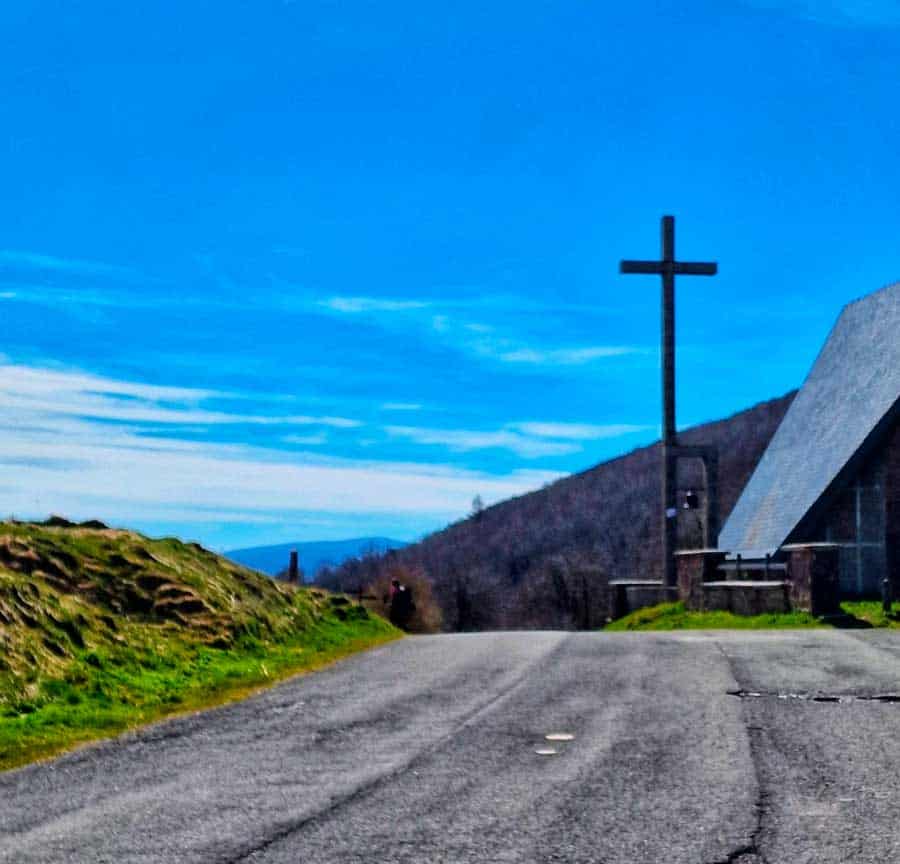
Today, a modern chapel stands on the foundations of the old hospice. And whilst I didn’t quite fall to my knees, I was certainly very very happy to reach the top of that hill knowing that Roncesvalles was very close and downhill!
When To Choose The Valcarlos Route
Many pilgrims still choose to walk the Valcarlos Route, and for good reason. It’s a pretty route and Valcarlos a lovely little town but the most important reason is always one of safety.
You should choose the Valcarlos Route:
Choosing Between Napoleon and Valcarlos
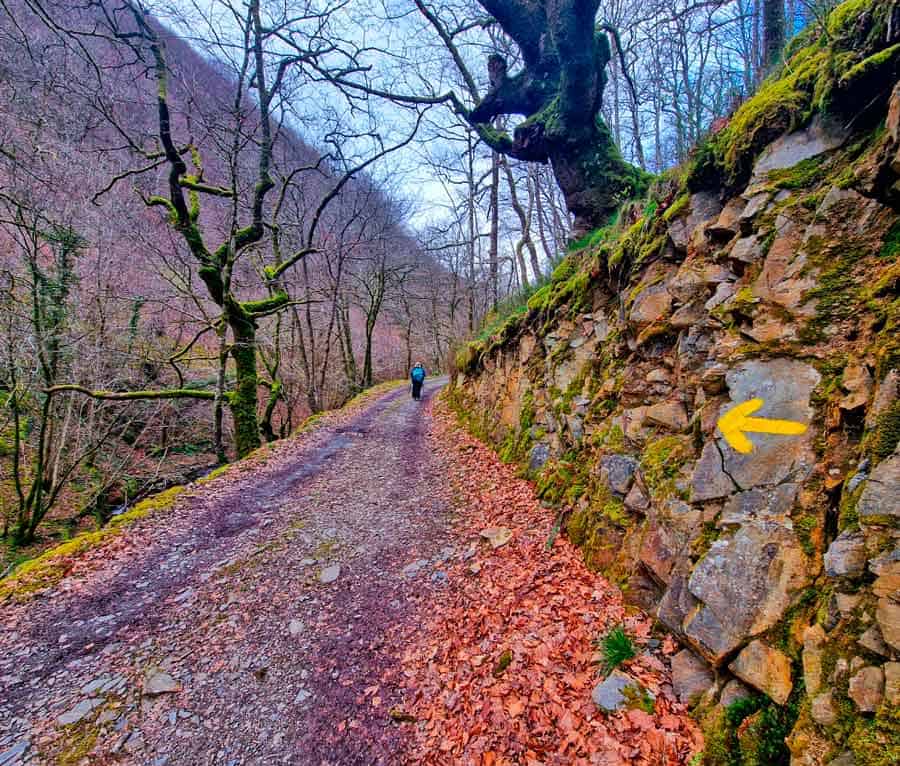
Having walked both routes, I can honestly say that there’s no wrong choice — it’s all about the right choice for you. But it’s also fair to say that the weather, your fitness and your experience all play a part.
Whether you’re drawn to the high, sweeping views of the Napoleon Route or the sheltered, historic paths of Valcarlos, each route offers its own kind of beauty — and its own set of challenges.
| Valcarlos Route | Napoleon Route | |
| Distance | 23.5 km | 25.3 km |
| Elevation Gain | 1,342 m | 1,382 m |
| Elevation Loss | 428 m | 581 m |
| Maximum Elevation | 1,059 m (Ibañeta Pass) | 1,432 m (Col de Lepoeder) |
| Terrain | Gradual climbs, forest paths, paved and rural roads | Steep climbs, rural roads open mountain trails, rugged terrain |
| Historical Route | Medieval pilgrim route following valleys and Roman roads | Higher military/trade route, popularised in modern times |
| Weather Exposure | More sheltered (forest cover) | Exposed to wind, weather, and sudden changes |
| When to Walk | Open all year (mandatory in winter) | Open 1 April – 31 October (weather permitting) |
| Accommodation Options | Options in Valcarlos | Orisson, Borda, or return to St Jean |
| Safety | Safer in bad weather | Dangerous in poor conditions |
| Views | Forests, valleys, rivers | Panoramic mountain views, wide open landscapes |
Accommodation Comparison : Valcarlos Vs Napoleon
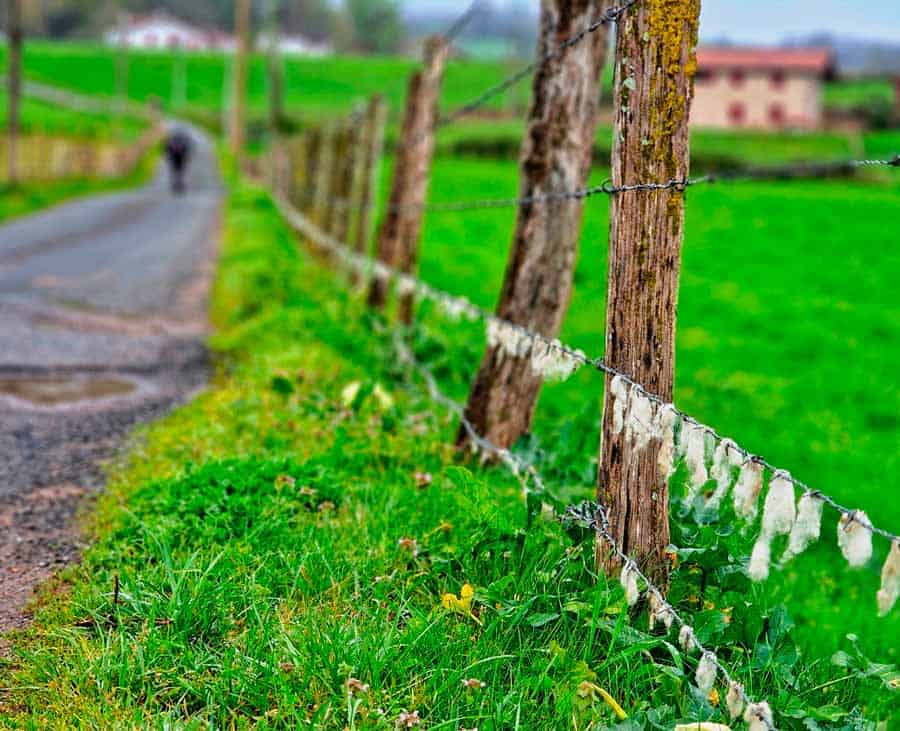
One of the reasons pilgrims opt for the Valcarlos Route is that there are usually more bed options available and less pressure on those spaces.
By contrast, accommodation along the higher Napoleon Route is much more limited and demand is high, especially in the busy spring and summer months.
Napoleon Route Options
As well as the options I’ve included here it is also possible to walk partway along the Napoleon Route and return to St Jean Pied de Port using the Donkey Service minibus. However, with high demand for beds in St Jean, this is not always possible unless you book in advance.
Valcarlos Route Options
When I walked in late March, I was easily able to secure a private room in Valcarlos, and the municipal albergue also had plenty of space available.
Finding a bed along this route is usually straightforward unless a sudden closure of the Napoleon Route forces pilgrims onto the lower path at short notice.
Top Tip : No matter which route you choose, I highly recommend booking in advance — especially in the busy spring and summer months (when I book my bed all the way to Pamplona). It’s one less thing to worry about when you start walking.

Services Comparison : Valcarlos Vs Napoleon Routes
Along both routes there are some services available, although I would always stress that you should not embark on either route without carrying enough water and a few snacks to keep you going. And both routes also offer bag transfer services.
Napoleon Route Services
While the route across the mountains feels wild and remote, there are still a few options for services even if you’re not staying overnight.
Valcarlos Route Services
I had always assumed that there were very few services along the Valcarlos Route but I was pleasantly surprised that there were some.
Top Tip : An important point for the Valcarlos Route is that there are no services or water fountains between Valcarlos and Roncesvalles. Do make sure you fill up with water and carry enough snacks before you leave Valcarlos — the final climb is long and demanding!
Terrain and Elevation Comparison : Valcarlos Vs Napoleon
Like many other pilgrims, I assumed that the Valcarlos Route was the easier of the two paths from St Jean Pied de Port. Having walked both, I feel this needs to come with a big caveat: neither route is easy, and both will test your fitness and endurance.
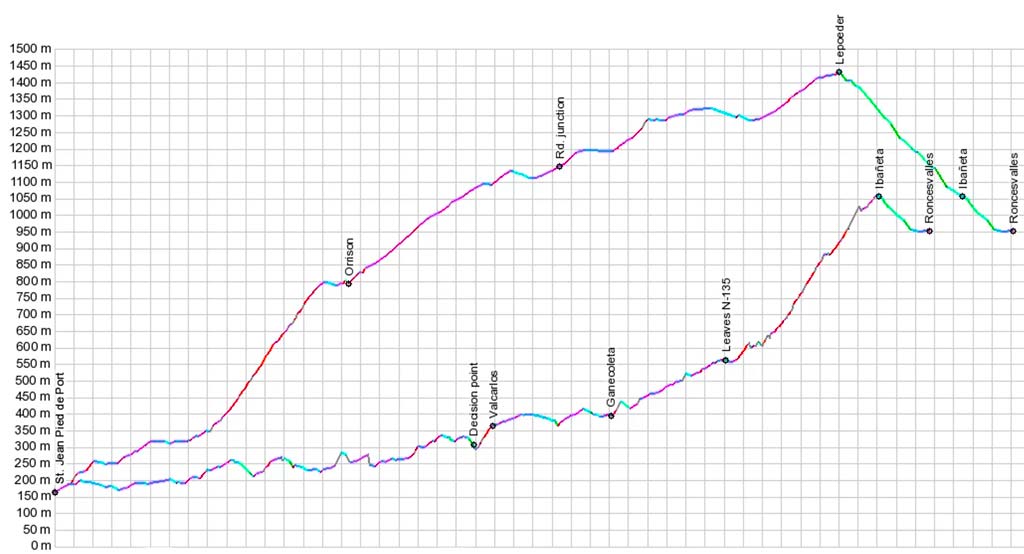
Both routes mean that you will gain considerable elevation, both demand respect, preparation and endurance. Whichever path you take, the feeling of reaching Roncesvalles after such a hard day’s walk is unforgettable.
Safety Considerations for Both the Valcarlos and Napoleon Routes
Whichever route you take, it’s important to remember the trail statistics above. You’re covering a lot of ground and a lot of elevation on both routes and neither route is easy.
Many pilgrims have expressed some concern about getting lost, I feel that both routes are generally well marked and well maintained. However, both paths between St Jean Pied de Port and Roncesvalles come with their challenges and it’s important to be prepared before setting out.
1. Weather
On the Napoleon Route, high winds, fog, snow, and storms can make conditions dangerous very quickly. The route is legally closed between 1 November and 31 March for this reason.
Always check the latest weather forecast and seek advice from the Pilgrim Office or your accommodation before setting out (not the day before). And always remember: even with a good forecast, the weather can change rapidly at elevation, so be prepared!
The Valcarlos Route is lower but still at altitude, and snow can cover the trail in winter. After heavy rain, parts of the path can become waterlogged, and you may be advised to stay on the main road all the way to Roncesvalles.
And don’t forget sun protection. The Napoleon Route is very exposed to sun too, whereas the Valcarlos route does offer cooler and shadier options, thanks to the forests and river valley.
2. Traffic
Both routes involve walking along quiet country roads at times. Take care, especially when leaving St Jean early in the morning and remember in Europe, you’ll walk on the left, facing oncoming traffic.
On the Valcarlos Route, while much of the walk is peaceful and rural, the final stretch from Valcarlos to Roncesvalles follows a main road for at least part of the route.
Traffic is usually light, but pilgrims should stay alert, especially in poor weather or reduced visibility.
3. Fitness
Neither route is easy, and both require a good level of fitness.
The Napoleon Route demands steady uphill walking for many hours, followed by a steep descent. The Valcarlos Route offers more rolling ups and downs, but finishes with a tough final climb.
Don’t be like me and assume that Valcarlos is the easy option! I paid for my complacency and the last kilometres stung.
Train beforehand, carry enough water, use hiking poles, and pace yourself. Good preparation is key to ensuring you arrive safely — and ready to enjoy the journey ahead.

Quick Quiz : Valcarlos Vs Napoleon? Which Route Suits You Best?
I’ll hold my hand up and admit this isn’t really the most scientific or technical of quizzes but if you’re still wondering which route is the right fit for you on your first day then read on.
1. What’s your biggest priority for Day 1?
2. How do you feel about steep climbs?
3. What time of year are you starting your Camino?
4. What kind of scenery appeals most to you?
5. If it starts pouring With rain at 1,400 metres, What would You Do?
6. How do you feel about crowds and solitude?
7. What Wet Weather Protection Do You Have?
8. How much sun protection are you bringing?
9. What’s your walking fitness level today?
10. Are you happy walking on roads and hard surfaces underfoot?
Quiz Answers : Which Route Is Right For You?
FAQ About Stage 1 From St Jean Pied De port
Here are a few of the most common questions pilgrims ask before setting out from St Jean Pied de Port.
1. When is the Napoleon Route open?
The Napoleon Route opens on 1 April and closes on 31 October.
However, the route will also close if the weather is bad — which can happen in early spring. Always check the weather forecast and seek advice from the Pilgrim Office or your accommodation before setting out.
2. Is Stage 1 of the Camino de Santiago really difficult?
Yes. The route over the mountains is difficult. But difficult is not the same as impossible.
It’s not a technical trail — the paths are well-marked and maintained — but in mountain passes the weather can change quickly. There’s also considerable elevation on both the Napoleon and Valcarlos Routes, so you should train and prepare beforehand.
However, on my first Camino Frances, I let fear prevent me from walking over the mountains, and I started in Roncesvalles instead. I regretted that choice for 800 kilometres. When I finished my Camino, I returned and walked Stage 1 over the Napoleon Route.
The walk between St Jean and Roncesvalles is not an easy walk but it is perfectly doable. Don’t let fear prevent you from walking — but do be prepared.
3. What is the one thing I should know about Day 1 of the Camino Frances?
Be prepared. Plan for this day. Train for this day.
Wear the right clothing, book your beds in advance, know your own strengths and above all, take your time and enjoy this most glorious of stages.
4. Can I split the Napoleon Route into two days?
Yes, you can.
If you can’t book a bed at Orisson or Borda, then you can still split the Napoleon Route into two by using the Express Bourricot service or the Donkey Service (and yes, there really are two different companies with the same name).
There are four pickup points along the trail although many pilgrims aim to reach Orisson or the Virgin statue. At around 2:30 pm, you are collected and taken back to St Jean for the night.
The next morning, you’re dropped back at the same point to continue your walk.
I recommend contacting the transport company in advance during busy periods to make sure there’s a seat in the bus and be sure you have a bed booked back in St Jean.
So Which Is Best Route? The Napoleon Or The Valcarlos Route?
I was asked this question so many times while volunteering in the Pilgrim Office, and my answer now is the same as it was then — the best route is the one that works best for you.
I can’t deny that I love the majesty of the Napoleon route. I can’t pretend that I don’t adore that mountain trail. But I know this walk. I know the challenges. I know what I’m capable of.
If you are like me — ready, prepared, and eager to walk— then go and walk the Napoleon Route. Fall in love with this incredible first stage of the Camino Frances.
However, if the weather is poor, or if you feel less sure, a little nervous, or know that your fitness isn’t where you’d hoped, then walk the Valcarlos Route. It’s still a very pretty path.
The best route for Stage 1 is the one that gets you safely to Roncesvalles. The best route is the one you finish and the one that leaves you feeling strong and ready for the Camino journey ahead.
Whichever path you choose, you will feel an immense sense of achievement and that feeling will stay with you long after your journey is over. Whichever route you choose, you will have crossed the Pyrenees and walked from France to into Spain and that is simply wonderful!
Want to learn more about the Camino? Then hop over to my Free Private Facebook Group | Walking The Camino De Santiago.

Are You Walking The Camino Frances?
I hope this guide has helped you feel more confident about your Camino start. If you’d like more Camino advice, packing tips, or encouragement, feel free to explore a few more of my guides.
If you’re planning your Camino or already on the trail, I’d love to hear about your experiences. Join our Camino community on Facebook, share your stories, and find inspiration for the road ahead.
Don’t Forget Travel Insurance
Whenever you travel, you should have great travel and medical insurance. None of us expect anything bad to happen, but in the event of an incident, you want to be sure that your insurance will cover you.
I’ve ended up in hospital in Peru, Indonesia, Portugal, Japan and Ireland. Every time my insurance took care of everything. I would never leave home without full and comprehensive insurance.
MondialCare : Due to increasing limitations, mainly due to age, we have recently switched to MondialCare for our travel insurance. We have taken an annual policy at a very reasonable cost that includes medical and other travel cover. There are no trip length limits and the upper age for cover is 84. For Camino walkers and travel in Europe they have a low cost Schengen policy with no age limit.
TrueTraveller : We have used this policy and were very happy with the cover, especially considering our ages and pre-existing conditions.
Globelink: We have used and recommended Globelink for years and not heard of any issues. They are a great choice for European and UK Residents.
Genki : This is an EU based company offering long term policies for nomads and travellers. Their monthly rates are very competitive for longer trips too.
Try Our Trip Planning Tools
Start here to find the best accommodation
Start here to find flights for your adventure
Start here to find the best sightseeing tours

Hey I’m Colleen. I’m married to Gerry, we’ve three fabulous kids and been living in France for almost two decades. I fell in love with Spain in the 1980s and I’ve walked 1000s of miles along the Camino de Santiago. Now we’re exploring and walking the world and I can’t wait to share what we’ve learned!