
Home > Camino de Santiago Guide > Last 100km Into Santiago de Compostela
8 Ways to Walk the Last 100 kms into Santiago de Compostela
Some of my links may be affiliate links. If you make a purchase, I might earn a small commission at no cost to you. See our Privacy Policy for details. And this post was crafted with care and occasional typos by Colleen (and not AI)
Are you planning to walk the Camino but only have about a week? If so, you’re probably considering walking the last 100 kilometres into Santiago to earn your Compostela.
While the official guidelines changed slightly in 2025, many pilgrims still wish to walk continuously and finish in the majestic city of Santiago.
I’ve walked thousands of Camino kilometres, including nearly every route that brings you into Santiago—many of them more than once. From the bustling trails of the Frances to the quieter paths of the Sanabres, and each route offers something different.
In this post, I’ll walk you through different routes that qualify for the final 100km—share key facts, pros and cons, and a taste of what it’s really like to walk these trails. If you’re not sure which path is right for you, this post will help you figure it out.

Quick Comparison of The Routes into Santiago
| Camino | Start | Distance | Joins |
|---|---|---|---|
| Frances | Sarria | 116 | |
| Portuguese Central | Tui | 118 | |
| Portuguese Coastal | Vigo | 100 | Central in Redondela |
| Ingles | Ferrol | 118 | |
| Primitivo | Lugo | 102 | Frances in Melide |
| Norte | Baamonde | 103 | Frances in Arzua |
| Sanabres | Ourense | 114 | |
| Invierno | Chantada | 105 | Sanabres in Lalin |
Want to learn more about the Camino? Then hop over to my Free Private Facebook Group | Walking The Camino De Santiago.

1. Camino Frances From Sarria
If you’ve heard of the Camino, then you’ve likely heard of Sarria on the Camino Frances too. It’s by far the most popular starting point for modern pilgrims, with over 32% of all Compostela issued from this route starting point.
With countless albergues, cafés, bag transport options, and well-marked trails, and a lot of history, it’s arguably the most beginner-friendly Camino route. The path undulates through classic Galician countryside—think stone villages, moss-covered walls, shady forests, and the occasional cow traffic jam.
When I walked this stretch in spring 2025, I was pleasantly surprised by the number of open churches. Often with a local volunteer ready to welcome pilgrims and share a bit of history.
That said, this route is not the quietest option. From May to September, it can feel very busy—especially if you find yourself alongside groups of school children. If you’re craving a reflective experience, this may not be your ideal path.
Still, Sarria is popular for a reason. It offers the essence of the Camino experience: shared meals, spiritual moments, and a deep sense of arrival as you approach Santiago. And if you plan your walk well, you can avoid the crowds:

2. Camino Portuguese Central
Starting in the riverside town of Tui, right on the border with Portugal, this route gives you the best of both worlds. You can easily cross the bridge into Valença and begin your Camino in Portugal if you’d like to start with a Portuguese stamp in your credencial (pilgrim passport).
The final 100 km of the Portuguese Central route are wonderful, passing through some of the prettiest woods I’ve walked on any Camino. Gerry loved the Roman roads and the rich Roman history too.
The cathedral in Tui is a medieval marvel, and if you like to start your Camino in style, there’s even a Parador in town. Along the way, you’ll pass Pontevedra and Caldas de Reis, both well worth exploring.
The route is quieter than the Frances but still offers plenty of infrastructure and pilgrim company, making it a great balance between support and peace.
I’m not fond of the urban walk into O Porriño, but having done it a few times, I can say the river variant is a much prettier alternative and well worth taking.
Tui has long been a favourite starting point and is the second most popular last-100km route after Sarria. It’s a solid choice with deep pilgrim roots, good food and accommodation, and enough services to keep you comfortable without losing that peaceful Camino feel.

3. Camino Portuguese Coastal
I love the Portuguese Coastal route. In fact, I’ve walked it five times and I’m already planning my next visit. However, if you’re choosing to start in Vigo because you’re drawn to the idea of walking along the coast, do note that the sea views end shortly after leaving the city, as you walk inland to Redondela.
That said, Vigo itself is a bustling port city with great beaches, easy transport links, and access to the Cíes Islands—perfect for a bit of pre-Camino sightseeing.
The city also boasts excellent hotels, modern cafés, and some of the best seafood in Galicia (Vigo is famous for it). It’s a good choice if you prefer a less rural Camino but still want to earn your Compostela.
Vigo is also one of the shortest final 100km options, at around 101 km, so it saves you a day of walking compared to the Central route from Tui.

What About The Spiritual Variant?
The Spiritual Variant is a beautiful detour from the Portuguese route, following what tradition holds to be the final journey of the remains of St James when his body was brought to the Iberian Peninsula from the Holy Land.
From Pontevedra, pilgrims branch off toward the Monastery of Poio, then up to Armenteira, walking the stunning Ruta da Pedra e da Auga before reaching Vilanova de Arousa.
You can break the day to Armentiera by pausing in Combarro – I’d strongly recommend this as you start the big hill on fresh legs, and spend time in this glorious seaside village.
From Vilanova, you take a boat and sail through the Ría de Arousa and up the Ulla River—the only part of the Camino officially completed by water. The route rejoins the Portuguese path at Pontecesures for the final walk into Santiago.
This really is a glorious option, and I’m very much looking forward to walking it again. We had a few hiccups on our last journey—our boat time changed last minute, which threw our plans—my best advice is to allow for flexibility and simply enjoy the adventure.
Do Remember : to receive the Compostela when walking the Spiritual Variant.

4. Camino Ingles
I didn’t expect to love the Camino Inglés as much as I did. It’s the perfect Camino for those short on time, looking for a more peaceful experience or wanting to complete a full route—and not just join the last 100 km.
The Inglés, or English Way, is an ancient maritime route once used by pilgrims from the UK, Ireland, and northern Europe, who arrived by boat into the ports of Ferrol and A Coruña. While the A Coruña route is shorter (around 75 km), only Ferrol qualifies for a Compostela unless you’ve previously walked another qualifying Camino.
From Ferrol, the path follows estuary trails, a few traditional fishing villages, climbs through green Galician hills and a couple of great little towns – Betanzos is a wonderful little town that really surprised me.
Services are ok but more spaced out than on the Frances, so it’s worth planning ahead for food and water. The terrain is rolling with a few steeper climbs, and yes, there is a fair bit of tarmac—which isn’t my favourite but it’s all part of the journey.
The Camino Ingles is a great little Camino and I feel it gets some unfair critism online. The Xunta authorites are putting much effort into improving infrastructure along the route, and it’s a great choice if you want to do something a little different, avoid the crowds of the Frances, and walk every step to Santiago.
I know I’m looking forward to my next Camino Ingles!

What About Starting In A Coruña?
Top Tip : Your additional route must be officially recognised by a Camino association or church authority, and stamped along the way. This must be a pilgrimage, not simply a walking trail.

5. Camino Primitivo
If you want to walk in the footsteps of the very first pilgrim, the Camino Primitivo is for you. The route begins in Oviedo but the 100 kilometre starts from Lugo, a fabulous city steeped in Roman history. One of Gerry’s favourite memories was a birthday dinner in this city!
While the Camino Primitivo is known for its more rugged terrain, starting in Lugo avoids the steepest sections. The worst of the elevation is behind you—but this is still Galicia, so expect plenty of rolling hills!
When we walked, reaching Melide and joining the Frances was quite a jolt after the quiet trails we’d enjoyed. The path is much busier, but if you plan to stay off the main stages, you can still find those peaceful spaces to walk in your own company.
Lugo is a great starting point if you want something a little different without committing to the full Primitivo. You’ll enjoy a different landscape for a few days, and a quieter Camino experience before joining the busier final days into Santiago.

6. Camino del Norte
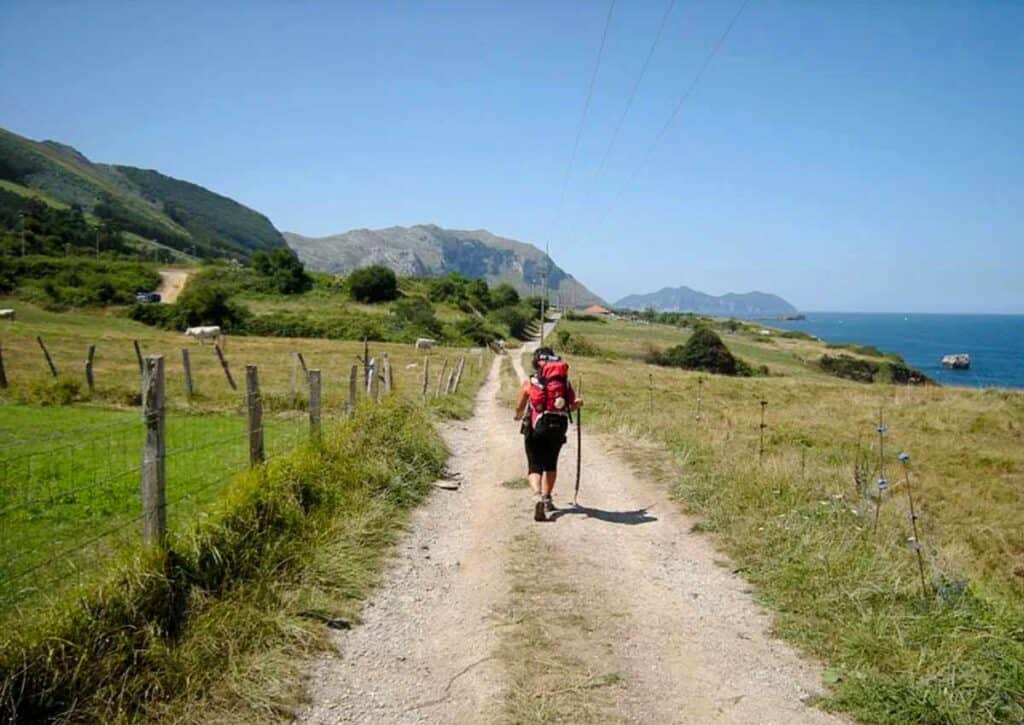
The final 100 km of the Camino del Norte is a bit of a hybrid. It’s more remote, less defined, and often overlooked as many pilgrims branch off toward the Primitivo earlier along the route.
But for those seeking solitude and the rolling green landscapes of rural Galicia, starting in Vilalba or Baamonde offers a wonderfully peaceful path.
This trail is rich in traditional Galician culture, passing through quiet farmland, eucalyptus forests, and typical stone villages. Of all the routes to Santiago de Compostela, this is the one path I’ve not taken but the Monastery of Sobrado dos Monxes would be my reason. Pilgrims can sleep in the monastic quarters and also attend vespers.
The Norte merges with the Camino Frances at Arzúa, which will feel much busier after days of quiet trails. That said, there is a variant that bypasses Arzúa and joins the Frances later at Lavacolla, just outside Santiago.
This is a lovely route for experienced walkers or anyone seeking a quiet and reflective final 100 km into Santiago.
7. Camino Sanabres (Via de la Plata)
This was Gerry’s first Camino. I’d walked from Seville on the Via de la Plata, and we met up in the city of Ourense, known for its Roman hot springs. He’d barely arrived before he found churros and thick hot chocolate, followed by an excellent restaurant in the old centre—and regardless of the hills that followed, he was sold on the Camino experience!
The Camino Sanabrés is a beautiful trail and the final days are no exception. It offers a quieter path into Santiago—ideal if you want to avoid the busier routes but still experience Galicia in all its charm.
The terrain is more demanding and there’s a steep climb out of Ourense and whilst there are a few climbs this isn’t like the mountains from St Jean. Just prepare your legs for a bit of a workout and you’ll be fine.
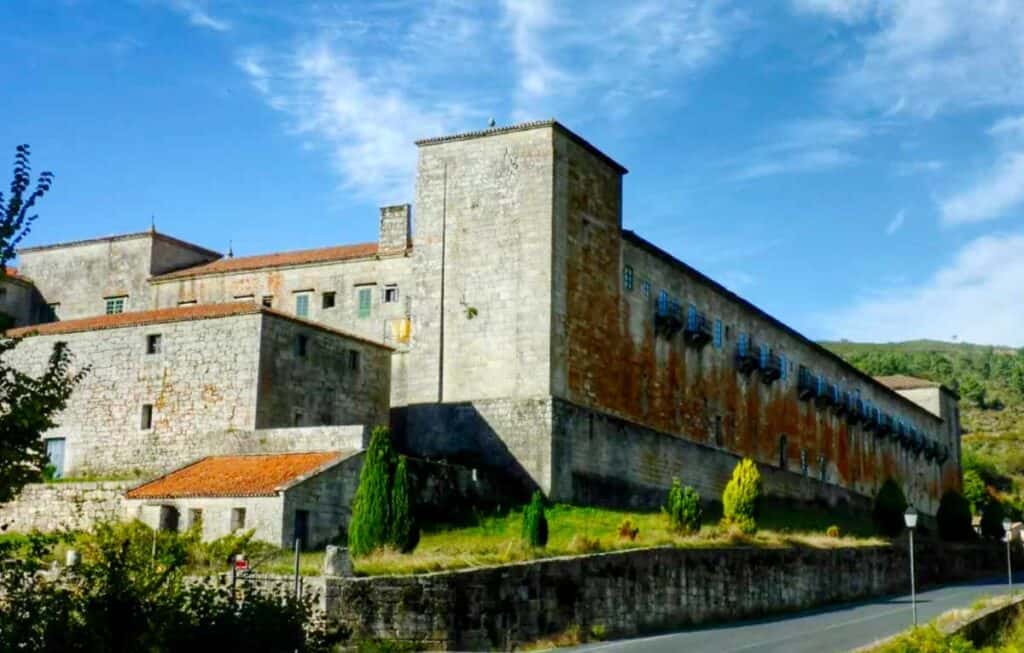
We chose the detour to the incredible Monastery of Oseira, and I’d recommend it to anyone walking this route. Spend the night if you can and attend Vespers—it’s a memory that we’ll never forget.
There are fewer accommodation options but we stayed in some excellent Xunta albergues and found lovely restaurants offering generous pilgrim menus along the path.
We both loved our walk from Ourense. If you’re after a more peaceful journey and a bit of history, this is a great option—and a wonderful way to complete the 100 km needed for your Compostela.
8. Camino de Invierno
The Camino de Invierno—the Winter Way—was traditionally used by pilgrims when snow made the high passes of O Cebreiro on the Camino Frances impassable. Today, it offers a very peaceful yet culturally rich alternative through the heart of Galicia.
The trail starts in Ponferrada but for the final 100 kilometres, many pilgrims choose to start in historic Monforte de Lemos, winding their way through the stunning Ribeira Sacra—a region known for its terraced vineyards, river valleys, and Romanesque monasteries. Others opt to start in Chantada, which is just over 100 km from Santiago and still offers the same quiet, off-the-beaten-path feel.
The route is very scenic, passing through sleepy villages, countryside, and ancient forests. While there are some ups and downs, the terrain is gentler than routes like the Primitivo.
The main challenge for some would be the lack of infrastructure. Services are limited, and accommodation options can be sparse. You’ll also find fewer pilgrims on the path, which for many is part of the appeal. If you enjoy solitude and don’t mind carrying your own pack, it’s a rewarding route.
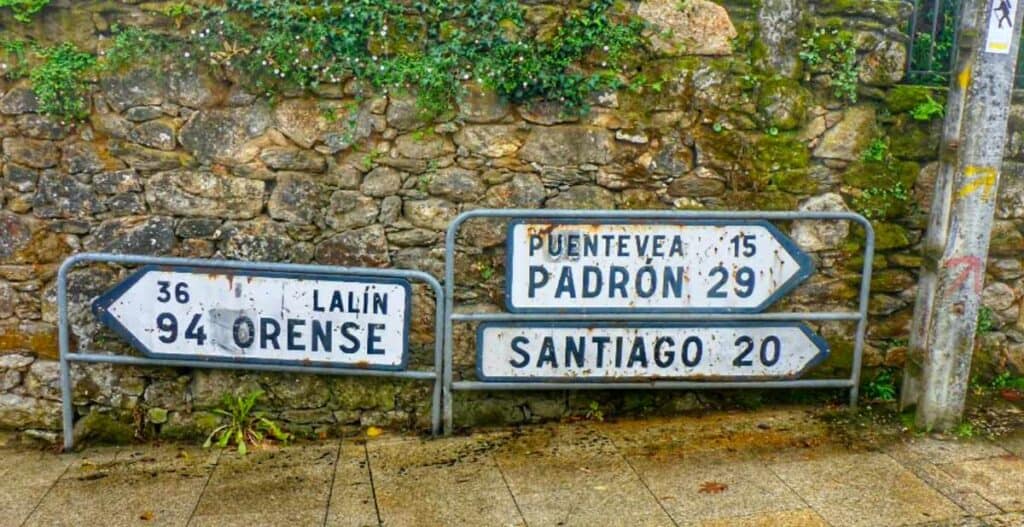
If you’re looking for a peaceful trail and want to walk a Camino that few others choose, the Invierno is a beautiful option. The route merges with the Sanabrés at Lalín before continuing on to Santiago.
FAQs About Walking the Last 100 km Into Santiago
I hope the guide above has given you a clear overview of the many routes into Santiago, but here are a few of the most frequently asked questions about walking the last 100 kilometres.
1. What is the shortest Camino that qualifies for the Compostela?
You can walk any recognised Camino route and start at the 100 km mark to qualify—as long as you collect a stamp (sello) to show your starting point. If you’d prefer to walk a complete Camino route from start to finish, the Camino Inglés is your best choice. It’s 118 kilometres from Ferrol to Santiago and can easily be walked in 5 days.
2. Can I walk just the last 100 km of the Camino de Santiago?
Yes, absolutely. In fact, on the Camino Francés, there’s accommodation located right at the 100 km marker. You’ll just need to collect a stamp on the first day to prove where you began. You don’t have to start in a specific town—just make sure you’ve walked at least 100 km continuously with pilgrimage intent.
3. What’s the easiest Camino route for beginners?
Once you reach Galicia, you should expect some elevation and hills—it’s part of the charm! But in terms of ease, the most beginner-friendly routes are those with more infrastructure and support, such as the Camino Francés from Sarria or the Portuguese Central from Tui/Vigo.
The Xunta de Galicia does a wonderful job maintaining these routes, and you’ll find regular waymarking, pilgrim albergues, and food stops along the way.
4. Which Camino is the quietest for the last 100 km?
Based on 2024 statistics, the quietest last-100km routes are the Camino del Norte, Camino Sanabrés, and Camino de Invierno. If you’re looking for solitude, nature, and fewer crowds, these are excellent options.
5. Do I need to book accommodation in advance?
That depends. If you’re walking one of the busier routes—like the Frances from Sarria or the Portuguese Central from Tui/Vigo—then yes, it’s wise to book in advance, especially in high season (spring and summer).
If you’re happy to carry your own backpack, don’t mind staying in basic albergues, and can be flexible, then you might get away with a spontaneous approach. But even on quieter routes like the Inglés, places like Hospital de Bruma fill up quickly due to limited beds. So a little planning goes a long way.

Are You Walking the Camino and Need More Help?
Since 2018, I’ve been running Camino Planning Workshops here in France, helping hundreds of pilgrims prepare with confidence. In 2025, I turned them into a comprehensive online resource, adding lots more content and breaking the day into six bite-sized, practical sessions.
One of these is dedicated entirely on helping you choose the right Camino for you!
Then We Walked Camino Planning Workshops:

Need More Personal Support?
If you’d like more individual guidance, I also offer one-to-one Camino support sessions — whether you’re feeling overwhelmed or just want a second pair of eyes on your plan.
Want to Read More?
Over the last decade and more, I’ve walked thousands of Camino kilometres and written hundreds of blog posts to help fellow pilgrims.
Whether you’re looking for:
All this and everything in-between and better still, join my Walking The Camino Facebook group.
Want to learn more about the Camino? Then hop over to my Free Private Facebook Group | Walking The Camino De Santiago.
Don’t Forget Travel Insurance
Whenever you travel, you should have great travel and medical insurance. None of us expect anything bad to happen, but in the event of an incident, you want to be sure that your insurance will cover you.
I’ve ended up in hospital in Peru, Indonesia, Portugal, Japan and Ireland. Every time my insurance took care of everything. I would never leave home without full and comprehensive insurance.
MondialCare : Due to increasing limitations, mainly due to age, we have recently switched to MondialCare for our travel insurance. We have taken an annual policy at a very reasonable cost that includes medical and other travel cover. There are no trip length limits and the upper age for cover is 84. For Camino walkers and travel in Europe they have a low cost Schengen policy with no age limit.
TrueTraveller : We have used this policy and were very happy with the cover, especially considering our ages and pre-existing conditions.
Globelink: We have used and recommended Globelink for years and not heard of any issues. They are a great choice for European and UK Residents.
Genki : This is an EU based company offering long term policies for nomads and travellers. Their monthly rates are very competitive for longer trips too.
Try Our Trip Planning Tools
Start here to find the best accommodation
Start here to find flights for your adventure
Start here to find the best sightseeing tours

Hey I’m Colleen. I’m married to Gerry, we’ve three fabulous kids and been living in France for almost two decades. I fell in love with Spain in the 1980s and I’ve walked 1000s of miles along the Camino de Santiago. Now we’re exploring and walking the world and I can’t wait to share what we’ve learned!