
Home > Camino De Santiago Guide > Sleep Well on the Camino
Practical Guide to Sleeping in Albergues on the Camino de Santiago
Some of my links may be affiliate links. If you make a purchase, I might earn a small commission at no cost to you. See our Privacy Policy for details. And this post was crafted with care and occasional typos by Colleen (and not AI)
My first night on the Camino de Santiago was in the iconic pilgrim albergue of Roncesvalles. I’d done my homework, read the forums, read the guidebooks and thought I was ready.
Until the snoring started. At first, I genuinely thought it was a joke—but no, it was real. Then someone’s phone pinged. And pinged again. And again. And then I added to the noise, by rummaging through my pack, hunting for earplugs.
Whilst sleeping in albergues, I’ve been cold and damp and hot and stuffy, shared rooms with folks who snore like bears, and once lay awake worrying that the woman next to me would stop breathing altogether. If you’re lucky, you learn quickly that patience is your greatest virtue—and compromise comes right behind it.
And when all else fails? Well… a private room is your friend.
After more than a decade of staying in albergues, I’ve learned what works and developed a system that helps me sleep. Let me show you how to navigate the beautiful chaos of albergue life—and how to give yourself the best possible chance of a peaceful (ish) night’s sleep.
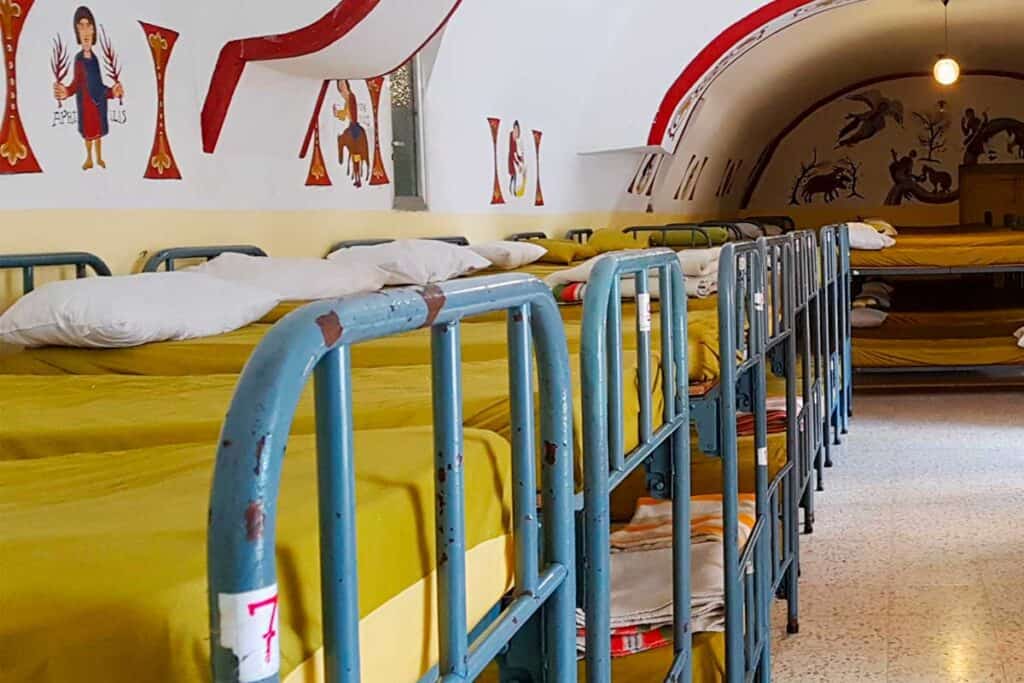
Sleeping in Albergues on the Camino — What to Expect
The first thing to learn is that no two albergue are the same. Some you’ll love—not for the comfort, but for the experience. Others you’ll not want to leave for the of crispness of the freshly laundered sheets.
If you’re planning to stay in the traditional parochial or municipal albergues, keep your expectations in check. Most are basic and you need to be self-sufficient.
And next, expect noise. Expect pilgrims who’ve never heard of Camino etiquette. Expect one or two who’ll happily strip off without a care. And expect smells, video calls, rustling, and yes—expect snores. There are always snorers.

Why Sleep is a Challenge on the Camino
There are many reasons why sleep can be a challenge in an albergue, but don’t let that put you off – it’s all part of the great Camino experience!
I’m pretty sure there are other reasons why it’s difficult to sleep in an albergue and yet the strange thing is, you do still sleep. You quickly find a rhythm and if you’ve walked over a mountain your body is often so tired that it does what it’s meant to do. Sleep.
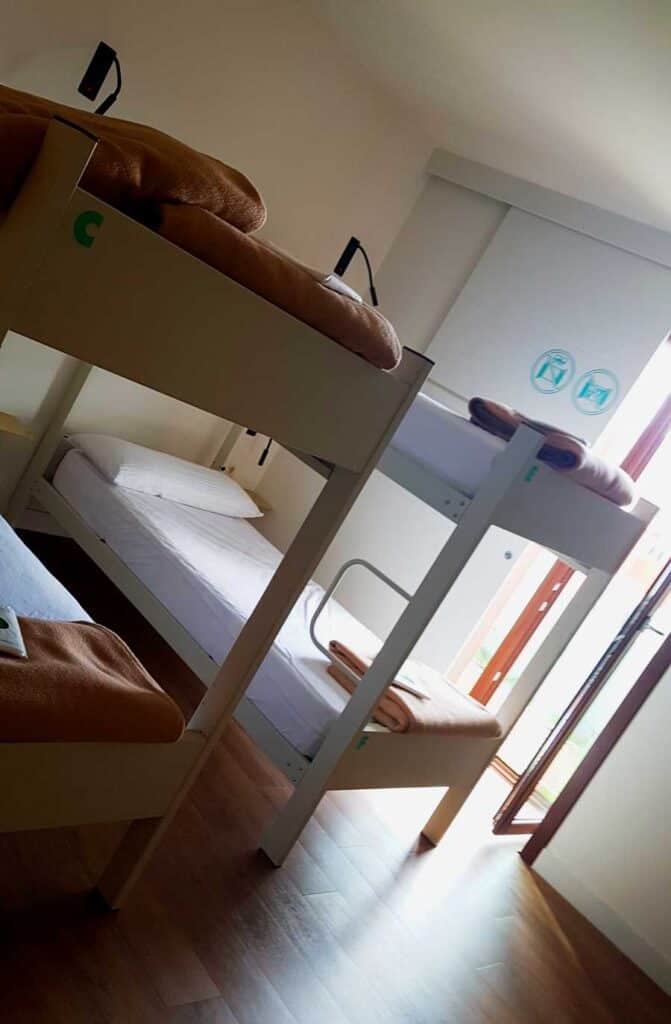
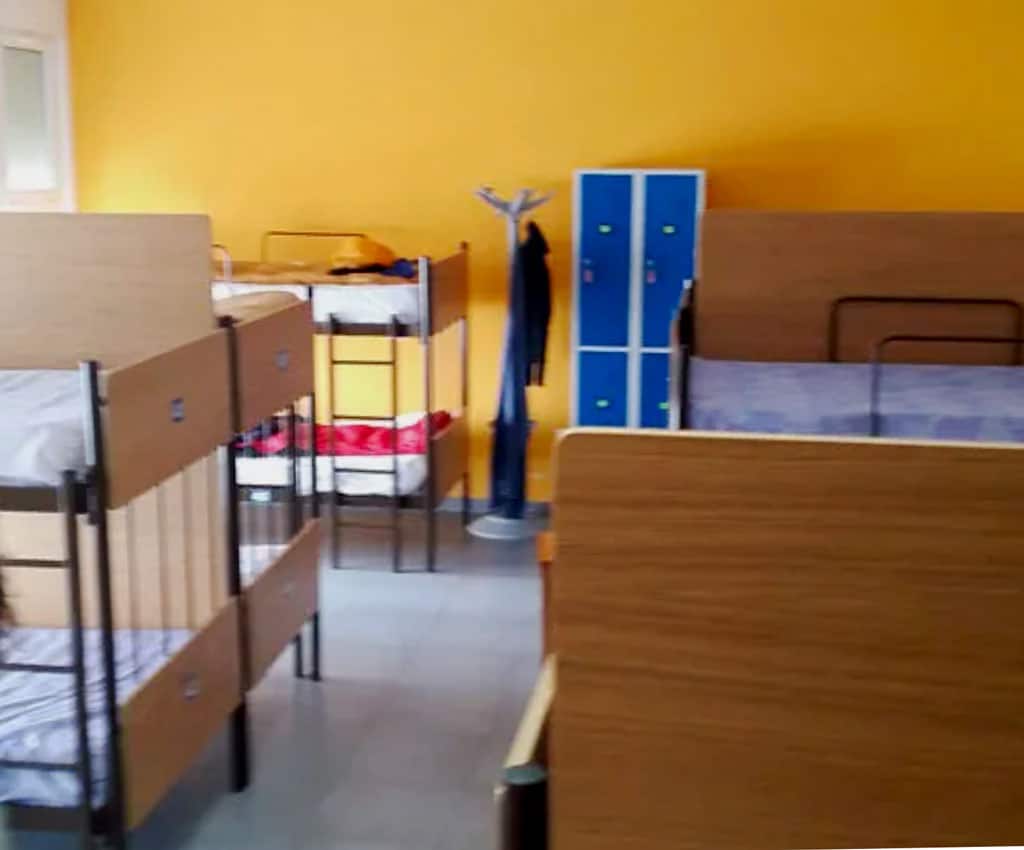
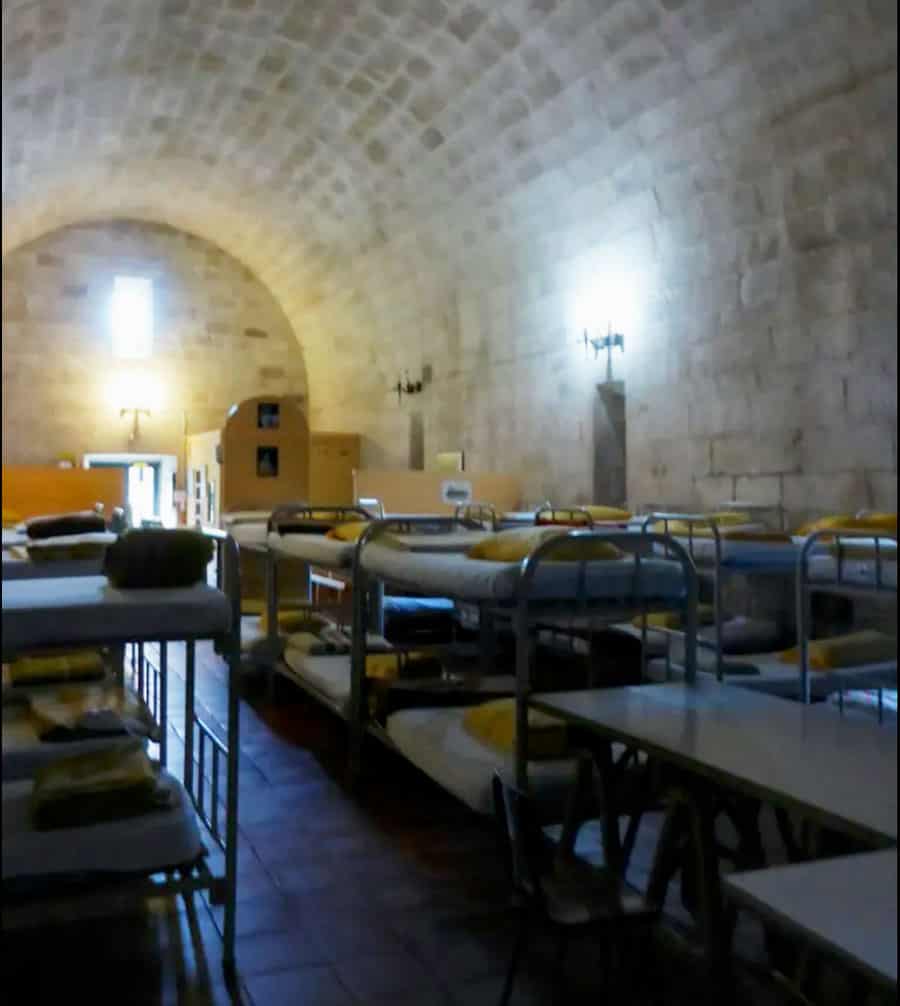
Can you Do Anything To Improve Your Sleep?
I love an albergue; I call them the pilgrim nest. Gerry is less keen but he’ll tolerate them for the experience or a good communal dinner.
For me albergues are a part of the Camino de Santiago. They maybe teach you a thing or two about how you cope and deal with difficult situations, but they’re also the place where friendships are formed and bonds are built.
After more than a decade of sleeping in albergue, I’ve learned that you can do a lot to help yourself sleep. I’ve learned what works for me and built a sleep system that travels with me around the world. Is it fool proof? No. There will always be something but most nights, I sleep well.
1. Charging Essentials for Sleeping in Albergue
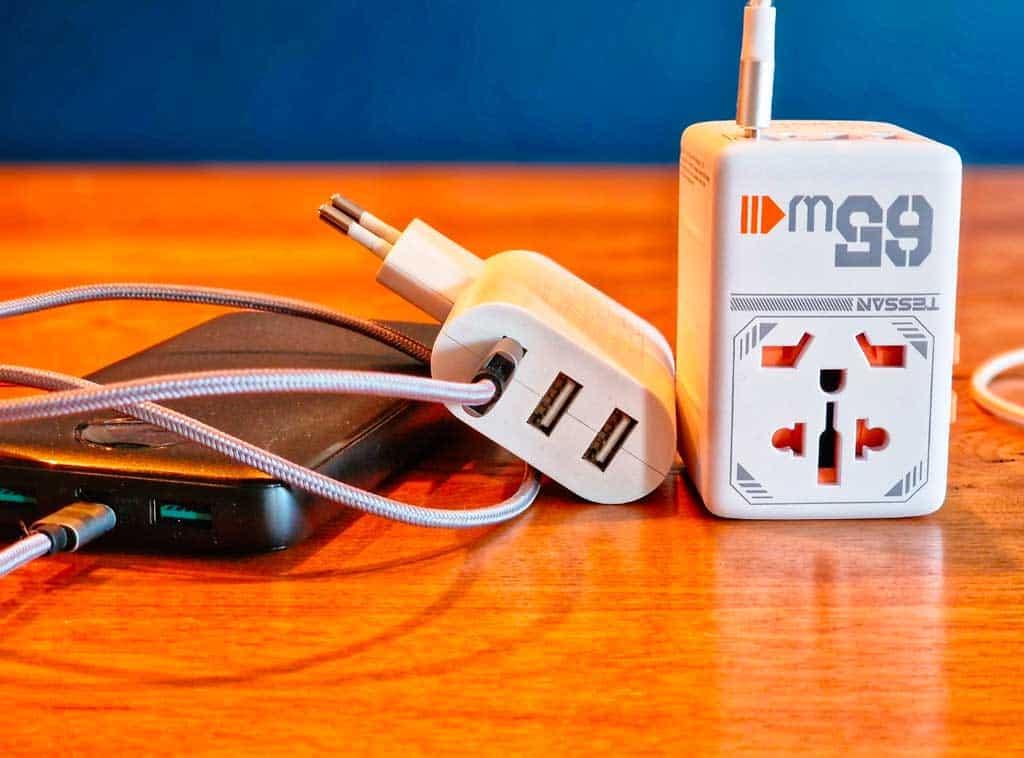
If you’re taking a phone, a digital watch, or camera you’ll need to think about charging. Some albergue have sockets beside each bunk and others have one central charging station that everyone has to share.
Do not lie awake at night worrying about your phone being out of sight. Indeed, don’t ever leave your phone unattended as petty theft is not unheard of. Charge a power bank instead.
I also carry a multi-USB adapter so I can share a socket with others—and I pack a spare USB lead because it’s the first thing to get left behind!
Top Tip : Never unplug someone else’s device to charge your own—it’s bad form, and guaranteed to make you unpopular.
2. Comfortable Sleepwear for Albergue Nights
I’ll be honest—on my first Camino, I simply slept in my clean clothes ready for the next day. It seemed practical at the time. But there’s a problem with that :
These days, I’ve learned my lesson. I carry a set of super-soft, super-light merino wool leggings and a base layer top—they weigh next to nothing, dry quickly, and double up beautifully as a base layer on really cold days.
And the best part? They’re incredibly comfortable—which, when you’re trying to sleep matters more than you might realise.
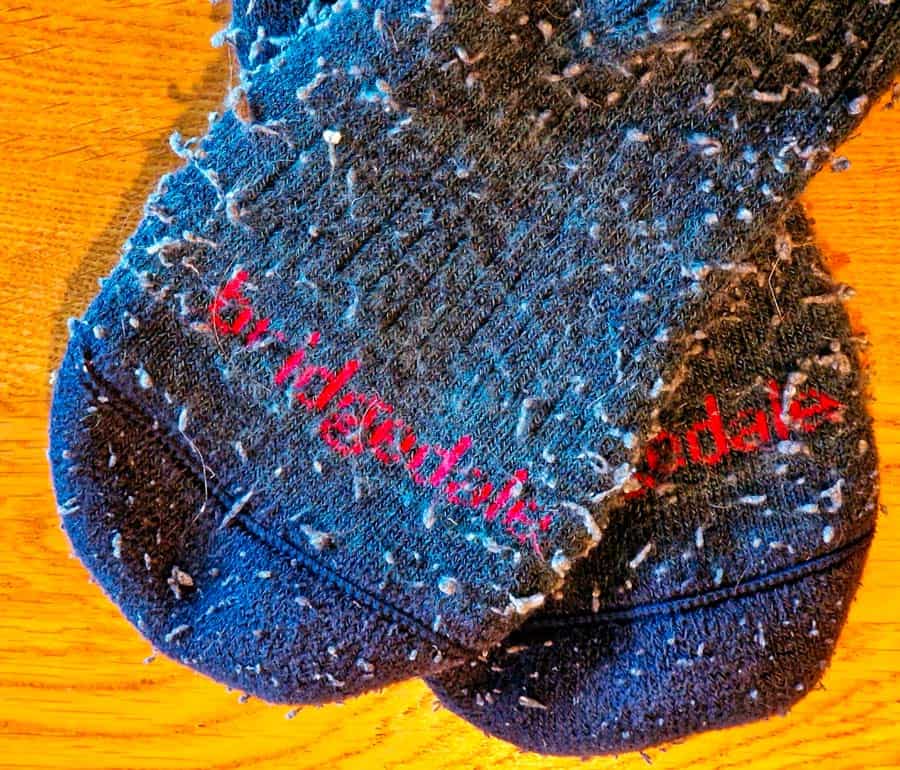
Top Tip: I get cold feet, so I always pack a pair of Bridgedale woollen socks. They’re soft, not tight around the ankle, and perfect as bed socks. And if it’s a cold morning? I can wear them straight into my boots.
3. Head Torch — For Early Mornings and Late-Night Bathroom Trips
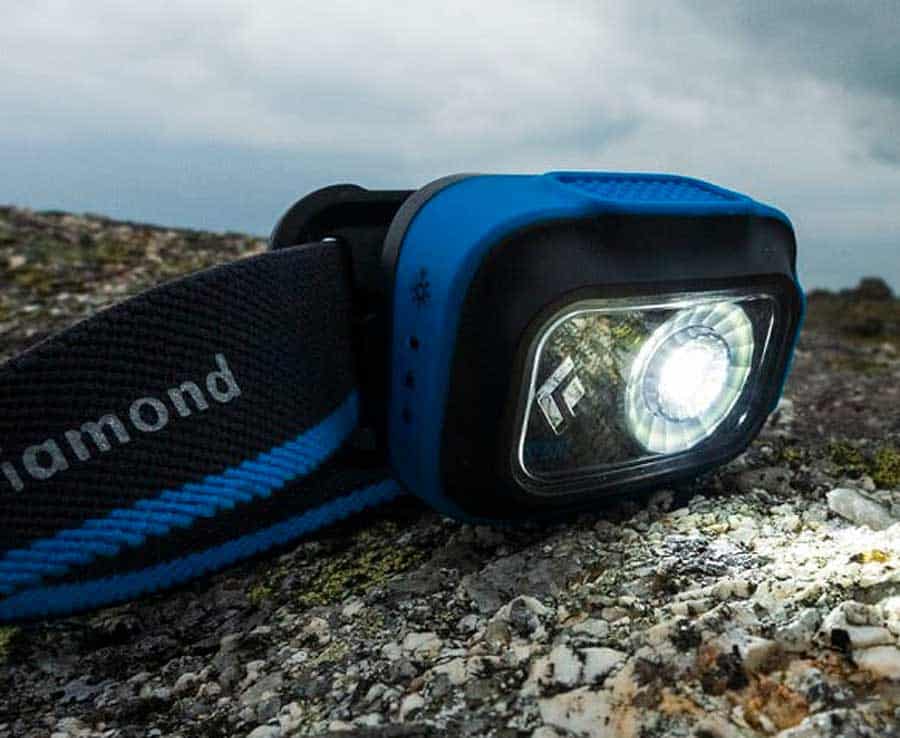
If you’re walking the Camino, a head torch is a must. Not just for early starts and late-night bathroom trips, it’s a safety backup if you find yourself needing a little extra light on the trail.
But please don’t be the person who straps it to their head and blasts the dorm with light. Instead, I pop the strap around my wrist and hold the torch in my hand. Most models have a red light setting – aim this soft light at the floor to help find your way.
These days, I carry a rather nice Black Diamond head torch but you can absolutely find decent, cheaper models on Amazon. Just make sure it gives you at least 200 lumens if you’re planning to use it out on the trail.
Top Tip : When you get home, always take the battery out. We carried our torches all the way from the northern coast of Spain, across the Primitivo Camino and only realised in the forest outside O Pedrouzo that our batteries had leaked and ruined the torches. Lesson learned! Don’t be like us—test your gear before you leave home.
4. Earplugs : Your Best Defence Against Camino Snorers
I know many of us have a love-hate relationship with earplugs but if you find a pair that works for you, you’ll wonder how you ever slept without them. And I kind of feel that if you’re sleeping in albergue, you’ll want to have something with you – just in case!
Do they block out every sound? No. They are not 100% but a comfortable earbud will dampen noise enough for you to fall asleep.
There are many options out there and you can spend a lot of money! Over the years, I’ve tried several but these are the ones I’ve tried and would recommend you test:
Foam Earplugs — Cheap, Light, and Worth Carrying
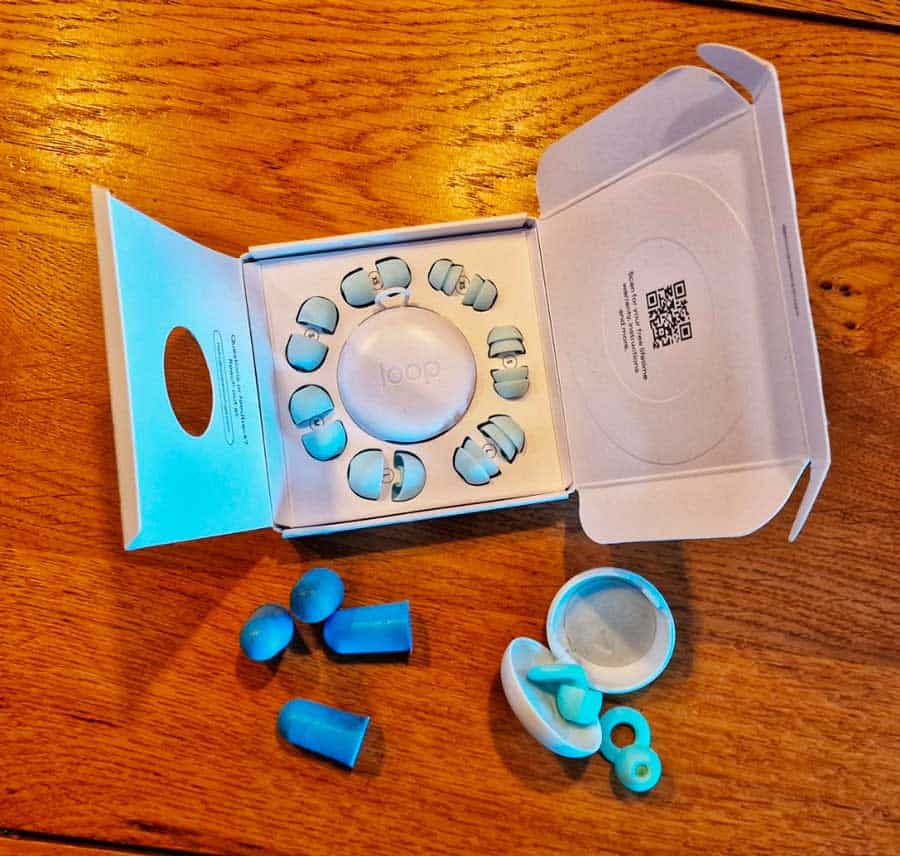
These squishable earplugs are cheap, light, and perfect for handing out when someone’s desperate at 2am. I used them for years and they do block sound well. I did find if I pushed them in too hard, I’d sometimes wake with a slight sinus-like earache. Nothing major, but enough to get me looking for alternatives.
Wax Earplugs — Eco-Friendly and Mouldable
Wax earplugs are easy to mould to the shape of your ear and do a decent job of blocking sound. Personally, they didn’t work for me, but I know several Camino friends who swear by these.
Loop Earplugs — My Personal Favourite
I love my Loops. I discovered these a few years ago, and I’m on my third pair—not because they’re lost or damaged but because I keep buying more and they keep improving them!
I originally bought Loops for travel—I can hear music leaking from headphones two rows away. But they worked so well, I upgraded to the sleep version.
They come with their own little storage box and you have a choice if bud sizes for the perfect fit. There’s also a Loop Accessory Cord which you can purchase – it makes them easy to find if one falls out at night.
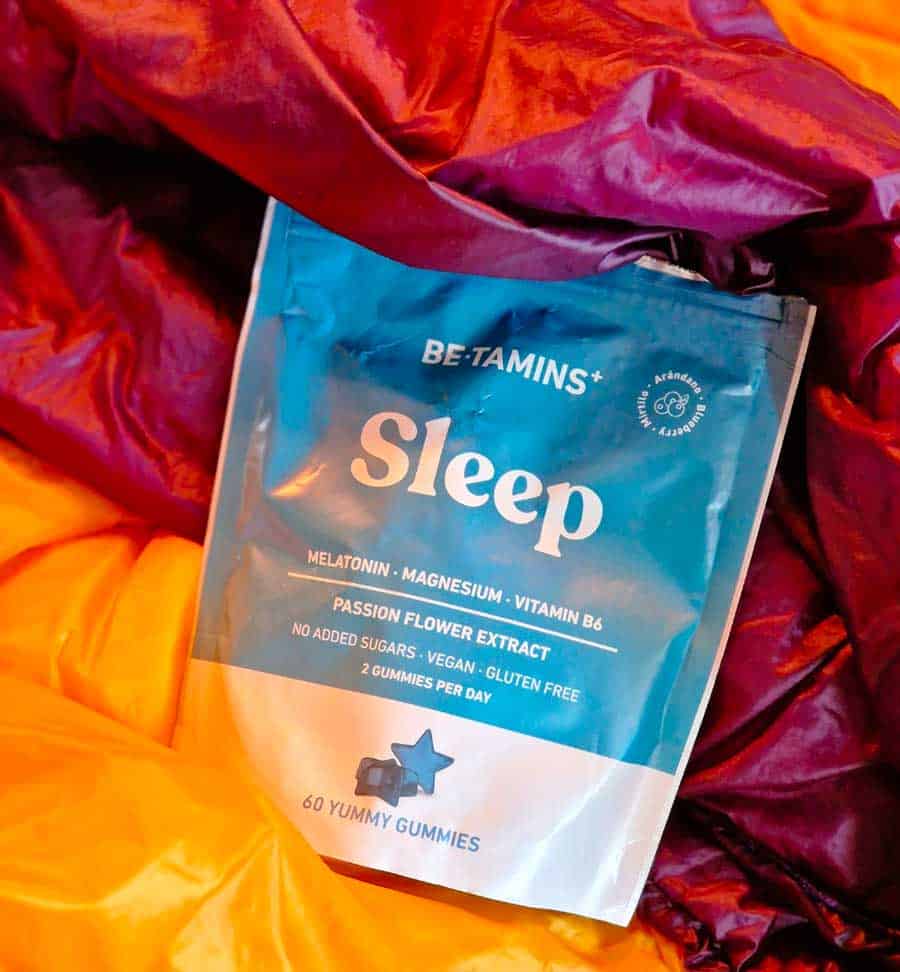
5. Using Melatonin to Help You Sleep Better on the Camino
For most nights on the Camino I don’t need any help falling asleep. After an early start, walking 25 kilometres, eating a good meal and getting myself warm and comfortable, I’m usually out like a light.
But when we’re travelling, crossing time zones, facing a long-haul flight, and for those times when sleep just won’t come I’ve found melatonin incredibly helpful for me. It’s now something I always carry when we travel.
Years ago, Gerry read a NASA article which explained how astronauts use melatonin to gently adjust their sleep cycles when crossing time zones. Not as a knockout sleeping pill but as a tool to help the body reset naturally.
We tried it and for me it’s been a huge help when I need it most; for Gerry it wasn’t so good and he finds he gets a headache. You can read and learn more here too : Johns Hopkins : Melatonin for Sleep
I’m not a doctor : Melatonin isn’t for everyone and it’s not a long-term solution for sleep issues. If you have health concerns or take other medications, chat with your doctor first.
6. Sleep Mask— The Camino Essential I Didn’t Know I Needed
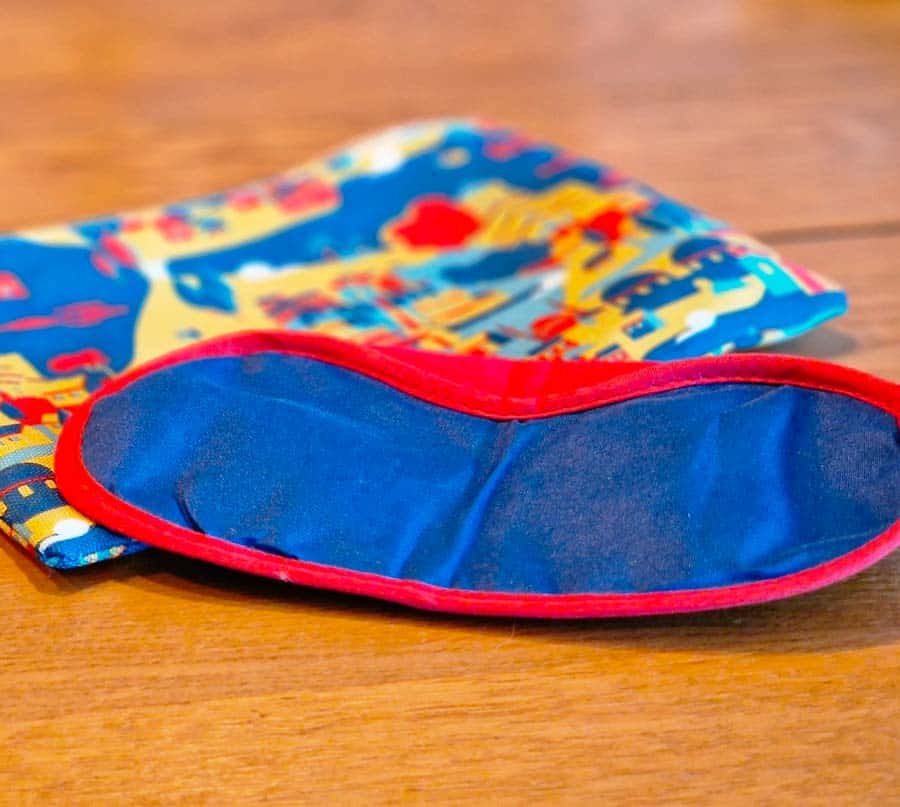
Who wears a sleep mask? I’ve seen them in movies—but does anyone wear one at home? And yet a few years ago, we flew long-haul with Turkish Airlines and in the little zipped amenity bag was lip balm, a toothbrush and paste, lightweight slippers (also worth keeping), and a sleep mask.
It was a 12-hour flight, so I thought, why not? I put on the slippers, popped in my Loop earbuds and pulled on the eye mask. Six hours later, Gerry woke me up! Light can disturb your sleep just as much as noise and that little bit of fabric can make a huge difference.
7. Sleeping Bag, Quilt, or Liner — What Do You Really Need for Comfort?
This is a question I see asked over and over in Camino Facebook groups and forums: Do I really need a sleeping bag? The honest answer is that only you will really know what you’re comfortable with. For me I like to be warm enough and I like a little extra weight from bed covers?
On my first Camino, I was obsessed with keeping my pack weight down. I took a silk liner and convinced myself it would be fine. I walked in September and October and whilst it was hot during the day it was cool at night. A silk liner just wasn’t enough.
Municipal albergues often don’t have blankets, and more than once I found myself waking from the cold. And it wasn’t until Astorga, on the Camino Frances that I found an open outdoor shop and could buy a sleeping bag!
I’m not a fan of sleeping bags especially mummy-style ones. So, when I walked the Via de la Plata, I looked for a lightweight alternative. I found a hiking quilt—and spent a ridiculous amount of money at the time. But ten years on I still have it and thankfully these days, you can find much cheaper models.
I sewed big buttons onto my silk liner and loop the quilt loops through them to stop the quilt sliding off in the night. It’s light to carry, it keeps me warm, and most importantly, my feet can move.

8. Small Bag To Keep Valuables Safe and Close While You Sleep
I know this suggestion isn’t going to physically help you sleep—but just like having a good charging system, finding a way to keep your valuables safe gives you peace of mind; which will help you sleep.
There have been occasional reports of petty theft in albergues. I have never experienced it myself but the worry that it could happen is real.
When I’m hiking I use my small over-the-shoulder hiking bag and it’s just big enough for my essentials like passport, Camino credential, money, phone and medication
Some albergue have a locker for your rucksack but there are a few things that regardless, I always keep with me. At night, I loop the bag around the bunk post, tuck it inside my sleep sack and sleep easy knowing everything’s close.


If You’re Sleeping in Albergues Please Don’t Be That Pilgrim
There are endless threads about Camino etiquette, and I could write a book on the things that I’ve seen that have left me open-mouthed in albergues! But to spare you a post the size of War and Peace here are just a few absolute no-no’s if you want to sleep peacefully and stay on friendly terms with your fellow pilgrims:
1. Bags on the Bed
Our backpacks get dirty, dusty, sweaty, sometimes worse. And yet, people plonk them on the bed as soon as they arrive. It’s unhygienic and it’s the fastest way to spread bed bugs.
Please—keep your pack on the floor or the designated racks. Some albergues ask you to leave your bag at the door and that’s not a bad idea.
2. Bug Sprays (and Chemical Cocktails)
I’ve read posts where people suggest spraying their beds with permethrin every night—or douse themselves and the bed in bug repellent. Please don’t.
Firstly, imagine the chemical build-up if every pilgrim did that night after night to every bed. And second, not everyone can tolerate those insecticides. If you need to apply repellent (and I do), step outside and do it in the fresh air—never on the beds or in the dorm.
3. Essential Oils & Strong Smells
It might seem lovely to pop a bit of lavender oil on your pillow but what if everyone has the same idea? Suddenly the dorm is swimming in a fog of essential oils and half of us are sneezing or nursing headaches.
Please—save the oils for home, or at least check with those around you first.
4. Head Torches & Packing at 4am
We’ve covered this already but it bears repeating. Don’t strap your head torch on in the dorm and shine it around like you’re searching for lost treasure.
If you’re planning a pre-dawn start, pack your bag the night before. Take it out of the bedroom and into the common room to finish up—quietly—while the rest of us catch a bit more sleep.
5. Laundry on Bunks
I’ve seen pilgrims hang wet laundry all over bunk ladders. It might be a good solution for you but spare a thought for the poor soul climbing down in the night trying not to get tangled in your undies.
I carry a little Sea-to-Summit washing line which is perfect for drying a few bits without turning the dorm into a laundrette.
6. Silent Mode : Volume Off Please
I try to have patience but this one… mmm it’s a weakness. The pings, the dings, the YouTube videos are all noises we don’t need to share. Please, switch your phone to silent when you arrive in the albergue or pop in your earphones and let the rest of us have some quiet time.
7. And Last But Not Least : Be Kind
Reading this list back, I sound like a grumpy old woman—but I promise, I’m not! If the Camino teaches us anything, it’s patience. You can’t expect to grab a bunk bed for €10 and have everything perfect.
The truth is, most of us are imperfect. We make mistakes, we get tired, we get grumpy. Sometimes we’re selfish, and often, we simply don’t realise we’re doing anything wrong. So whatever else happens—be kind.
We have no idea what kind of day someone’s had, what they’re carrying—physically or emotionally—and sometimes, a little patience and understanding might just make or break someone else’s Camino.

What About Private Rooms — Will You Still Be a Pilgrim?
I’m not a fan of the whole true pilgrim debate! It’s a little bit of one-up-manship and for me, has no place on the Camino. So here’s my two-penneth worth : if you’re overwhelmed by albergue life or you simply can’t face it—then don’t.
There’s no rule that says you must sleep in a bunk bed. There’s nothing on the Pilgrim Credential or Compostela that asks where you slept. No one cares.
I love albergues— for all their faults they are part of my Camino experience and when I guide my groups, I try to stay in a few because it adds something to the journey. However, Gerry really does not like to stay in an albergue. He’ll tell you that he’s reached an age where he wants his own bathroom—and very little will change his mind.
There are many solutions and all are perfectly ok. Many private albergues offer both bunks and private rooms and in some you can book a private bedroom while sharing the albergue bathroom. I like to mix and match – I’ll stay in a few favourite albergues but then enjoy my own space for a night or two in a private room and once in a while I’ll maybe book a parador!
If you need a good night’s sleep then book a room and enjoy the peace… unless, of course, the walls are very thin and there’s a champion snorer next door!
Want to learn more about the Camino? Then hop over to my Free Private Facebook Group | Walking The Camino De Santiago.

So Can You Ever Sleep Well In An Albergue on the Camino?
It takes some getting used to—but yes, it is totally possible to sleep well.
The trick is to experiment at home. Test your sleep system like you test your shoes. If you’re uncomfortable sleeping in your hiking gear at home, then trust me, it won’t feel any better in an albergue. If your silk liner feels cold in your bedroom, it won’t warm you on the Camino either.
However, if you are comfortable and warm and with the right earplugs, a cheap sleep mask, and a place to lay your head—you will sleep. After a few days, you’ll settle into a rhythm and you’ll start to relax into albergue life.
And like everything in life, there are always lessons to learn—namely a little preparation really does go a long way, patience is a virtue and it costs us absolutely nothing to be kind.
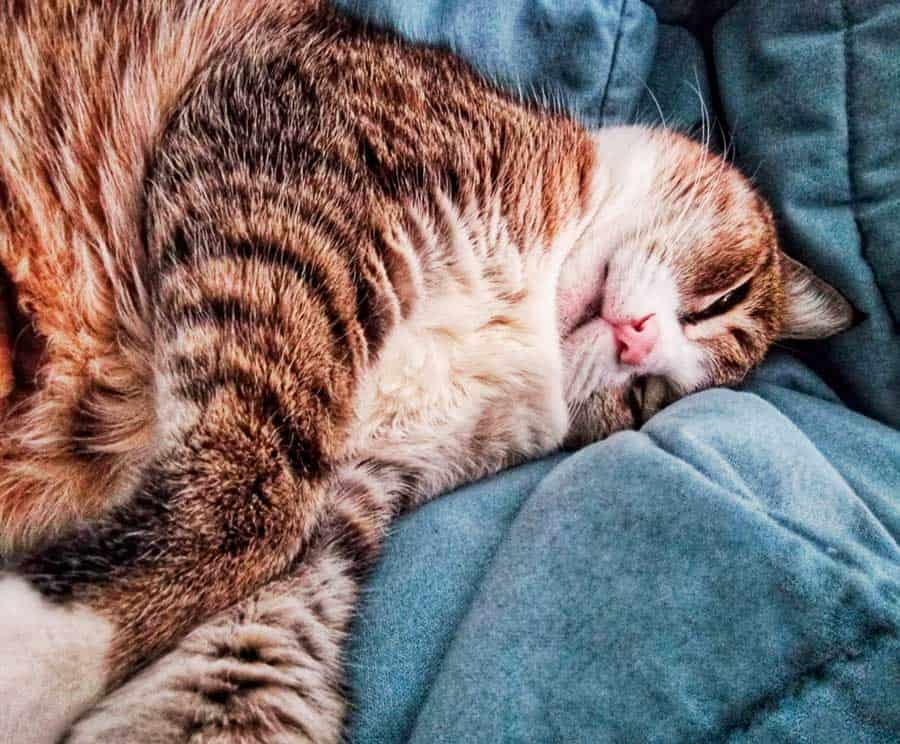
Sleeping in an albergue like everything else on the Camino is a choice. But it is possible to sleep well. Experiment at home and if you get it right you’ll sleep as well as our cat does on on a sunny day; even with her eyes open!
Thanks for Walking This Far With Me
If you’ve made it this far—thank you! I do tend to write long posts but I really hope this guide helps you feel more confident (and a little more prepared) when it comes to sleeping on the Camino.
If you’d like more tips, stories, and practical advice, you’ll find plenty more in my Camino de Santiago guides. I’ve written detailed step by step daily guides which are free to use along with many other tips and tricks.
And if you’re planning your own walk—or just dreaming about it—come and join us in my private Camino Facebook Group. It’s a friendly space full of people just like you, asking questions, sharing stories, and supporting each other on this incredible journey.
Don’t Forget Travel Insurance
Whenever you travel, you should have great travel and medical insurance. None of us expect anything bad to happen, but in the event of an incident, you want to be sure that your insurance will cover you.
I’ve ended up in hospital in Peru, Indonesia, Portugal, Japan and Ireland. Every time my insurance took care of everything. I would never leave home without full and comprehensive insurance.
MondialCare : Due to increasing limitations, mainly due to age, we have recently switched to MondialCare for our travel insurance. We have taken an annual policy at a very reasonable cost that includes medical and other travel cover. There are no trip length limits and the upper age for cover is 84. For Camino walkers and travel in Europe they have a low cost Schengen policy with no age limit.
TrueTraveller : We have used this policy and were very happy with the cover, especially considering our ages and pre-existing conditions.
Globelink: We have used and recommended Globelink for years and not heard of any issues. They are a great choice for European and UK Residents.
Genki : This is an EU based company offering long term policies for nomads and travellers. Their monthly rates are very competitive for longer trips too.
Try Our Trip Planning Tools
Start here to find the best accommodation
Start here to find flights for your adventure
Start here to find the best sightseeing tours

Hey I’m Colleen. I’m married to Gerry, we’ve three fabulous kids and been living in France for almost two decades. I fell in love with Spain in the 1980s and I’ve walked 1000s of miles along the Camino de Santiago. Now we’re exploring and walking the world and I can’t wait to share what we’ve learned!