
Home > Camino De Santiago Guide > Will I Find a Bed on the Camino?
Will I Find a Bed on the Camino? What to Do If It’s Full
Some of my links may be affiliate links. If you make a purchase, I might earn a small commission at no cost to you. See our Privacy Policy for details. And this post was crafted with care and occasional typos by Colleen (and not AI)
Will I find a bed on the Camino? What should I do if everywhere is full? Should I book ahead?
These questions and concerns appear almost daily in forums and Facebook groups. And there’s a reason for that. It’s a genuine concern for most new pilgrims… and even a few more experienced ones too!
I have walked thousands of Camino kilometres. I have walked in peak seasons, low season, Holy Years, and on quiet winter trails. And yes, I have always found a bed. So let me allay some of your fears and show you how the Camino works in practice.

Is It Really True That All Beds Can Be Full?
Yes, there have been days when pilgrims arrived in town and there were no beds left. Indeed I’ve been that pilgrim.
Many years ago I walked from Roncesvalles during a storm. Pilgrims stopped early. Every door we knocked on was full. We ended up walking almost 40 kilometres that day until one very kind parochial albergue squeezed in three very wet pilgrims and gave us refuge.
That experience taught me something important. If you arrive somewhere and there is no bed available, people will try to help you.
Local councils open sports halls. Municipal or parochial albergues find a mattress in a corner. Hospitaleros ring ahead. Even the local fire station has been called into action. Taxis ferry pilgrims off Camino. In short, there is usually a solution.
Do Beds fill? Yes but:

Why Do So Many Pilgrims Worry About Finding a Bed?
The Camino does get busy. There are bottlenecks. There are public holidays. There are spikes when beds genuinely fill quickly. And this is talked about a great deal online; even when the problem is easily fixed. Not finding a bed is a genuine cause for concern.
There are many reasons why finding a bed can sometimes be tricky. I know from experience that the first weekend in May is often extremely busy. It’s a national holiday in Spain and in many European countries. Pilgrims walking in sections often choose that long weekend to walk a section of the Camino. If I’m walking at the start of May then I always book ahead for a few days.
May and September are known to be peak season. During this time there are many online posts saying the accommodation is “completo” everywhere or folks will talk about the race for a bed. And sometimes it’s true. But sometimes it creates a false sense of panic that causes other pilgrims to change plans unnecessarily. And rather than help, this can make matters worse.
The reality sits somewhere in the middle. Bed shortages can happen. But there are services in place to help pilgrims. And whilst one popular albergue may be full, just down the road another may be empty.
Whilst I do understand the concern, please try not to let the fear or the idea of the bed race dominate your Camino planning. Think of it more like another practical decision, like choosing your shoes or your backpack.

What Happens If I Arrive and Everything Is Full?
First, don’t panic. I’ve been in those shoes.
If your chosen albergue is full, ask them for suggestions. Hospitaleros are used to this. They often know of:
When I volunteered at the Pilgrim Office in Saint Jean Pied de Port, late arrivals often wanted the municipal albergue because it was cheapest. By the time they arrived, it was full. But we could usually find somewhere else by calling around.
When I volunteered in Nájera, we had a phone number for the local sports hall in case every bed in town was full. Los Arcos and Zubiri had similar options. In Saint Jean Pied de Port, pilgrims have been known to sleep in the fire station. And I’ve slept in a sports hall when walking the Via de la Plata.
It is rare. But it happens. And there is almost always a solution.
Feeling overwhelmed with planning your Camino?
Instead of searching endlessly, take a look at my Camino Planning Workshops. I turned over a decade of experience into a library of 20+ hours of practical, short, easy-to-follow videos, answering every question a pilgrim could have and plenty you’ve not thought to ask yet!
Will Someone Help Me?
Yes.
If you need help, head to a municipal or parochial albergue. They are often best equipped to assist. Even if they are full, they usually know what to do.
If there is no municipal, ask in a local bar. Rural Spain still works very well on word of mouth. There may be a room in someone’s house that never appears online.
And, as a last resort, go online. Ask on the Camino Forum or an active Facebook group. Or contact the local ‘Friends of the Camino’. Very often someone with local knowledge will have a solution we’d never consider.

Do I Really Need to Book Ahead on the Camino?
I have walked more than twenty Caminos. I have:
The bed I chose never defined my Camino.
I know for some pilgrims, the idea of booking ahead is just not part of their plan. And that’s ok. But for others, and I would count Gerry in that group, booking ahead just makes for a better experience. There is no right way to do this.
Book ahead if it works for you. Stay flexible if that suits you better. And remember, you can change your mind.

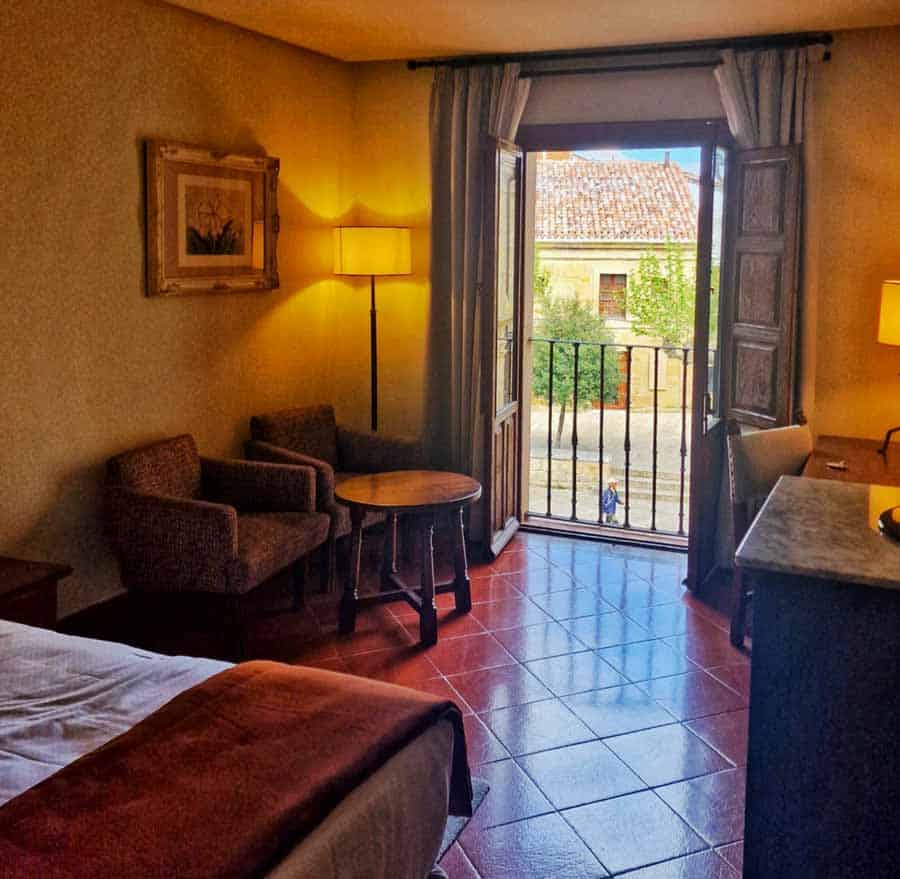
When Booking Ahead Makes Sense
Booking ahead can offer:
When I walk with Gerry, we usually book. He prefers a private room and bathroom. Those fill first so we just need to plan. He also likes to have the freedom to wander and go off piste during the day. We never know when we’ll arrive at our destination but it’s usually later than most. So we book.
Booking gives me freedom during the day. I can walk slowly. Stop for lunch. Visit churches. Sit on a bench. I am not chasing a bed.
If booking makes you calmer, then book.
Top Tip: If you are walking from St Jean Pied de Port those first few days often fill in peak season. If you wish to break the stage to Roncesvalles then you really must book ahead. Indeed I recommend that pilgrims book their beds until Pamplona. Give yourself a few days to adjust and book those beds before leaving home.
When Not Booking Works Beautifully
Not booking gives flexibility.
On my first Camino, I aimed for 20 to 25 kilometres but stopped when I felt like it. One hot day I reached Granon, with a headache and feeling exhausted after a noisy dorm and little sleep. I saw a small sign offering private rooms. I stopped early and slept well. Having that freedom mattered.
When I struggled with blisters, I paused in Estella and then walked half days. Not booking ahead made that possible.
If you are happy with bunk beds and a little uncertainty, not booking can be wonderful.
For many pilgrims, the idea of letting go and trusting that all will be well is very much part of their pilgrim experience. Whilst it can be trickier during the busiest of days on the busy routes, if I were walking alone, I would be tempted to just walk and see what happens.
Those who prefer to not book will tell you that letting go is where the magic and the transformation happens. And I get that.
Booking or Not On Busier Routes
Many will say there are plenty of beds and plenty of choice and on the busier routes that is true.
On the Camino Frances or Portuguese Coastal there are many beds. But there are also many pilgrims. And on the Portuguese coast you are also competing with holidaymakers.
There is plenty of accommodation. But don’t assume it guarantees your first choice.
Booking or Not On Quieter Routes
There are trails with less traffic than the Camino Frances and then there are trails with very few pilgrims. The two should not be confused.
Routes like the Primitivo, Camino Ingles or even the Vía de la Plata do have fewer pilgrims. They also have fewer beds. And there are fewer services between stages, so choices are limited.
I know the Primitivo and the Ingles can both fill beds in peak season. However, routes like the Levante will probably never have a problem as you’re lucky to see another pilgrim.
If I were to walk the Primitivo in 2027 during a Holy Year, I will definitely plan and book. If I walk in October even on the busiest of trails, I probably won’t. And even when you’re walking, read the road. Is it busy? Are beds tight? You can adjust your strategy accordingly.
Busy Months vs Quieter Months
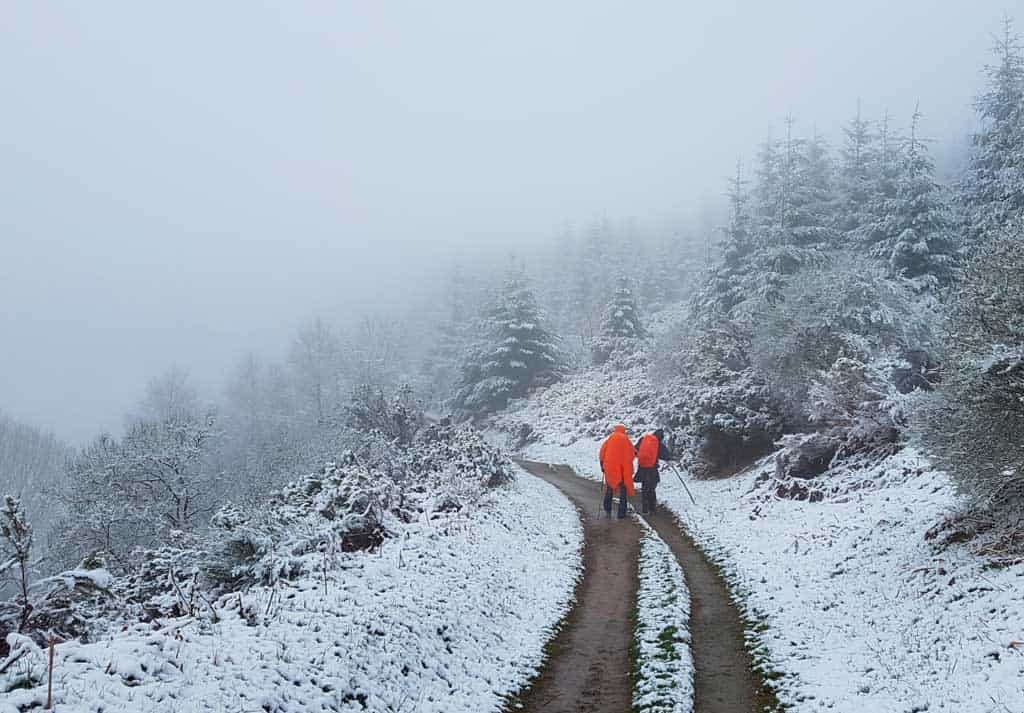
There are very clear peaks and troughs and the difference is quite remarkable. And the change between seasons switches dramatically. Pilgrim Office statistics show clear peaks:
Easter can be busy and major local festivals like 25 July in Santiago (the feast of St James) or 12 October (Spain Day) or wine festivals in Leon or Logrono may all create localised problems. And of course in Holy Years pilgrim numbers swell.
I would never try to find a last-minute bed in Pamplona during San Fermín and accommodation in Santiago de Compostela sells out around the Feast of Saint James.
When I volunteered in Nájera in August I was expecting chaos and yet we only filled every bed once. I think it’s important to remember that the online perspective might be very localised and doesn’t always match reality. If you have concerns you can always call ahead and check.
In 2025 I walked the Camino Frances in May. Online there were photos of busy busy trails and yet we walked on quiet paths. We avoided the busy stage ends, we left a little later in the day. And if we found a bubble, we paused until it passed.

Can You Book Albergues?
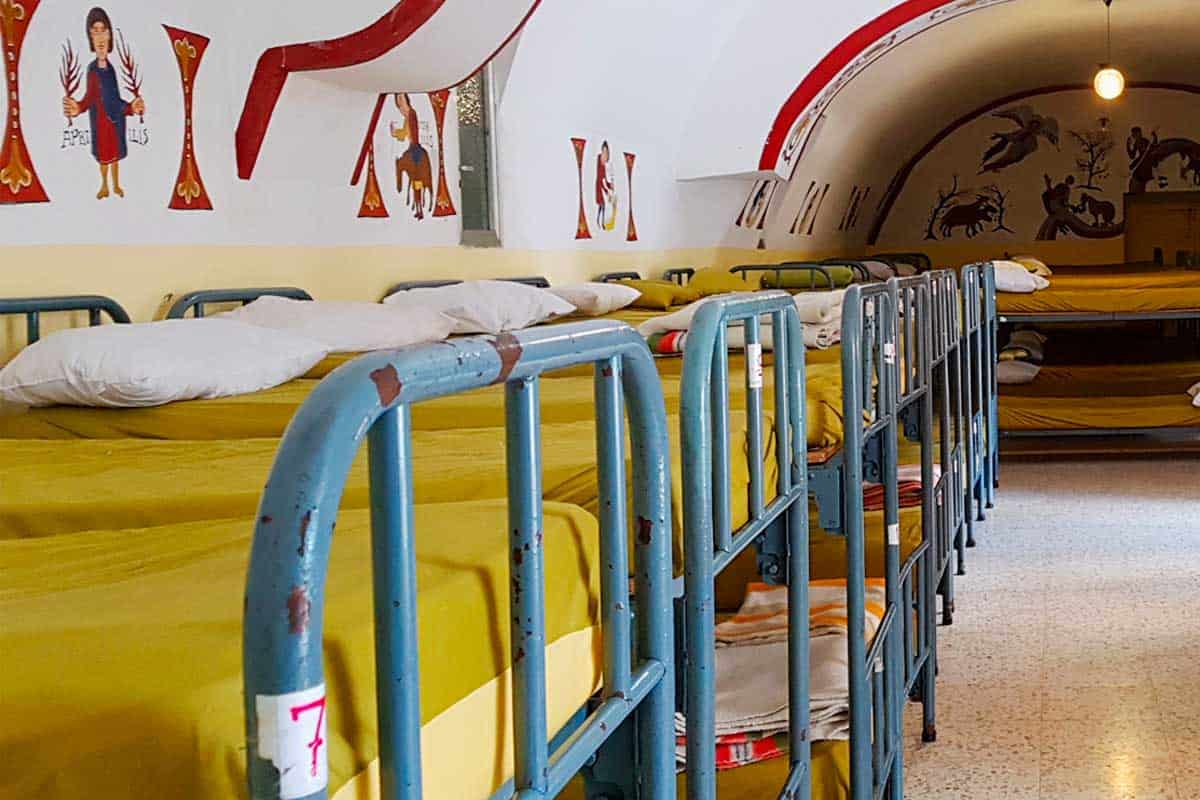
There are four main types of pilgrim albergue:
Most municipal and parochial albergues do not take reservations. Some allow same-day phone calls. Policies do vary depending on the time of year. Remember that they aren’t always manned full time so there is no-one there to answer the phone and if manned by volunteers there isn’t one point of contact.
Most private albergues and hotels do take bookings. Many use WhatsApp. Many appear on booking platforms.
Do Remember! If you book and cannot arrive, always cancel. Owners lose money and turn others away if you do not.

I Only Want to Stay in Municipals Because They’re Cheaper
It’s true, municipals offer excellent value. I volunteered in Nájera and for six euros pilgrims had:
But these beds fill quickly because many pilgrims choose to stay.
If your budget is tight, build in contingency. If the municipal is full, you may need a private room. If that is going to bust your budget, consider sharing with another pilgrim if needed. Either way, do allow a little extra because 6€ beds are not guaranteed.
Romance aside, also remember that municipal albergues can mean large dormitories and they can be noisy. Kitchens can be chaotic. Showers can be busy. And there is not always a happy communal dinner with pilgrims singing around a guitar.
I love pilgrim albergues; I call them Pilgrim Nests. But go in with realistic expectations. And if you loved your stay then you are welcome to donate a little more to help us maintain these wonderful spaces.

A Word About Donativo Albergue
Donativo does not mean free. They are an ancient system of providing a bed for pilgrims, and those pilgrims pay what they can. If you have nothing then you will be found a bed. But very few pilgrims have nothing.
I recommend that you pay what you would pay in the muni. If the average cost is 10€ for the bed then pay this. If you can afford a little more then be generous.
I know that the system is abused. I have seen photos of pennies and even buttons being dropping in the donation box and as a result this glorious system of pilgrim accommodation is slowly disappearing.
Don’t let our generation of pilgrims be the reason why they close. Donativo albergues have existed for a thousand years. Let’s ensure they can continue.
What If I Only Want To Stay In Private Rooms?
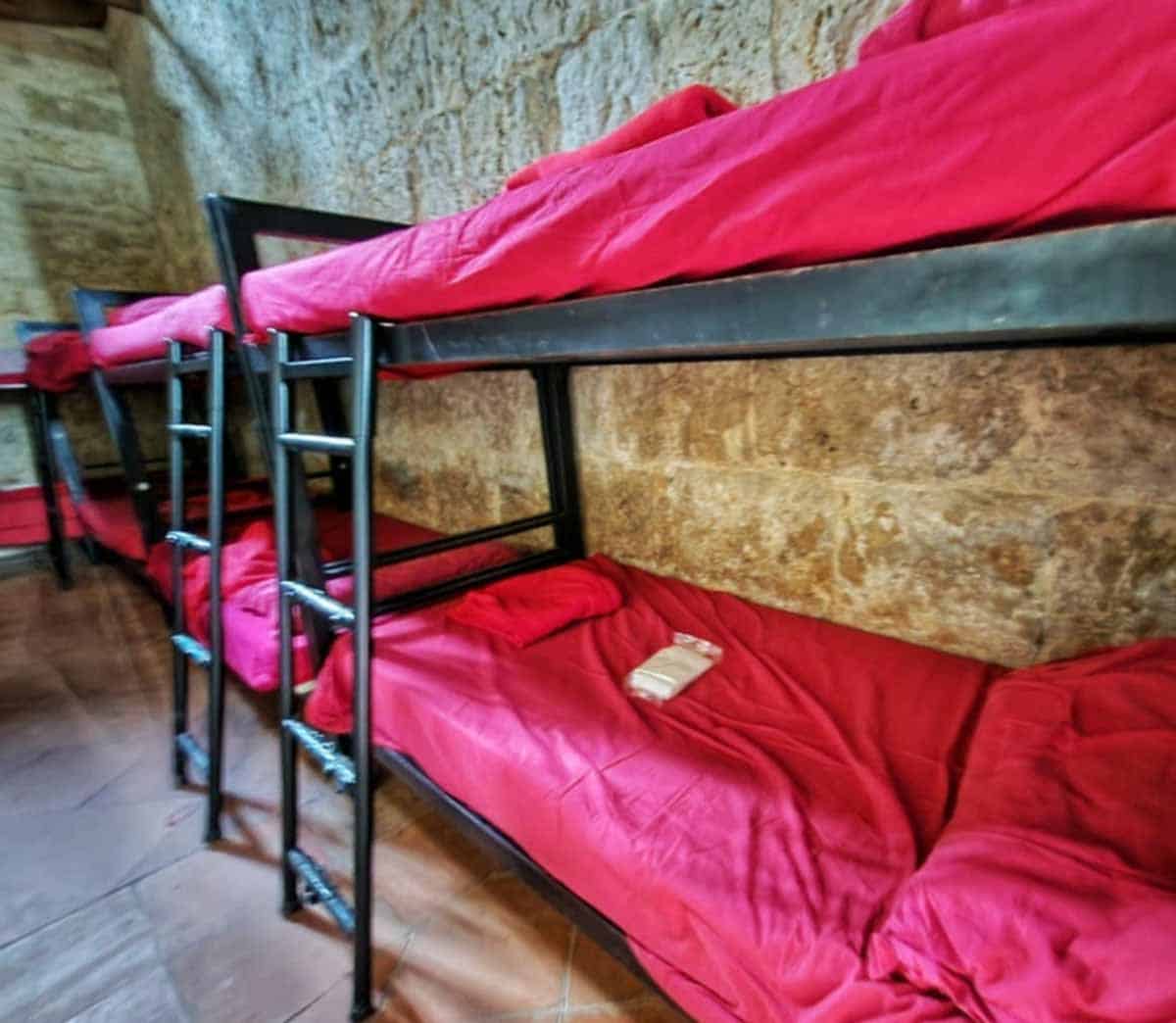
Then you’ll be like Gerry! And that’s a good thing! But remember, private rooms fill first.
If you know your dates, and your flight is booked then start booking your beds. Many Spanish accommodations release availability in autumn for the following year, so your first choice may look full but it’s perhaps because dates have not been released yet.
If private ensuite rooms are gone:
There is nowhere in the rule book that says you have to sleep in a bunk bed. Kings and queens walked the Camino and they didn’t. You are allowed comfort and a few special stays. But be aware that those beds fill first so start booking!
How to Reduce the Risk of Not Finding a Bed
For many pilgrims the solution is to rise at 5am and queue outside a closed albergue in a line to guarantee their spot. This is far from ideal and may be try instead:
I dislike the advice that says you must rush to secure a bed. I also don’t like walking in the dark or queuing in line for an hour for my bed. This can turn the Camino into a race. And there are calmer better ways to enjoy your Camino.
Frequently Asked Questions
As I mentioned at the start, concerns about finding beds are voiced daily and as the season starts and pilgrims start walking in earnest, the more there are requests for help. Here are a few of the more frequently asked questions.
1. What happens if I arrive and all albergues are full?
First, ask at the municipal or parochial albergue. They often know of alternative beds, nearby villages, or emergency overflow options. In busy periods, local councils sometimes open sports halls.
It’s rare to be left with no solution. Worst case is that you may need to taxi off the Camino and return the following morning.
2. I’m Starting My Camino In A Few Weeks; is it too late to book?
May and September are peak months and April is getting more popular. If you want private rooms or are walking in a group, booking ahead is sensible.
Check on the major booking sites and see what is available. And where you can, book now. I always recommend booking the first few days regardless.
3. Do municipal albergues take reservations?
Most do not. Some allow same-day phone reservations but will only hold the bed until a certain time. Most municipal albergues do operate on a first-come, first-served basis. Many also do not accept any form of bag transportation either.
Policies vary by town and by season but do not expect to be able to reserve.
Private albergues however, usually do accept bookings.
Top Tip: It’s worth calling ahead to check availability. We often received calls from pilgrims on the road and could tell them of the availability at that time. And sometimes, you maybe able to hold a bed for an hour or two. But don’t depend on this.
4. Do I really need to start walking at 5am to secure a bed?
No. Arriving early can help during busy periods, but there are other strategies such as stopping between traditional stages or booking one or two nights ahead.
Whether you need to start walking at 5 am depends heavily on the season, your chosen route, and your accommodation preferences, but for most, it is not necessary.
I don’t like to walk in the dark. You miss the view and can also miss the arrows. I also feel that your Camino becomes just about getting there and not about the journey itself.
Top Tip: The only time I will walk early is during very hot weather and I want to escape the heat of the afternoon sun.
5. Has anyone ever been left sleeping outside?
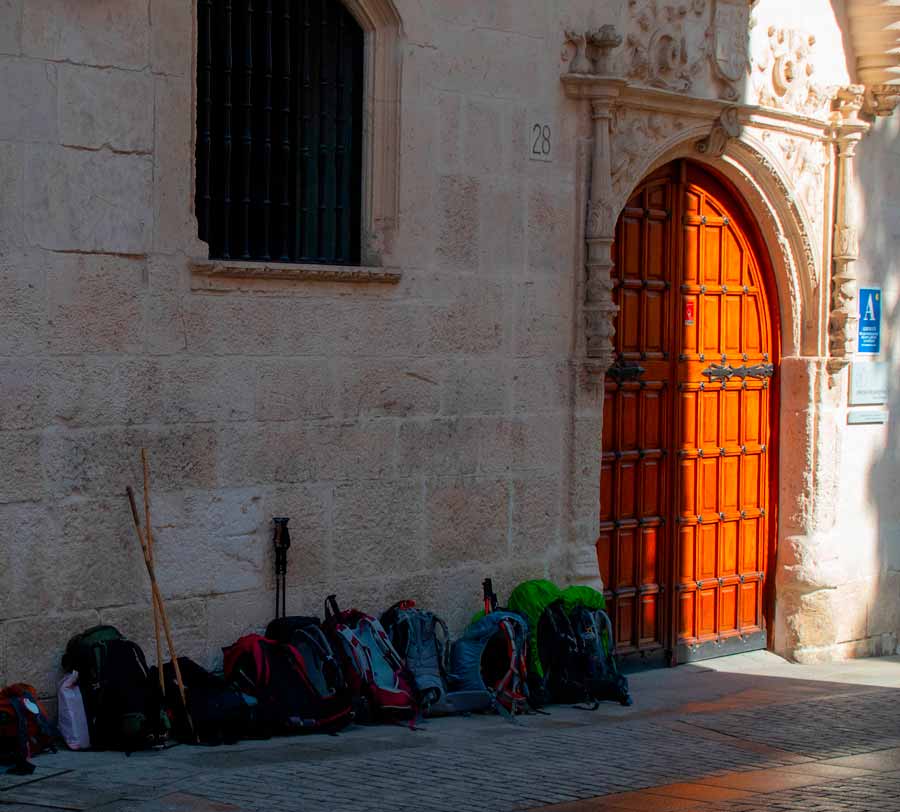
In my experience, no. I have seen towns fill up but I have also seen volunteers, the local authorities or local people step in to help. There is usually a solution. Even if that means staying off the camino for the night.
Some pilgrims choose to sleep outside but this is rare and it’s worth noting that wild camping is restricted in Spain.
So… Will You Find a Bed?
I can’t promise it absolutely. But I’m pretty confident that you will. In twelve years and hundreds of nights, I have never seen pilgrims left sleeping outside with no help. I have seen towns full but there are solutions to this.
There are options. There are volunteers. There are sports halls. There are taxis. There are alternatives.
Whether you choose to book ahead or not should match your personality, your route, your season and your own comfort needs.
Book if that makes you happier. Don’t book if you prefer the spontaneity; although if this is your choice then also allow for some flexibility in your schedule. There is no freedom if you only have ten days to get from A to B and you must stick to your schedule.
I guess my last message would be do not let the fear of not finding a bed stop you from walking the Camino.
The Camino is many things. It may test your comfort levels. It may test your resilience. It will test the limits of how uncomfortable you are willing to be. Maybe it is all those things. But I’ve always found a bed.

Are You Planning To Walk the Camino?
If you’re walking soon and want detailed daily guidance, I’ve written full stage-by-stage guides for several Camino routes that include practical details like stages, distances, accommodation options I know and where to find services.
You can find everything on my Camino de Santiago page or more specifically :
I Created Six Camino Planning Workshops!
I answer hundreds of your Camino questions — with videos, downloads and links covering routes, travel, stages, accommodation, daily life, and packing — all in one place. It’s like getting advice from a friend — who’s walked the Camino 23 times! All for just $35!

Don’t Forget Travel Insurance
Whenever you travel, you should have great travel and medical insurance. None of us expect anything bad to happen, but in the event of an incident, you want to be sure that your insurance will cover you.
I’ve ended up in hospital in Peru, Indonesia, Portugal, Japan and Ireland. Every time my insurance took care of everything. I would never leave home without full and comprehensive insurance.
MondialCare : Due to increasing limitations, mainly due to age, we have recently switched to MondialCare for our travel insurance. We have taken an annual policy at a very reasonable cost that includes medical and other travel cover. There are no trip length limits and the upper age for cover is 84. For Camino walkers and travel in Europe they have a low cost Schengen policy with no age limit.
TrueTraveller : We have used this policy and were very happy with the cover, especially considering our ages and pre-existing conditions.
Globelink: We have used and recommended Globelink for years and not heard of any issues. They are a great choice for European and UK Residents.
Genki : This is an EU based company offering long term policies for nomads and travellers. Their monthly rates are very competitive for longer trips too.
Try Our Trip Planning Tools
Start here to find the best accommodation
Start here to find flights for your adventure
Start here to find the best sightseeing tours

Hey I’m Colleen. I’m married to Gerry, we’ve three fabulous kids and been living in France for almost two decades. I fell in love with Spain in the 1980s and I’ve walked 1000s of miles along the Camino de Santiago. Now we’re exploring and walking the world and I can’t wait to share what we’ve learned!