
Home > Camino de Santiago > Independent, Self-Guided or Guided Tour
Walking the Camino: Independent, Self-Guided or Guided Tour?
Some of my links may be affiliate links. If you make a purchase, I might earn a small commission at no cost to you. See our Privacy Policy for details. And this post was crafted with care and occasional typos by Colleen (and not AI)
If you’ve spent any time reading Camino forums or Facebook groups, you’ll probably see the same question come up over and over again. Should I walk independently, choose a self-guided company or book a guided tour?
The problem is that for every answer, there will be another pilgrim with a completely different opinion. So how do you decide which option is right for you?
When I first walked the Camino, I thought there was only one way to do it. Start in St Jean Pied de Port, carry everything on my back and sleep in pilgrim hostels.
I was a novice who felt like an imposter. I felt almost embarrassed to ask questions online and wondered if a slightly plump, middle-aged woman should even consider heading off on the trail alone.
I quickly learned I was wrong.
There isn’t one way to walk the Camino. You can:
Every year, thousands of pilgrims choose different ways to reach Santiago, and none of them are better than another; they’re simply different. The challenge is knowing which option is right for you.
Walking the Camino is a huge undertaking. It takes time, money and preparation. So how do you decide?
I’ve walked over 20 Caminos, volunteered in the Pilgrim Office, worked as a hospitalera and helped hundreds of pilgrims plan their own journeys. Keep reading and I’ll explain the differences between each option, so you can decide which one is right for you.
Whichever option you choose, you’ll still follow the same yellow arrows towards Santiago de Compostela.
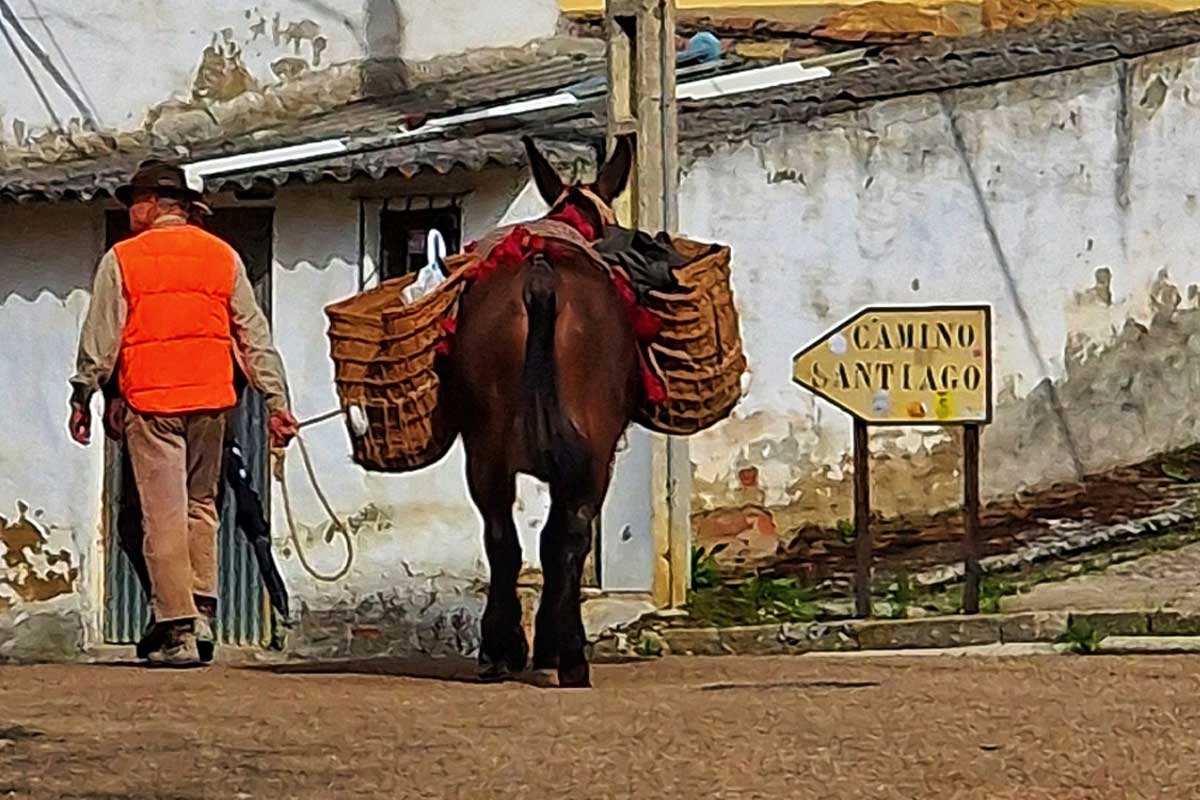
There’s a detailed comparison of each section below which ends with an at-a-glance summary and FAQ, feel free to use the TOC above to jump to your option.
Three Ways To Walk The Camino De Santiago
To be fair, I’m saying there are only three ways to walk the Camino, because that’s not entirely true. There are countless variations. You can mix and match accommodation, carry your backpack or use luggage transfer, walk for a week or several months, and travel alone or with friends.
For this guide, though, I’m comparing the three main ways people choose to organise their Camino.
I’ve walked each of these Caminos and can honestly say that none are better than another. They simply offer different levels of freedom, support and planning.
Also, you don’t have to choose one way. Maybe you’ll join a tour for the first few days, just to help find your feet, then you’ll strike out alone. Maybe you’d like to walk part of the Camino alone but prefer a group to organise the later busier stages at the end.

1. Walking The Camino Independently
If you’re considering walking independently, you’ve probably already discovered guidebooks such as the John Brierley Guides. Perhaps you’ve also found Camino websites (like Then We Walked) or apps such as Wise Pilgrim to help you plan your stages and daily distances. You may even have purchased my Camino Essentials workshops to learn the planning processes that I use myself.
Whatever resources you choose, when you walk independently, you’re responsible for organising your own Camino. Every year, thousands of pilgrims do this and safely arrive in Santiago.
Who Chooses To Walk Independently?
Walking independently appeals to people who enjoy planning their own trips and like having complete control over their journey.
Some book every night’s accommodation before leaving home, while others prefer to let the Camino unfold one day at a time. Some carry their backpack, others use luggage transfer.
There isn’t one right way to walk independently but the key is you do it yourself.
What You’re Responsible For
When you organise your own Camino, you’ll usually research and arrange:
Advantages
Disadvantages
Independent Camino at a Glance
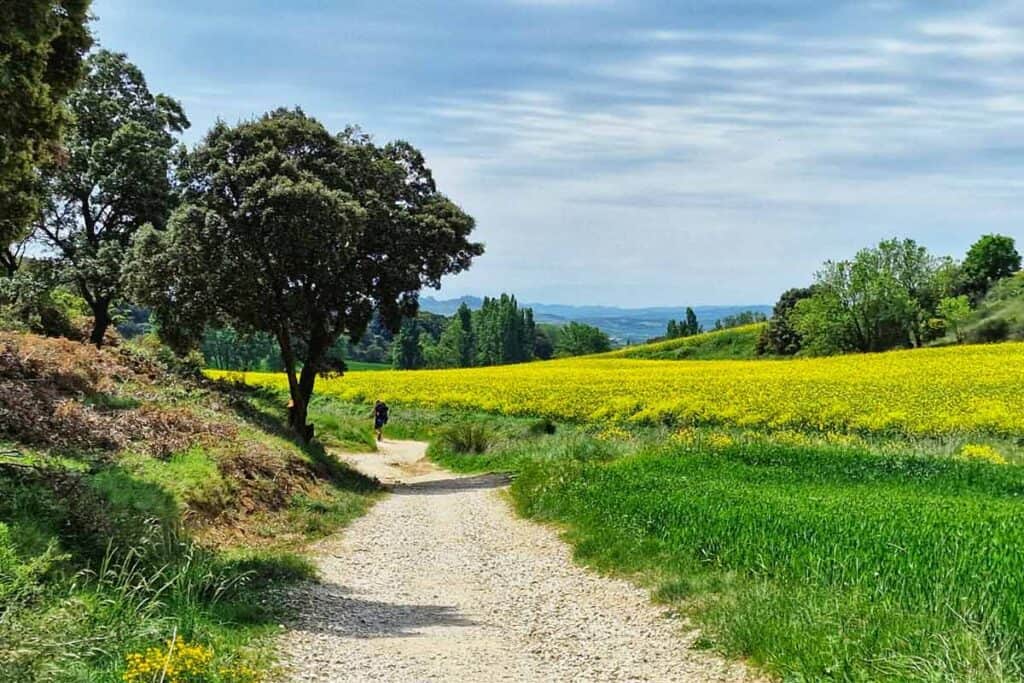
Top Tip: Walking independently doesn’t mean you’ll be walking alone but choosing the right route is important if you would like company.
Independent: Questions And Concerns I Often Hear
Will I Find Accommodation And What If I Don’t?
It is true that the Camino can be busy at certain times of year, and occasionally finding a bed can be difficult. I can attest to this as I have been that pilgrim, walking far more than intended because there was no room at the inn.
Fortunately, there are several ways to reduce that risk. You can book your accommodation before leaving home, reserve a day or two ahead as you walk, or simply assess how busy the trail is once you arrive and adapt your plans accordingly.
For pinch points like the last 100kms of any trail or the start of the Camino Frances you can also jump into Self-guided options and let someone else plan that for you.
Also, it’s worth noting that there are still plenty of albergues that don’t accept reservations, and just because the private rooms are full, it doesn’t mean the bunk beds are.
And in times when there is real pressure on beds, go to the municipal and ask for help. Some towns open sports halls and even fire stations to help a pilgrim.
Will I Get Lost?
The short answer is quite possibly. I’ve certainly missed a yellow arrow from time to time. Thankfully though, the more popular Camino routes are extremely well marked. If you haven’t seen a yellow arrow or scallop shell for a while, it’s usually a sign to stop and check your route.
I use the Wise Pilgrim app when I’m unsure, but you can also ask another pilgrim, speak to a local or simply retrace your steps to the last marker.
Do I need to speak Spanish/French/Portuguese?
Not necessarily. Along the Camino you’ll find plenty of English spoken, with both pilgrims and services. And often there are natural translators in groups or nearby who will help.
I speak French and lots of Spaniards also speak French; I’ve found this useful on many occasions. In Portugal, English is widely spoken and in France, there are usually bi-lingual folk around to help.
WhatsApp is widely used when booking accommodation, and Google Translate makes communicating much easier.
Learning a few basic phrases is always welcome, but don’t let language worries stop you walking.
Is It Safe To Walk Alone?
For many first-time pilgrims, especially women, this is one of the biggest concerns.
Overall, the Camino is considered a very safe long-distance walk, although it isn’t Nirvana, and like anywhere, it’s sensible to take normal precautions.
If you’d like extra reassurance, download the AlertCops app, connect with other pilgrims before you leave, or find a walking companion through communities such as the Camino Forum, Camino Facebook groups or Camigas. And check your backpack, most come with a built in whistle.
On the busier routes, in spring and autumn you’ll rarely be far from other pilgrims, so if you ever feel uncomfortable it’s usually easy to walk alongside others for a while.
What Happens If I Get Injured?
If you have an emergency in Spain, dial 112 for the International Operator.
For less urgent problems, medical centres are found in most larger towns along the way. One of the things I love about the Camino is the sense of community. If you’re staying in an albergue, the hospitalero, other pilgrims and even local people will almost always do their best to help you.

2. Walking The Camino With A Self-Guided Company
When I see questions online asking about self-guided tours, the answers are often 50% helpful and 50% of replies saying you don’t need it!
And whilst it’s true you do not need a company, what is also true is that some pilgrims are just too busy and have too much going on in their lives to focus on their Camino.
We’re not all the same, and the beauty of the Camino is that there’s room for all of us.
Who Chooses A Self-Guided Camino?
Self-guided means different things depending on who you choose to work with.
Some companies offer fixed packages with set stages, while others, like me, create a completely bespoke itinerary around your needs. Some offer pre-camino information, apps, meal packages and luggage transfer; some even offer 24-hour support.
For most, the self-guided option is a comfortable alternative to a tour. Your Camino is planned and booked in advance, but you’re still walking independently.
Many first-time pilgrims love this choice. Some have particular needs (like needing their own bathroom) and some have limited time with fixed schedules and just need things planned ahead.
Most people who choose to walk self-guided are looking to retain independence, but they want the logistics and concierge sorted.
What Is Usually Included (In Varying Degrees)
I would add that there are varying degrees of what is included. Not everyone needs all of the above, and cost is a big factor.
I plan itineraries which often have shorter stages or stages that fit a particular timescale or need. Pilgrims aren’t looking for all the concierge services.
Advantages
Disadvantages
Self-Guided At A Glance

Self Guided: Questions And Concerns I Often Hear
Is it still independent and will I be a real pilgrim
Yes! And yes! I really dislike the term real pilgrim. After all, what is a real pilgrim? I think it’s a made-up term. The cathedral in Santiago and the Pilgrim Office will not ask you what type of bed you chose or if you had any help with the booking. So please throw that thought away!
Are you independent? Yes, if that matters to you. You are still putting one foot in front of the other. You’re simply getting some help with the logistics. Depending on the level of self-guided services you’ve paid for, you can even book your own accommodation and plan your own luggage transfers.
Will I Meet Other Pilgrims?
This is really down to you, the route you choose, the time of year you walk.
Self-guided simply means someone else took care of the logistics. You can still opt to stay in albergues and you can certainly choose to pause at pilgrim cafes along the way; I’ve made friends whilst waiting for my laundry in Viana do Castelo!
If you’re walking the Camino Frances or the Camino Portuguese in May or September, you will have no problem meeting others. If you walk in December, it will be different.
Is it worth the money?
Only you can answer this. I planned a 60 day Camino recently for a couple who wanted to go slow. They’re booking their own accommodation but they wanted a plan that made sense and worked for them. I know they feel it was invaluable.
I also have friends (I met on the Camino Primitivo) who had everything managed for them. It was expensive but they were very happy and had no complaints.
If the only way you can walk the Camino is to use a company to help then that’s money very well spent.
Am I just paying someone to book hotels?
I was asked this very question last week. And with me, no not at all. I plan the route based on your needs, I recommend places to pause, how to break the day, what is worth visiting. And we have the opportunity to talk on Zoom, allowing you to ask all manner of questions. What I don’t offer is room booking.
Some of the larger companies will book your accommodation, breakfast if needed, luggage services and offer pre-Camino support. And all will have extensive knowledge of the routes.
What If Something Happens And I Can’t Walk?
Last year when I walked, a lady I met injured her foot. She tried to continue but we all knew her Camino was over. She was walking independently, so she could simply stop and fly home.
If you have booked ahead and paid for a self-guided option, this may not be as easy.
You must check with your company what happens if you cannot start or if you have to stop. And you must have comprehensive travel insurance to cover your out of pocket losses.

3. Walking The Camino On A Guided Tour
More and more pilgrims are choosing to opt for a guided tour when they decide to walk the Camino. And not just first-time pilgrims either.
Most of us will have taken a package tour at some point in our lives; a package holiday when you were young, a family trip, a road trip in retirement, a weekend away with a local club. In simple terms, a guided tour isn’t much different from those trips.
Except it is; because it’s the Camino.
I have been on both sides of this coin. I’ve taken fully guided tours across the wilds of Africa and loved every second of it. And I’ve planned every detail of my walking club’s Camino and work hard to ensure they have the best experience on their walk.
And like everything about the Camino, different tours offer differing levels of support depending on need and budget but all include accommodation and a guide.
Who Chooses A Guided Camino?
Many first time pilgrims will choose this option. However, from experience I know that many come back time and again if they’re happy with their experiences.
Busy people will very often choose this option because they just wouldn’t go otherwise. I once had a South African businessman join our group; he said it was the only way he would ever commit to and walk the Camino.
Nervous pilgrims might choose this option. They do not wish to walk alone and need to know that there is someone there if they need support.
I once asked on Ivar’s Camino forum how women found the courage to walk the more solitary routes, knowing that they would be alone on the trail. I’ve walked over 20 Caminos but still feel a little anxious when walking alone; I honestly do prefer to walk with company.
You should expect to pay more for this option; a guided camino is going to be more expensive than going solo. Although I’d add that if you want a private room, sometimes taking a tour means you get the room you want at a lower cost because you’re happy to share with another solo traveller.
Top Tip: For women travelling solo, the guided tour absolutely brings in a degree of comfort and security; many tours are women only and even mixed groups have same-gender rooms
Young people, school trips, and those with disabilities will also choose a guided option. In short, all kinds of people choose to walk a guided Camino. I’ve led hundreds of pilgrims and my walking buddies have ranged from old rugby mates on a week away, to mother and daughter meeting ups and many solo walkers who just do not want to go alone. They’re all still pilgrims, just walking to Santiago.
What’s Usually Included
Advantages
Disadvantages
Guided Camino At A Glance

Guided Tour: Questions And Concerns I Often Hear
Will I Be Rushed?
I want to say no, but a common complaint for this kind of Camino has been that people are worried they’ll be left behind.
Walking in a group is extremely difficult. Walking as a married couple is difficult. I walk faster than Gerry but he is always faster on a hill. You do need to check how the group walk is planned and if it’s OK to walk slowly and alone at your own pace.
Most companies have no issue with you walking your way, but just check in advance before booking.
Will I Have Free Time?
Again this is down to the company and their itinerary.
If the day is long, you might find you arrive, shower and head right to dinner. Some itineraries do not allow for shorter days or rest days.
As cost is a major factor, some companies do not add in rest days, or will merge shorter days to move the group along. I have previously asked my walking club if they would rather walk 2 x 14km days or go for one long 28km day. The answer varies with the group.
You do need to check the itinerary closely and if this is a big concern, maybe a self-guided option is more for you.
Can I Still Get A Compostela?
The Cathedral in Santiago dictates who is entitled to receive their Compostela. The rules are concerning the walking. You are required to walk 100 kilometres; more if you use bicycles or horses.
There are no rules which mention beds or packs or how you booked or indeed who you walked with.
If the Compostela is an important part of your Camino, choosing to walk with a tour, self-guided or independently has no bearing on its issue.
Will I Walk With The Same People?
Again this is down to the company. From experience, in my groups, folks often pair up and find their best friend to walk with, but they also walk with others, alone and with strangers.
Indeed Gerry and I will also walk like this. I do know of other groups where this is discouraged, as they try to keep the group together.
I strongly believe the Camino needs an element of alone time and thinking time. Choose which option you’re most comfortable with but do ask the question.
What Happens If I Get Sick Or Injured?
This is a very valid point and again it is something your tour company should answer. I have had this happen in my group and we were able to make alternative arrangements for the person to ensure they didn’t miss out.
You might need to take a taxi if you are unable to walk the following day. The guide will probably take you to a medical centre or hospital (depending on need).
You also have to consider how you would feel if you had to go home. I have fallen and my Camino was over. Likewise I’ve been sick and had to stop. If you’ve joined a tour there is no refund. In which case, excellent comprehensive travel insurance is a must!
What Happens If I Can’t Go?
This sadly has happened to a few of those who booked with me. The only recourse you will have, if it is close to the departure date, is to call on your Travel Insurance. Depending on the policy, you may be able to claim for your lost expenses.
But no matter how good the insurance, not all out of pocket expenses are covered and sadly that is the nature of travel.
Common Myths About Guided and Self-Guided Caminos
I started Then We Walked because I walked 800 kilometres solo with my pack, I stayed in albergues, ate with strangers, had all kinds of problems and yet the woman who ended was not the woman who started and it changed my life.
However, if I had listened to all the naysayers who felt I was making a mistake, I might never have reached St Jean Pied de Port, let alone Santiago.
So many people say to me I’d love to walk the camino but… and proceed to tell me why they cannot. Often it’s because they feel there is only one way to walk
I don’t care how folks choose to walk. I care that they step out on to this beautiful trail and if they gain just a little of what I did then I will be happy.
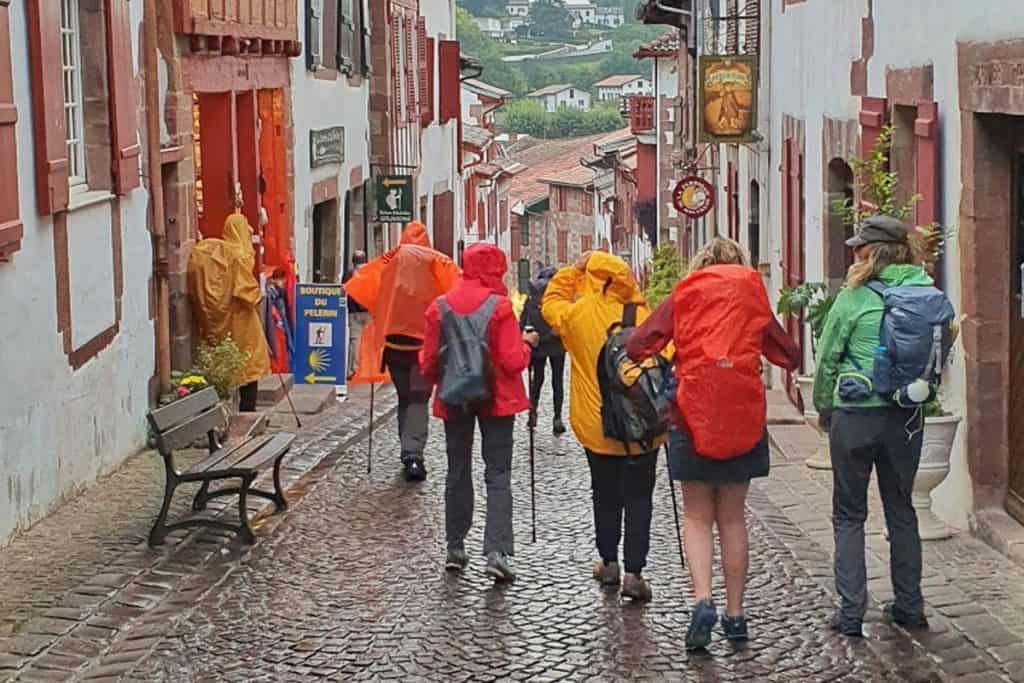
A Real Pilgrim Carries Their Own Backpack
Do they? I have never seen an image of St James carrying a pack. Indeed, when I see images of medieval pilgrims, rarely are they carrying anything.
I read once that pilgrims are meant to suffer, so we should carry the pack. My response was that we have no idea what suffering or sacrifice it has taken just to reach the start and take the first steps.
If not being able to carry a bag, or afford some of the Camino gear, is an issue for you, then don’t worry.
Walk the Camino, send your bag ahead, wear the clothes you wear when you walk at home and just enjoy the glory of the trail!
Using A Tour Company Is Cheating
The last time I checked the rules for the credential, they only mentioned walking and collecting Sello in the Credential. There is no mention of beds or services.
Whilst some people may use words like cheating, or tourgrino, in my heart I feel it says more about their pilgrimage than yours.
Walk. Enjoy the nature, respect the environment, the culture and the local people. Visit the cathedral, talk to strangers, leave no trace but do not worry about cheating!
You’ll Miss The Real Camino
Again I would ask, what is the real Camino? Many people will tell you that the Camino doesn’t even start until you go home.
For me the Camino is the trail. It’s the glorious nature of the world we live in. It’s walking with people from around the world. It’s listening to my thoughts and trying to make sense of the world. It’s about understanding and removing judgement, it’s about sharing, communal meals and respect. And yes, for many, it’s about a man called James who came to Spain to spread the Gospels.
I’m very good at planning Caminos, and I love taking care of my groups, but even I know that I cannot offer or include any of the things I just listed; no tour can.
Prepare yourself, train yourself and remove expectation. Walk, talk to pilgrims, slow down and watch the path unfold. For me, that’s where the real Camino lies.
Only Inexperienced People Use Tours
Well, I’m inexperienced then. And I don’t mind.
Maybe the fact that you recognise this in yourself is a good thing. Maybe you are saying, the Camino is far more than the bed I sleep in. I want to experience what happens between sleeping and waking, so I’m happy for someone else to organise the beds.
Everyone Should Stay In Albergues
Gerry says he’s reached an age when he deserves his own bathroom, and a lot of folks agree. I also know he snores, and I know I’ve saved a few fellow pilgrims from a sleepless night.
Should you stay in albergues? Honestly, I would say give it a go. Try a few. You might surprise yourself.
Do you have to spend every night in an albergue? No.
And if you’re lucky, you’ll find my favourite kind of accommodation; a pilgrim hostel with private rooms.
And even if you know that you really do prefer hotel accommodation, these days, even in the Paradors, you’ll bump into the pilgrims you’ve been walking with during the day.
Which Way Is Right For You? Solo, Self-Guided Or A Tour?
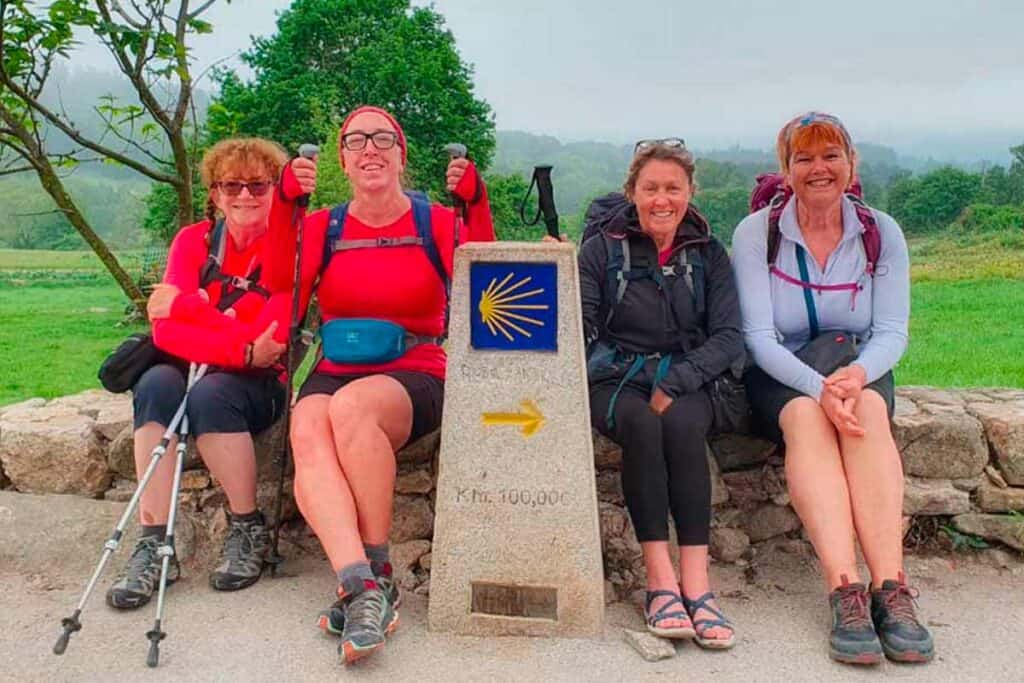
I hope if you’ve read this far that you realise, for me at least, the way you organise the logistics of your Camino is not important.
Walking is the important part. Using your Camino to fully immerse yourself in the company of pilgrims or the culture of Spain or even to lose yourself in your own thoughts; that is important.
Where and how you choose your bed should not be the thing that stops you.
I have walked so many routes across France, Spain and Portugal and I have loved them all. I know it sounds so cliché, but the Camino did change my life and it continues to shape who I am.
The world can sometimes be noisy and all we need is to walk in the company of like minded people and feel part of a moving community; no matter how big or small. The Camino can be the calm that we all need.
St James isn’t interested in whether you stayed in a bunk bed or a Parador and he doesn’t care what you carry on your back, but what’s in your heart.
The Camino is a trail for everyone. If I can spend the next twenty years telling people to come and walk and just a handful do, then I will be happy.
Whichever way you choose; just walk.
Need Help Deciding?
If you’d like a helping hand I offer a range of services which can help you on your way.

Don’t Forget Travel Insurance
Whenever you travel, you should have great travel and medical insurance. None of us expect anything bad to happen, but in the event of an incident, you want to be sure that your insurance will cover you.
I’ve ended up in hospital in Peru, Indonesia, Portugal, Japan and Ireland. Every time my insurance took care of everything. I would never leave home without full and comprehensive insurance.
MondialCare : Due to increasing limitations, mainly due to age, we have recently switched to MondialCare for our travel insurance. We have taken an annual policy at a very reasonable cost that includes medical and other travel cover. There are no trip length limits and the upper age for cover is 84. For Camino walkers and travel in Europe they have a low cost Schengen policy with no age limit.
TrueTraveller : We have used this policy and were very happy with the cover, especially considering our ages and pre-existing conditions.
Globelink: We have used and recommended Globelink for years and not heard of any issues. They are a great choice for European and UK Residents.
Genki : This is an EU based company offering long term policies for nomads and travellers. Their monthly rates are very competitive for longer trips too.
Try Our Trip Planning Tools
Start here to find the best accommodation
Start here to find flights for your adventure
Start here to find the best sightseeing tours

Hey I’m Colleen. I’m married to Gerry, we’ve three fabulous kids and been living in France for almost two decades. I fell in love with Spain in the 1980s and I’ve walked 1000s of miles along the Camino de Santiago. Now we’re exploring and walking the world and I can’t wait to share what we’ve learned!