
Home > Camino de Santiago Guide > Who Is St James?
Who Is St James? The Story Behind The Camino De Santiago
Some of my links may be affiliate links. If you make a purchase, I might earn a small commission at no cost to you. See our Privacy Policy for details. And this post was crafted with care and occasional typos by Colleen (and not AI)
The Camino de Santiago takes its name — and indeed owes its very existence — to the apostle St James. And if you’re anything like me, you might be wondering: how did St James end up in Spain? And why is this ancient trail — and the city — called Santiago?
I’m not a historian, but I am a pilgrim. I’m passionate about all things Camino and endlessly curious about the history, culture, and facts behind the stories and legends.
If you’re like me, keep reading to discover what I’ve learned about Saint James the Greater — the man who walked with Jesus and ultimately died for him.

The Story and History of Santiago (Saint James the Greater)
When we walk the Camino de Santiago, we do so in the name of Saint James the Greater, so for me at least it makes sense to learn more about his life.
His name is etched into ancient walls, mentioned in prayers in countless churches along the way, and his legacy runs through every aspect of the Camino. But who was he? And how did a fisherman from Galilee become the centre of one of Christianity’s most enduring pilgrimages?
James the Greater: His Life And His History
Saint James is often referred to as James the Greater to distinguish him from the other James mentioned in the New Testament. Greater likely refers to his age or perhaps his prominence among the disciples.
He was one of Jesus’s twelve apostles and part of His inner circle, alongside Peter and his brother John. Jesus famously nicknamed the brothers James and John the “Sons of Thunder” — perhaps a nod to their passion or bold tempers!
Want to learn more about the Camino? Then hop over to my Free Private Facebook Group | Walking The Camino De Santiago.

What Do We Know Historically About James the Greater?
Whilst not everyone who walks the Camino, does so for religious reasons, it’s fair to say that regardless of your faith, there are historically accepted facts about the Apostles and indeed James the Greater.
While many details of James’s story are rooted in tradition, there are key historical facts supported by scriptural and early sources:
So while the journey to Spain is not well documented, his role in the early Church and his martyrdom are considered historically credible and accurate.
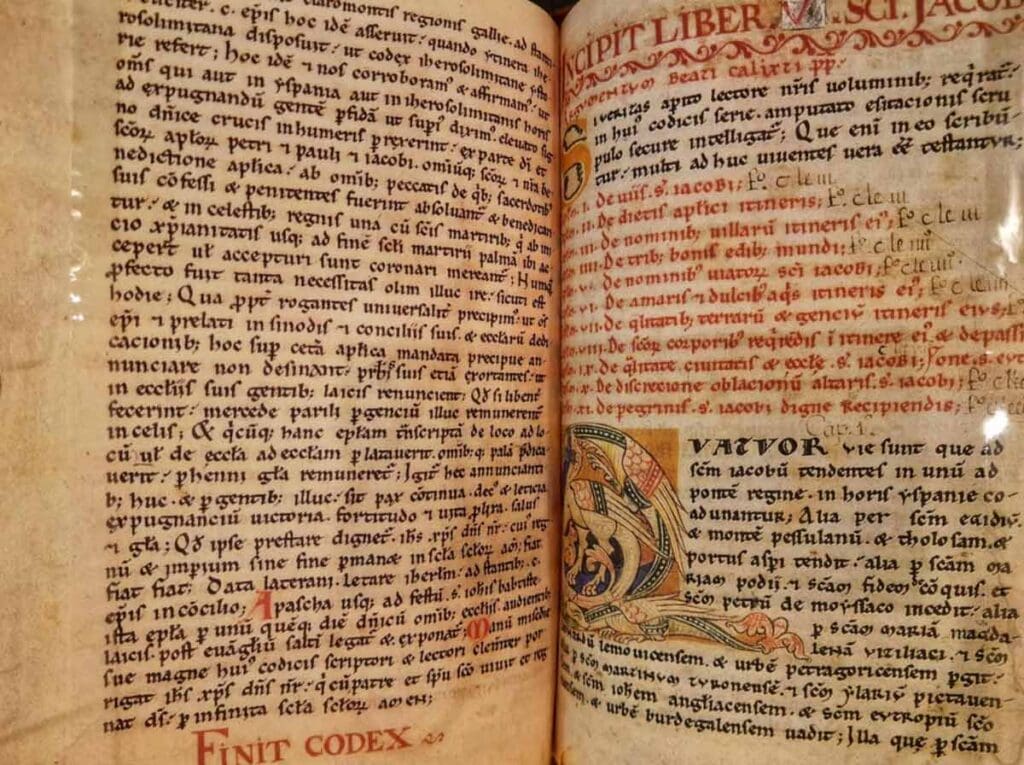
From Ya’akov to Santiago: The History Behind the Name
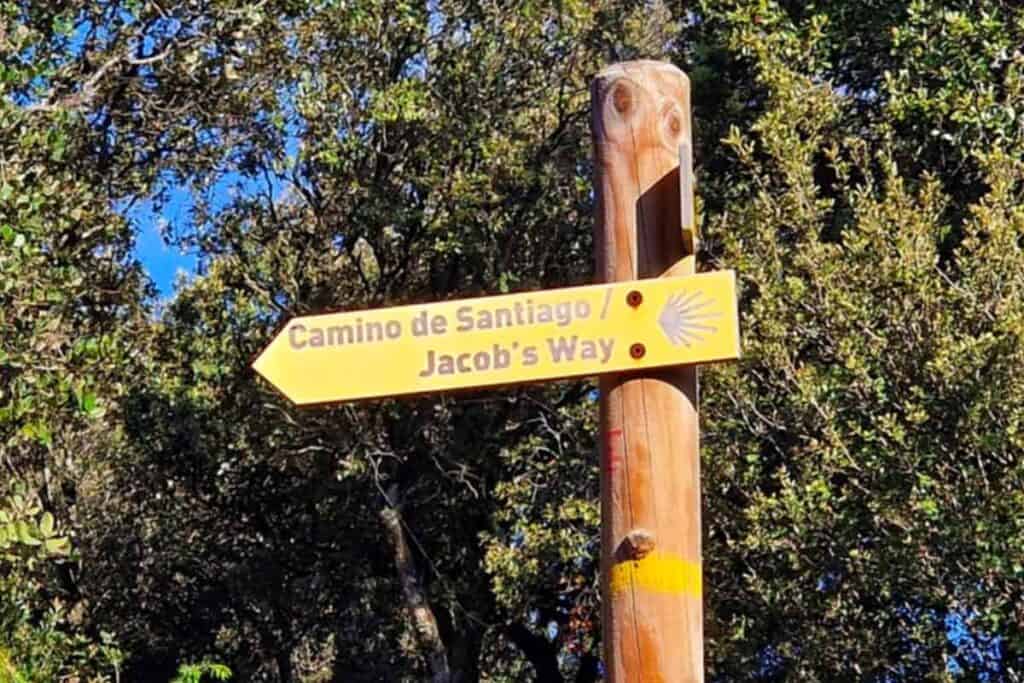
While walking in 2024 and 2025, I spotted a camino marker on the trail to Los Arcos which instead of reading Camino de Santiago, read Jacob’s Way.” It caught my eye and sent me on a journey to learn more.
James’s original name in Hebrew was Ya’akov (יעקב) – a very common name at the time. As the New Testament spread into the Greek-speaking world, Ya’akov became Iakobos (Greek), then Iacobus (Latin). Over time, Latin usage shifted to Iacomus, which then morphed across languages:
The name that we use today — James or Santiago — is the result of centuries of linguistic evolution. If you’d like to read more, I found this topic, from the Biblical Archaeology Society: James or Jacob in the Bible very interesting.
Galicia and The Missionary and Ministry Of St James
It’s a widely held belief that James travelled to Hispania to spread the Gospel; especially around Iria Flavia (modern-day Padrón).
After his death in Jerusalem, legend holds that his followers brought his remains by sea to the Galician coast, burying him inland where his tomb would one day be rediscovered.
Iria Flavia: Once An Important Roman Trading Port
Modern Padrón may feel sleepy, but in Roman times, Iria Flavia was a strategic port on the Via XIX, a Roman road linking Braga to Astorga — one that pilgrims still walk along today on the Camino Portuguese and the trail that Gerry calls the R19.
By the 4th or 5th century, Iria Flavia had become an important bishopric, one of the earliest in Galicia. It remained the seat of the bishop until the 9th century, when the Holy See was moved to Compostela following the discovery of James’s tomb.
The Discovery Of The Tomb
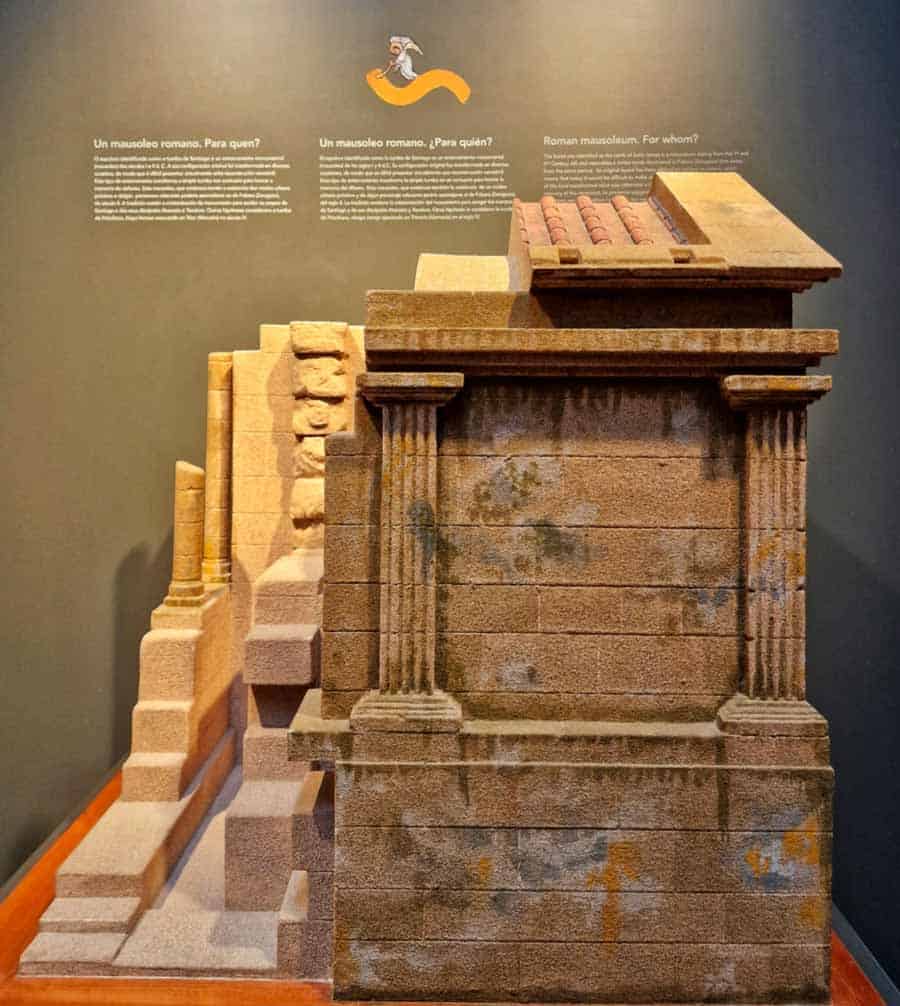
Around 820 AD, a hermit named Pelayo reported seeing lights on a wooded hill not far from Iria Flavia. Bishop Theodomir investigated and did indeed find a Roman-era tomb believed to contain the remains of James.
King Alfonso II of Asturias travelled from Oviedo to confirm the discovery and ordered a church to be built there. That path — from Oviedo to Santiago — became the Camino Primitivo, the first pilgrimage route.
You can see drawings of the early tomb and church in the Pilgrimage Museum in Santiago – it’s well worth a visit if you are in Santiago.
James The Warrior, The Patron Saint and His Legacy in Spain
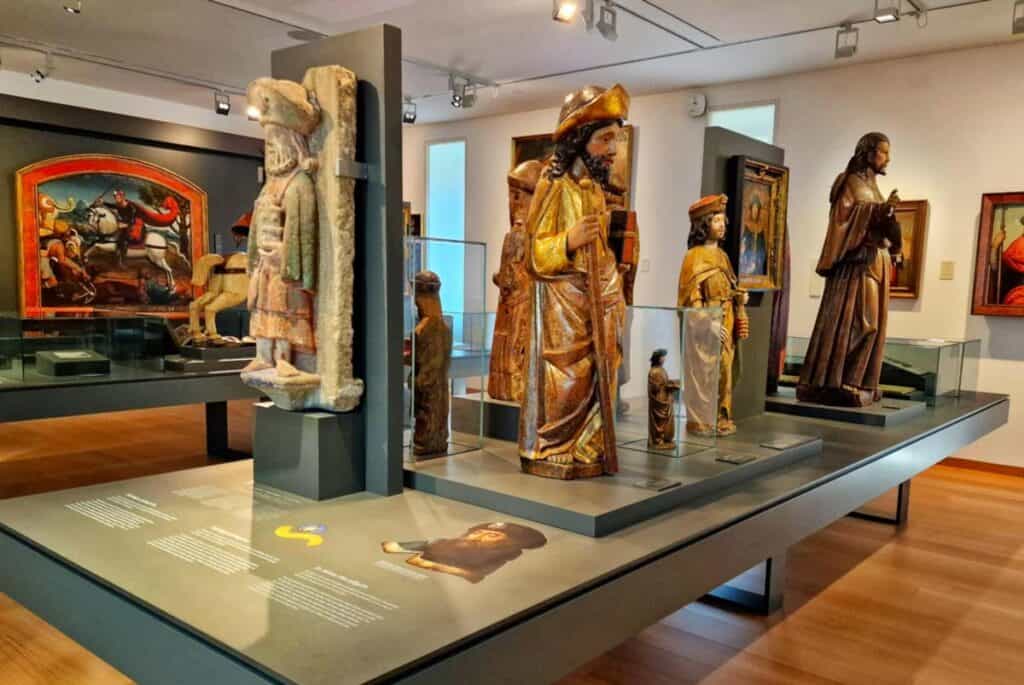
If you visit Burgos Cathedral you’ll likely come across a large depiction of James riding a white horse into battle. It’s a striking image and not the first I’ve seen of Santiago Matamoros (St James the Moor-slayer) but whenever I see this I feel strongly that this is not my James or the James that came to spread the word of the gospels.
Historians consider the Matamoros legend a political invention of the 9th century, intended to inspire Christian forces during the Reconquista. It served to unite Spain under a religious figure, but it’s widely seen today as symbolic, not historical.
I grew up in the family of a small rural protestant church in Devon, and whilst as an adult my faith maybe confused, I do know that the James that I walk to, is not the man sat upon that horse.
The Patron Saint of Spain
Over time, James’s legend — especially the story of him fighting for the faithful — helped position him as Spain’s heavenly protector. By the 12th century, the Camino was one of Europe’s most important pilgrimages.
As a result of his importance to Spain, in 1630, Pope Urban VIII formally declared St James the Greater as the patron saint of Spain. His feast day, 25 July, remains a national holiday — and when it falls on a Sunday, it marks a Holy Year on the Camino.
The Feast Day of Saint James in Santiago & Holy Years
The feast day of St James is on the 25 July and if you are lucky enough to be walking the camino at this time then you are in for a treat of celebration and spectacle; particularly in Santiago.
A Holy Year (or Jacobean Year) occurs whenever 25 July falls on a Sunday. The tradition dates back to 1492 when Pope Alexander VI granted the city of Santiago de Compostela, the right to celebrate a Jubilee Year — during this time the Holy Door of the cathedral is open and Pilgrims walking then can receive a plenary indulgence.
To receive the plenary indulgence (a full forgiveness of sins), pilgrims must:
According to the Pilgrim Office, in order to gain the Jubilee Plenary Indulgence (a full forgiveness of sins), pilgrims must:
I’ve been fortunate to walk during 2016, 2021, and 2022. You cannot fail to be impressed and touched by the weight of history that lies behind this act. Even if you’re not walking for religious reasons, there’s something very special about being part of this centuries-old tradition.
St James: His Life, His Name And His Legacy
When I first walked the Camino, it was for adventure and a sense of health and healing. I knew very little about James beyond the fact that he was one of the disciples.
But walking the Camino made me reflect, or at least ponder on what faith means to me, and the form it takes for me now. It also stirred my curiosity to learn more. Not to disprove, but to understand what is historical, what is tradition, and what is legend.
Historically, James is one of the best-documented apostles. His life in Galilee, his place among the twelve, and his martyrdom are well attested. His ministry in Spain is perhaps more tradition — but a tradition that carries such weight that millions have been inspired to walk to his tomb.
Perhaps the real power of a pilgrimage is that, in a world where information is so readily available, it is faith, mystery, and a different meaning that moves us, in a way that history alone can’t fully explain.
Whether or not the bones of a fisherman from Galilee called Ya’akov lie in Santiago, the impact of his story is undeniable. Pilgrims have walked for over a thousand years not out of certainty — but because of meaning, hope, and devotion.
And perhaps that’s the true miracle of the Camino.
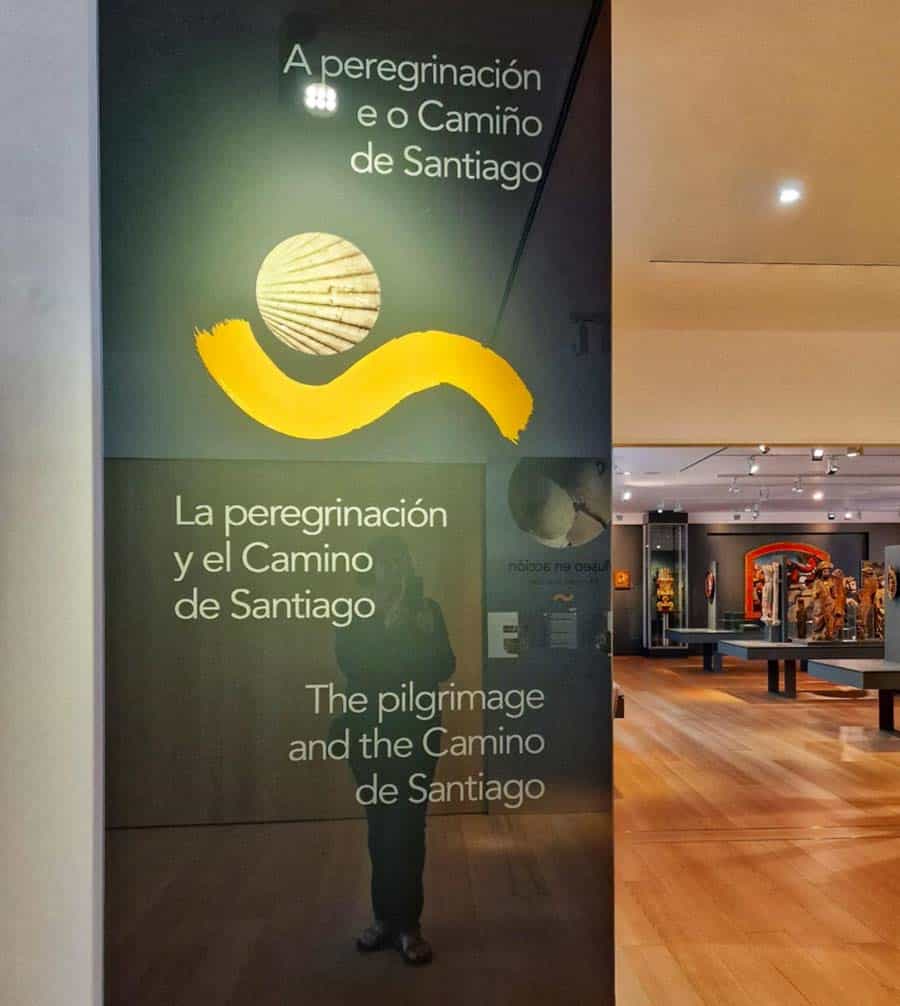
Further Reading : A Few Excellent Historical and Scholarly Reads
Institutions and Official Sources:
Major International Camino Associations
There are international Friends of the Camino across the globe : There are just a few of the english speaking associations.
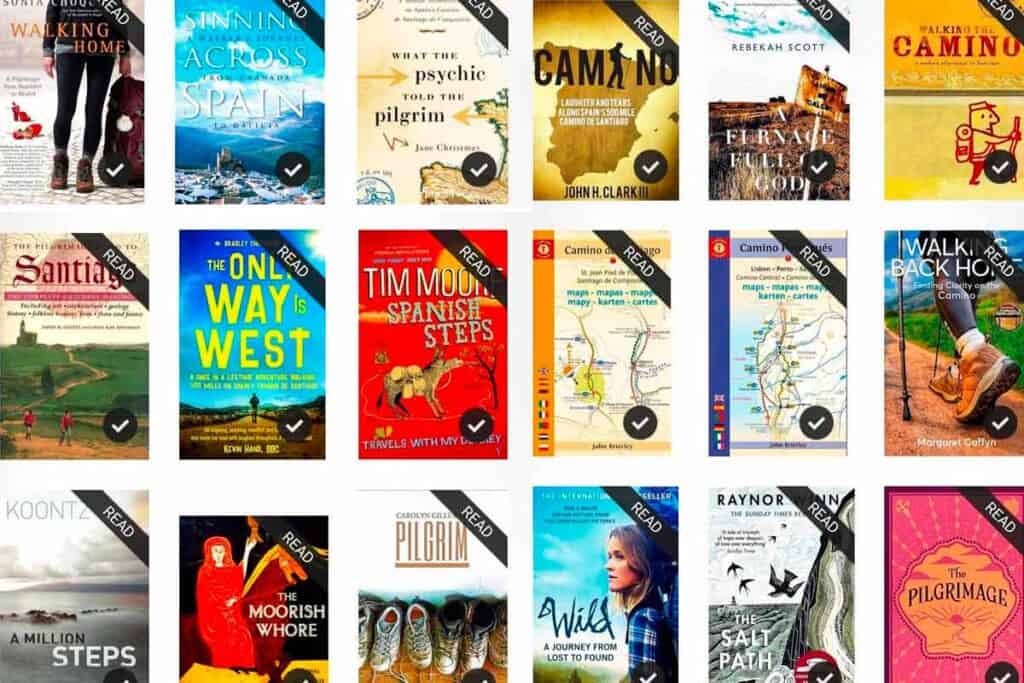
If you’re looking for ideas for further reading, take a look at my post about my favourite books about the Camino; both fact and fiction.
Don’t Forget Travel Insurance
Whenever you travel, you should have great travel and medical insurance. None of us expect anything bad to happen, but in the event of an incident, you want to be sure that your insurance will cover you.
I’ve ended up in hospital in Peru, Indonesia, Portugal, Japan and Ireland. Every time my insurance took care of everything. I would never leave home without full and comprehensive insurance.
MondialCare : Due to increasing limitations, mainly due to age, we have recently switched to MondialCare for our travel insurance. We have taken an annual policy at a very reasonable cost that includes medical and other travel cover. There are no trip length limits and the upper age for cover is 84. For Camino walkers and travel in Europe they have a low cost Schengen policy with no age limit.
TrueTraveller : We have used this policy and were very happy with the cover, especially considering our ages and pre-existing conditions.
Globelink: We have used and recommended Globelink for years and not heard of any issues. They are a great choice for European and UK Residents.
Genki : This is an EU based company offering long term policies for nomads and travellers. Their monthly rates are very competitive for longer trips too.
Try Our Trip Planning Tools
Start here to find the best accommodation
Start here to find flights for your adventure
Start here to find the best sightseeing tours

Hey I’m Colleen. I’m married to Gerry, we’ve three fabulous kids and been living in France for almost two decades. I fell in love with Spain in the 1980s and I’ve walked 1000s of miles along the Camino de Santiago. Now we’re exploring and walking the world and I can’t wait to share what we’ve learned!