
Home > Camino De Santiago Guide > Do I Need A Sleeping Bag On The Camino?
Do I Need A Sleeping Bag On The Camino Or Is A Liner Enough?
Some of my links may be affiliate links. If you make a purchase, I might earn a small commission at no cost to you. See our Privacy Policy for details. And this post was crafted with care and occasional typos by Colleen (and not AI)
On my first Camino, I was obsessed with my pack being too heavy. I researched everything and weighed everything and decided that I did not need a sleeping bag.
I took a liner. It was fine in early September. But as the days passed, the nights became cooler and I’d wake around three in the morning shivering. I ended up wearing my fleece to bed and absolutely knew I had made a mistake.
Do you need a sleeping bag on the Camino? In my experience, yes.
But of course, it isn’t that simple. The right choice depends on you, the season, the type of accommodation, and how warm you naturally sleep.
Read on and I’ll explain what’s really important and bust a few myths along the way; hopefully you’ll sleep as soundly as a cat on a warm blanket!

Sleeping Bag Vs Liner On The Camino
This question is asked so often and for every person who says, “I only had a liner and it was fine” there’s another who says, “I was cold.”
The truth is, the answers can only guide you towards making a choice. Just like choosing the right shoes or deciding how far to walk each day, it comes down to what suits you and your comfort levels.
What’s The Difference Between A Sleeping Bag And A Liner?
Before you decide which is right for you, it helps to understand the differences.
A sleeping bag is a thicker, insulated, zippered sack, often mummy-shaped, narrow at the feet and wider at the shoulders. It’s designed to keep you warm in cooler conditions, especially when camping.
A liner is a thin, lightweight sheet, shaped like a bag, and usually rectangular. It was originally designed to sit inside a sleeping bag to add warmth and protect it from sweat and dirt, making the main bag easier to wash.
When A Sleeping Bag Is The Right Choice
Sleeping bags were designed for camping, but they are widely used on the Camino because in many albergues bed linen is not provided and large dormitories may not be heated.
A sleeping bag is a good choice if:
When A Liner Is The Right Choice
If you’re choosing to carry a sleeping bag, a liner may not be needed, but there are situations where a liner alone can work.
A liner can be a good choice if:

Season By Season Guide
Spain is a large country, and the landscape from north to south is very different, as is the climate. Galicia can have glorious sunshine, but also has its fair share of wet and windy days. The Meseta may be hot and exposed in summer, but can be cold in early spring and late autumn.
In short, where you walk is just as important as when you walk.
Spring (March/April/May)
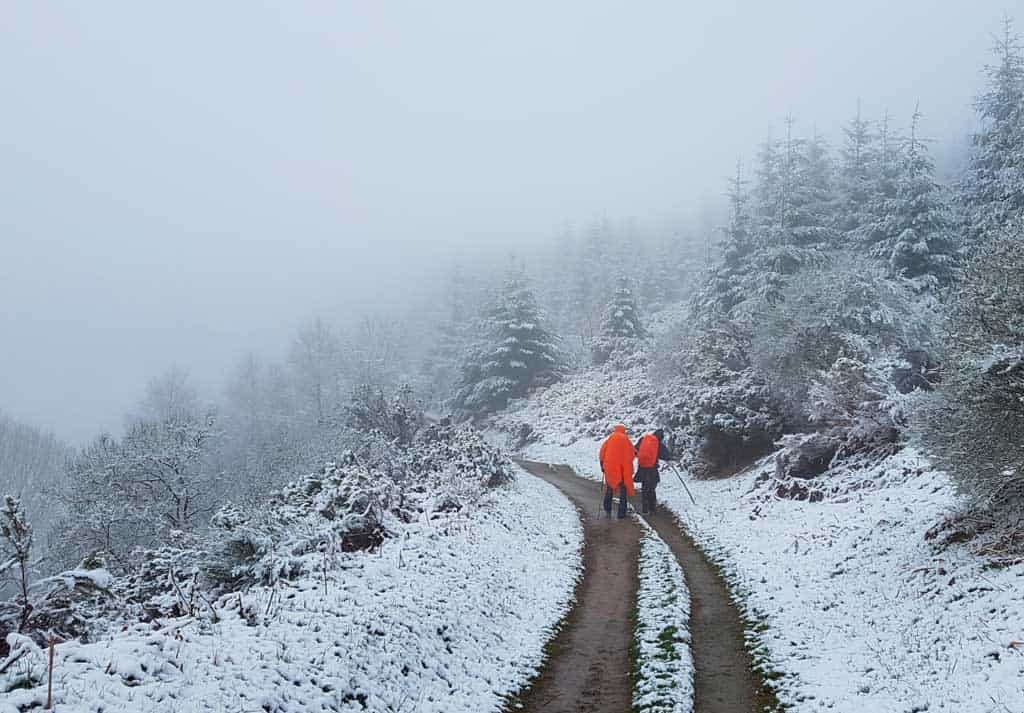
If you’re walking 800 kilometres across Spain, you could easily experience cold, rain and even snow; I’ve had snow in O Cebreiro on the Camino Frances in May! During the day it can feel warm but temperatures can drop quickly once the sun goes down.
For me, I would not rely solely on a liner during spring. I would carry a sleeping bag or quilt for peace of mind.
Summer (June/July/August)
It’s hot in Spain during the summer. We’ve walked in June and July many times, but in recent years it has simply been too hot for us.
It is cooler on the coast but overall in most regions evenings stay warm. In these months, many pilgrims are comfortable with just a liner.
But. I volunteered in Nájera in August during record high temperatures. The building had air conditioning, and every day pilgrims asked for blankets because they were cold at night.
Autumn (September/October/November)
Autumn is one of my favourite times to walk. I started my first Camino on 12 September. The weather was glorious. It was hot during the day but once night fell, it was cooler. I very quickly regretted relying on just a liner. I ended up buying a sleeping bag which was expensive and heavier than the one I had at home.
By late September and into October, evenings can be chilly. I would not walk at this time of year without something warmer than a liner.
Winter (December/January/February)
I’ve walked the Portuguese Camino in December. During the final days into Santiago, there was ice on the ground every morning and it was very cold.
I also volunteered as a ditch-pig, collecting rubbish along the trail in December. We stayed in albergues and oh boy it was cold. I had a liner, my hiking quilt, a lightweight blanket, and wore thermals to bed.
In winter, you will need a good quality sleeping bag with a suitable comfort rating. Heating is not guaranteed, and some albergues close as the cost of heating for so few pilgrims is too expensive.
Practical Considerations Before Choosing Your Sleep System
As I’ve mentioned I ended up buying an expensive, heavy mummy-style bag as my options on the trail were limited. I have since purchased a quilt but there are many options, so here’s a few things you should consider.
1. Sleeping Bag Weight
If you are carrying your pack, weight is a huge consideration and one of the reasons folks lean towards liner only. Today, there are plenty of lightweight options available although they can be expensive.
I opted for a lightweight quilt. You will need a system of fixing the quilt to your liner as they slip off during the night. I sewed buttons; it stays in place and keeps me warm and comfortable.
2. Volume – Does It Pack Small?
If you plan on taking a small rucksack or even plan to have luggage transported, a bulky sleeping bag will take up a lot of space. So, when looking at your options, do consider how easy it will be to pack.
3. Can You Wash It?
I love my Enlightened Equipment quilt. It’s extremely lightweight and keeps me warm BUT it is not easy to wash and I cannot put it in a hot wash.
Thankfully I’ve never needed to wash it during a Camino, but if I were buying again today I would choose something less expensive and that will go in a washing machine. Thankfully there are options like this Camping Quilt readily available on Amazon.
Whether you buy a sleeping bag or quilt, being able to machine wash and dry it quickly and easily is an important factor.
4. What You Wear For Sleep
What do you plan to wear when sleeping? Some folks wear tomorrow’s clothes, some wear their underwear. I take sleep wear.
I like my thermal merino leggings. They keep me warm are easy to wash and weigh very little. I add a t-shirt or a merino vest, which can also double up as a hiking top.
5. Test It At Home First
Whatever sleep system you choose, test it at home. I know your climate may be different but try to simulate cooler conditions. Open a window. Turn the heating down. How well do you sleep?
Conversely, you could be too warm. Some dormitories in winter can be toasty and ‘window wars’ are a real thing! Can you adapt your system to cool you down?
If you don’t feel comfortable in your own home, it will not improve in a shared dormitory.

What Do Albergues Actually Provide?
As I mentioned earlier, sleeping bag vs liners is a question asked a lot. And the reply is often “just bring a liner because albergues have blankets.” But do they?
Some do. However, I would never recommend relying on solely on this happening. Every bed you sleep in will be different and every kind of pilgrim accommodation will be different.
Municipal Albergues
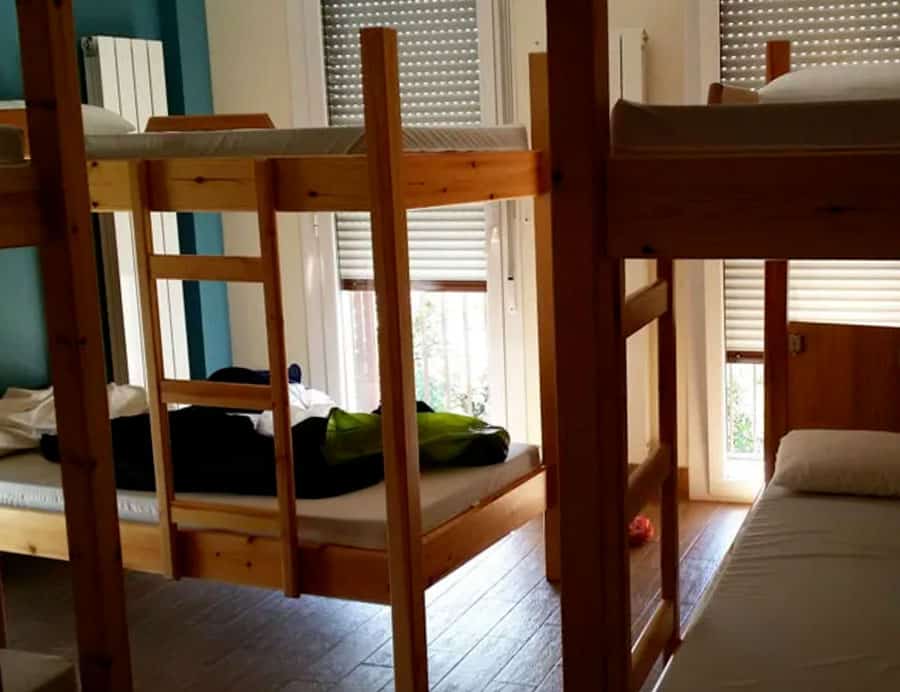
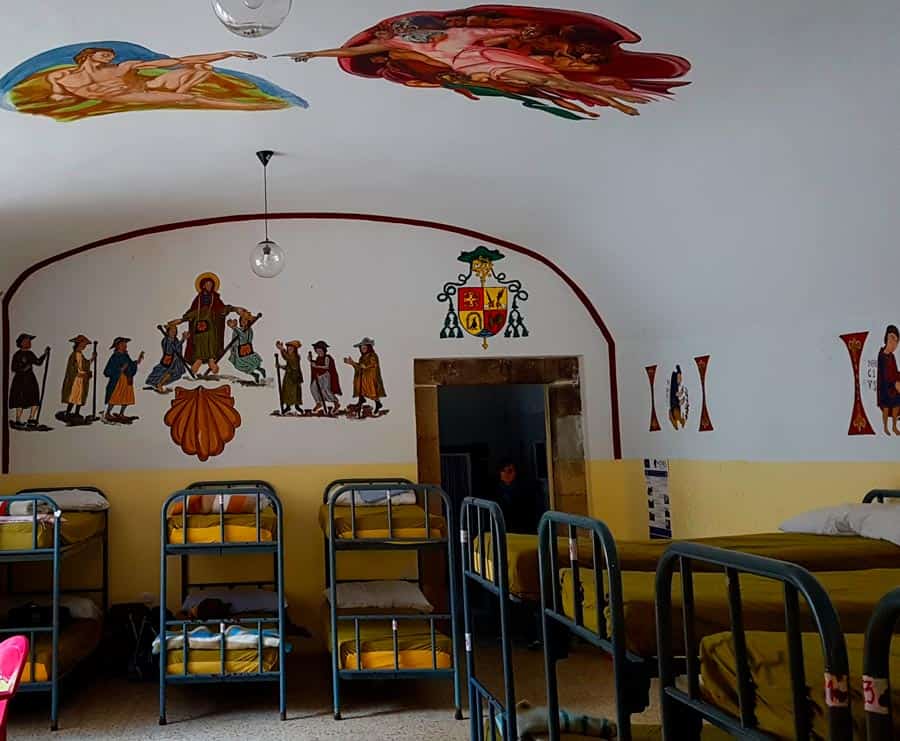
In a municipal albergue, you will usually have a bunk bed with a mattress and a pillow. When you check in, you are often given a disposable sheet and pillow cover. And that’s it.
Some municipals have blankets. But maybe not enough for every bed, and they are not washed daily. In many cases, they are not washed weekly either.
If you plan to rely on blankets, at the very least bring a liner for hygiene. For your own comfort and for the person who sleeps there after you. And accept that you may not always find one!
Private Albergues
Private albergues vary more widely. Many provide freshly laundered cotton sheets and pillowcases. Some provide a blanket or duvet. Others operate very much like municipal albergues and offer only disposable covers.
I have stayed in private albergues that felt like small hotels, and others that were more traditional.
Always check in advance if this matters to you. Do not assume that private automatically means full bedding.
Hotels And Guesthouses
Hotels, casa rurales and most guesthouses will provide full bed linen, usually including towels. There are plenty of fabulous stays that offer everything you’ll need. The more simple the accommodation, the more simple the offering.
If you are staying in private rooms within albergues, do check what is provided. Most provide bedding, but occasionally we have found the beds are much like standard albergue beds, with only disposable sheets provided.
My Sleep Kit For The Camino
I’m very happy with my current sleep system. But if I were starting from scratch today, I might make slightly different choices; a washable quilt would be more of a priority. That’s the benefit of experience and today there are more choices.
Gerry’s Sleeping Bag
Gerry opted for a simple Decathlon sleeping bag. We bought it many years ago, and it has served him well. It’s a lightweight mummy-style bag. Nothing fancy. It keeps him warm, it washes easily, and it does the job.
There are so many options available today. If you’re not fussy then sometimes simple is best.
My Liner
I like space when I sleep, so I chose a larger sleep sack, I think it’s meant to be a double but it feels like a large single.
Mine came from Amazon. It has a built-in pillowcase section, it washes well, it was inexpensive, very lightweight and it has lasted for years.
My Quilt
I really dislike mummy-shaped sleeping bags. I feel restricted in them and opted for a hiking quilt instead.
I use an Enlightened Equipment quilt, which is excellent but not cheap. It was one of the only options a decade ago but today you absolutely do not need to spend that much.
There are more affordable options available that would work perfectly well on the Camino; and they are much more laundry-friendly too.
An Alternative I’m Curious About
Some pilgrims have had great success by layering a standard liner with a thermal liner for added warmth, like the Sea to Summit option. It is said to add maybe 12c of additional heat which could be perfect for a June or early September Camino.
The thermal liners are not as cheap as the silk equivalent but they weigh very little and can be easily washed. This could be the balance many pilgrims are seeking.
Feeling overwhelmed with planning your Camino?
Instead of searching endlessly, take a look at my Camino Planning Workshops. I turned over a decade of experience into a library of 20+ hours of practical, short, easy-to-follow videos, answering every question a pilgrim could have and plenty you’ve not thought to ask yet!
FAQ: Sleeping Bag Vs Liner On The Camino
Hopefully you’re armed with all you need to create your perfect sleep system but here are a few additional questions I’ve seen asked in groups.
What Temperature Rating Sleeping Bag Do I Need For The Camino?
You do not need a heavy winter strength sleeping bag. You are sleeping indoors, not camping in the mountains.
Sleeping bags are often described by “season” ratings, as well as comfort temperature ranges. The comfort rating of the bag is the most important number to look at. As a general guide:
For most pilgrims walking in spring or autumn, a lightweight 2-season bag could be sufficient; especially when paired with a liner. In high summer, a 1-season bag or even a liner may be enough.
Can I Wash My Sleeping Bag On The Camino?
This depends entirely on the type of bag or quilt you choose. Many lightweight synthetic sleeping bags can be machine washed and dry relatively quickly. Down bags and technical quilts may need more careful handling and take longer to dry.
My quilt cannot go through a hot wash. If I need to clean it, I soak it gently and it takes a full day to dry properly. This is not ideal.
If you plan to wash your sleep system mid-Camino, check the care instructions carefully before you buy.
Top Tip: On rare occasions, you may encounter bed bugs. Thankfully, after over a decade of walking I have not. One recommended precaution, if you feel there has been exposure, is washing your sleep system on a hot wash cycle.
Not all quilts or down bags can tolerate high heat, so it’s worth checking the care instructions before you buy. The vast majority of pilgrims never experience this, but having a bag that can be washed is very useful.
Do I Need A Sleeping Bag If I’m Staying In Private Rooms?
If you are staying exclusively in hotels or private rooms with full bedding, you probably do not need a sleeping bag.
However, if you are not booking ahead and hope to find private rooms as you walk, it may be sensible to carry at least a liner. Sometimes the only option could be a bunk bed in a shared dormitory.
If there is a possibility that you don’t find a bed in a private room, it pays to have some flexibility.
I’m Only Taking A Sleeping Bag. Is It Worth Getting A Liner As Well?
That depends on your priorities. Liners were originally designed to keep sleeping bags clean while camping. On the Camino, you are sleeping indoors, so dirt is less of a concern.
Some pilgrims like the added hygiene layer or the small extra warmth. Others, like Gerry, simply take a washable sleeping bag and are perfectly comfortable. I like the liner as it sits next to my skin and I know it’s clean.
Should I Treat My Sleeping Bag Or Quilt With Insect Repellent?
Some pilgrims choose to treat their sleeping bag with a permethrin fabric spray as an added precaution against insects. I treat my quilt and rucksack with permethrin but would never treat my liner, as that rests directly against my skin.
It’s important to understand that no treatment guarantees prevention of bed bugs. At best, it may offer an additional layer of defence.
If you decide to use a fabric treatment, follow the manufacturer’s instructions carefully, allow it to dry completely before use, do not over apply and avoid applying it near pets, especially cats, as it can be harmful to them while wet.
And to put your mind at rest, I have never encountered unwanted passengers and most pilgrims never encounter issues. Choosing to spray is a personal choice rather than a necessity. But you must do this before you leave home, and apply exactly as per the manufacturers instructions.
Do Albergues Really Provide Blankets?
This bears repeating just so we’re clear. The truth is that some do. And some do not.
Policies vary and change over time. Before 2020 it was more likely that you would find blankets. They were removed when the Camino reopened for hygiene reasons and many albergue have chosen to keep it that way.
If I were walking now I would not rely on blankets being available for every bed.
So Do You Need A Sleeping Bag Or Will A Liner Work Just Fine?
I love that you read to the end! You now know that the answer is dependent on many things. And just like choosing shoes there’s great deal of personal preference.
Sleep is really important. Sleep is recovery and recovery is what allows you to walk to Santiago de Compostela.
You’ll be dealing with a dormitory with lots of noise and different beds and different levels of comfort. Settling on a sleep system that works best for you will make a huge difference to how you cope in Albergues.
Thankfully there are a lot of choices, to help you find the perfect system. And you don’t need to spend a fortune either. Shop around, look at the options, test it out at home and once you’re happy, rest assured that your system will work night after night after night.

Are You Planning To Walk the Camino?
If you’re walking soon and want detailed daily guidance, I’ve written full stage-by-stage guides for several Camino routes that include practical details like stages, distances, accommodation options I know and where to find services.
You can find everything on my Camino de Santiago page or more specifically :
I Created Six Camino Planning Workshops!
I answer hundreds of your Camino questions — with videos, downloads and links covering routes, travel, stages, accommodation, daily life, and packing — all in one place. It’s like getting advice from a friend — who’s walked the Camino 23 times! All for just $35!

Don’t Forget Travel Insurance
Whenever you travel, you should have great travel and medical insurance. None of us expect anything bad to happen, but in the event of an incident, you want to be sure that your insurance will cover you.
I’ve ended up in hospital in Peru, Indonesia, Portugal, Japan and Ireland. Every time my insurance took care of everything. I would never leave home without full and comprehensive insurance.
MondialCare : Due to increasing limitations, mainly due to age, we have recently switched to MondialCare for our travel insurance. We have taken an annual policy at a very reasonable cost that includes medical and other travel cover. There are no trip length limits and the upper age for cover is 84. For Camino walkers and travel in Europe they have a low cost Schengen policy with no age limit.
TrueTraveller : We have used this policy and were very happy with the cover, especially considering our ages and pre-existing conditions.
Globelink: We have used and recommended Globelink for years and not heard of any issues. They are a great choice for European and UK Residents.
Genki : This is an EU based company offering long term policies for nomads and travellers. Their monthly rates are very competitive for longer trips too.
Try Our Trip Planning Tools
Start here to find the best accommodation
Start here to find flights for your adventure
Start here to find the best sightseeing tours

Hey I’m Colleen. I’m married to Gerry, we’ve three fabulous kids and been living in France for almost two decades. I fell in love with Spain in the 1980s and I’ve walked 1000s of miles along the Camino de Santiago. Now we’re exploring and walking the world and I can’t wait to share what we’ve learned!