
Home > Destinations > Antarctica> Our Antarctica Diary
Our Antarctica Diary: 10 Extraordinary Days from Ushuaia
Some of my links may be affiliate links. If you make a purchase, I might earn a small commission at no cost to you. See our Privacy Policy for details. And this post was crafted with care and occasional typos by Colleen (and not AI)
Are you going to Antarctica? Or dreaming of it? I’ve been in your shoes. Antarctica sat on our wish list for years, but getting there felt impossible. It’s for scientists, explorers, and film-makers and not a pair of retired folks from France.
We talked about it for ever. We booked a year ahead. We planned an entire journey through South America just to reach Ushuaia. And then, one chilly November afternoon we were there, boarding a small expedition ship that would be our home for the next ten days.
We crossed the Drake Passage, we explored South Shetland Islands, and stepped onto the Antarctic Peninsula. And all that wishing and hoping and planning is now just a glorious memory. But oh my, what memories they are.
We’ve only been home a few days, and I’m trying to put into words just how extraordinary this adventure was. Here’s my diary with the bits the brochures don’t mention, along with the magic, the penguins, the rough seas and the calm ones, the glaciers, the lectures… and one very cold polar plunge.

Getting Ready in Ushuaia
We’d travelled down from Torres del Paine in Chile; we’d been making our way slowly through South America from Lima in Peru.
We allowed ourselves a few days in town to relax and make sure we had everything we needed before boarding. It felt as though everything we dreamed of hinged on getting there on time, so we built in a buffer just to be safe. If you can spare the extra days, I’d definitely recommend doing the same.
We visited our travel agent and collected the waterproof coats, trousers, and gloves we’d need. I also really wish we’d hired hiking poles. We found a tiny shop tucked between the big outdoor brands and bought a couple of warmer long-sleeve tops. They were inexpensive, ideal for our needs and we donated them at the end of the cruise.
Ushuaia has a huge choice of accommodation. We opted for a little apartment, made soup, watched Netflix, discovered Marco Polo’s gluten-free café in the High Street, and generally worked ourselves up into a state of excitement.
Top Tip : If you want to send a postcard from the end of the world, you can buy them from the shops in the high street (there’s one just down from Marco Polo’s). The sell postage stamps, and they stamped ours with something akin to a passport stamp or a sello you find on the Camino. And you can post it in the little box in the shop.

Day 1 – Embarkation In Ushuaia
If you’re anything like us, you’ll be feeling quietly excited. But you’ve an entire day to contain yourself. There’s plenty to do in Ushuaia (it is the end of the world, after all) but we chose to do very little. We didn’t get up too early, we had lunch at Marco Polo, and spent most of the day oscillating between nerves and giddy anticipation.
You don’t board until late afternoon. We were told to be there for 3pm, but in reality, they don’t want you until 4pm, and even then you’ll be in a queue.
Your passport and tickets are checked; some folks had their luggage scanned, though we didn’t. We walked past the day trippers with a little air of excitement because we were getting on the big ship!
The crew greet you on the dock, tick your name off the list and you can leave your luggage here. We travel light, so our little 8kg backpacks came with us, up the gangway and onto the M/V Ushuaia. More smiles, more welcomes, and then our steward led us to our cabin. And we nearly cried.
We had booked the cheapest room; bunks with a shared bathroom between two cabins. Glamorous it was not, but we travel so much, the only way we could make Antarctica work was to stick to a strict budget.
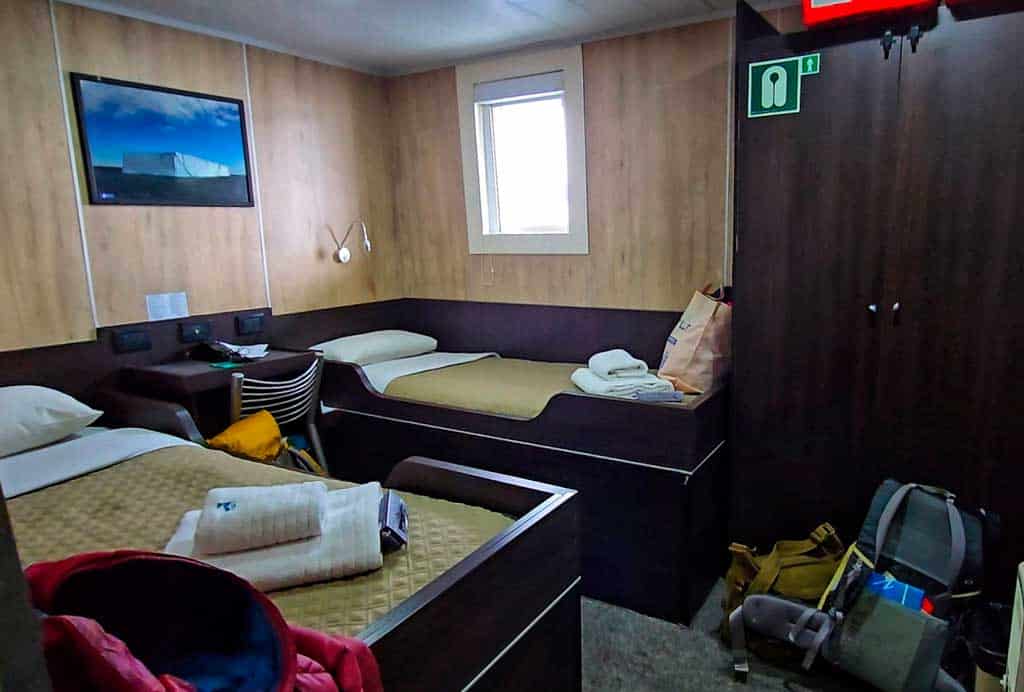
And yet there we were in Cabin 633. Two little single beds. A desk. A wardrobe. And our own bathroom. When the steward closed the door, we hugged, danced, and Gerry did his little penguin walk to celebrate! We were going to Antarctica, and we had beds, and neither of us risked falling from a top bunk as we crossed the Drake.
Next there was a welcome reception with tea, coffee, and snacks in the lounge, followed by a safety briefing and lifeboat drill. The crew made everything easy and put us at ease. Nothing felt complicated, the alarm sounded, lifejackets went on, we assembled as instructed.
Top Tip: The ship has Starlink Wi-Fi, and you can purchase a package on board. There were various options, but if, like me, you plan to upload thousands of photos, buy more than you think you’ll need. On the crossing days, I was very glad of unlimited data for scrolling, loading, and watching.
And then we were off. We stood on deck and watched Ushuaia disappear as we sailed along the Beagle Channel, and I cannot tell you how excited we were. And, if I’m honest, also slightly terrified about whether I’d survive the Drake Passage.
Dinner was three courses in the dining room. They knew I was celiac and that was never an issue. We bought a bottle of wine (they keep it for you and serve it as needed). Our plan was to have just one glass a night, which worked well, for the most part, but we might have had more than one on the return journey!
The dining room was full and the seats are snug. But we knew that this was not a luxury cruise and the informality suited us better. We sat with a lovely couple from Italy and chatted about our plans to drive around the entire coast of their homeland.
The ship’s doctor visited each table and offered seasickness tablets. An ominous sign! Beyond the calm waters of the Beagle, we already knew that our crossing on the Drake would be choppy.
After dinner we were told to secure our belongings before bed. We were entering open seas around midnight and it was going to be rough. I messaged our kids to say I loved them. It seems ridiculous now, but I really was nervous.

Why Is Drake passage so Notorious?
The Drake Passage is the stretch of water between Cape Horn and the Antarctic Peninsula, where the Atlantic, Pacific, and Southern Oceans all meet. There’s no land to slow the wind or calm the currents, so the water funnels through this gap at enormous speed. This creates Strong winds, Powerful currents and Long, rolling swells.
Some days it’s calm and you have what they call the Drake Lake. We know the cruise before ours had this as we met a few passengers. Other days it’s, energetic, the Drake Shake. And we had first hand experience of that! Ships cross safely every year, but it is a place where you definitely feel the power of the ocean.
Day 2 – Crossing the Drake
After dinner we headed back to our cabin. Some passengers stayed in the lounge to socialise; the bar is there too. We wanted to unpack our gear, organise, secure everything, and take a shower before we hit the rough seas.
The cabin wasn’t large, but it never felt cramped. We both had a full-sized single bed, each enclosed in a sort of wooden frame, which I assume keeps the mattress from sliding around in heavy swells. Between the beds sat a desk and chair, with sockets and a phone should we need assistance. The wardrobe was surprisingly spacious with sturdy locks, and we had more than enough room to hang and store our belongings.
The bathroom was perfectly adequate, and the shower was surprisingly strong and hot, with shampoo, soap, and hair conditioner provided! Because we expected a moderate-to-strong crossing, we made sure nothing was left out. And do remember to close the loo seat; the water can slosh about quite dramatically.
We also had a good-sized window, much larger than we expected. I used it as my “plumb line” to judge the roughness of the sea. If, while lying on my bed, the waves disappeared over the top of the window, I knew that we were in for a roll. That happened many, many times. Once we reached calmer waters, the window became Gerry’s lookout post, and he offered me a running commentary.

As the night progressed, the waves became more pronounced. I have good sea legs and never felt sick, but you absolutely notice the swell. Moving around becomes something you must consider. You learn to wait for the right roll of the ship, but in the beginning I often tipped backwards onto the bed and ended up with a fine collection of bruises on the backs of my legs.
I won’t sugar-coat the crossing. It is difficult for anyone prone to motion sickness. There was no avoiding it, and a few people on our ship were very sick indeed. Weirdly, I quite enjoyed the movement of the ship. Gerry said he rolled around considerably at night but would look across at me, sleeping soundly like a baby, and wonder what on earth he was doing wrong.
Top Tip: Cabin doors are held on hooks. Never, ever, ever hold yourself up using the door frame. This is the most common shipboard injury, as doors have a habit of slamming shut.
Breakfast was delayed because the sea was too rough. When we finally made it to the dining room, the buffet had been adapted into something easier to manage. Even then, during one particularly strong swell, everything slid off the table and onto the floor.
As well as a fabulous crew to keep us safe, we also had on board an Expedition Team, that included Antarctica researchers with PhDs, marine biologists, ornithologists and geologists, with decades of travelling to and from Antarctica between them. Their passion for the continent and it’s wildlife was evident and they helped to keep us busy during the day with:

I feel slightly guilty admitting this, but I found the walking in rough seas extremely funny. If you’re British and remember Acorn Antiques, you should image Julie Walters pottering about with her tea tray. I did have to supress more than a few giggles.
Lunch was adapted into sandwiches, and dinner became a bowl of spaghetti. It was too difficult to serve anything more elaborate, but no-one went hungry (although it was christened spaghetti-gate and for a while folks worried that this was the new dining standard!).
At lunch we sat with a man from South Korea and talked about hiking on Jeju Island, and at dinner we met two solo lady travellers who became our table companions for the rest of the voyage.
I know the crossing was terrible for some, but aside from my occasional fear that the ship might sink, I found myself really enjoying the journey. And I took comfort from the crew, who were unfazed and had made this crossing more times than they could remember.
I slept very well again that night. Gerry continued to roll.
Top Tip : Most Antarctica cruises will provide boots for shore landings. I ordered a size larger. I ended up wearing 3 pairs of socks and the extra size gave me room to move! Your feet will get cold so do consider this when choosing the size!

Day 3 – A Surprise First Landing
Our mornings began with a loudspeaker message that we all grew to love. Martin, our Expedition leader would greet us with music followed by, Good morning, good morning, dear passengers, it is now 7:45 am…
Today we woke to something new; snow instead of rain and a noticeable drop in temperature. The waves had eased, and it felt as though the worst of the crossing was behind us. We could enjoy a buffet breakfast and everything stayed on the table and tea and coffee flowed freely.
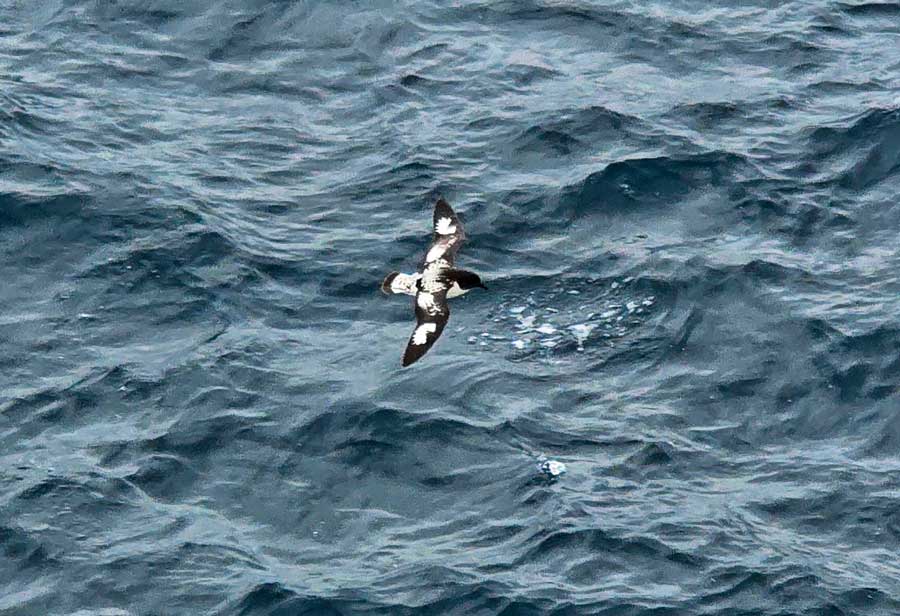
We had a morning lecture on seabirds of the Southern Ocean, followed by time on deck for bird-spotting. Gerry loved this. He’d already spotted several huge birds swooping around the ship and loved learning more about them.
It’s hard to grasp the size of these birds, but every now and then one would glide close enough for us to see the incredible wingspan. The crew log their sightings and share the data with Cornell University, so while we stood on deck we were actually helping science.
We also saw our first whales blowing in the distance, and someone spotted penguins as we neared the outer islands. I began to regret not bringing my camera.
Top Tip: We travel almost continuously and only take carry-on. In Argentina, we were limited to 8kg but not bringing my camera was a mistake. My phone was excellent, and the ship provides a photo gallery at the end of the journey, plus our fellow passengers kindly shared their shots, but even so, if you have a camera with a zoom lens, don’t leave it behind!
Lunch followed the bird watching, and today we enjoyed a tasty three courses. Meals continued in this pattern; something light to start (like salad or stuffed pepper), followed by a main of meat with vegetables, and dessert. There were always options for special diets, and I was always offered a gluten-free alternative.
The food on board was very good. We weren’t expecting fine dining, but everything was better than we’d imagined. And the dining room staff were fabulous.
In the afternoon we gathered for a mandatory briefing about landings in Antarctica. There are loud speaker announcements across the ship and noticeboards telling you what the agenda and timetable will be for the day. There is never a reason not to make a lecture or briefing and yet a few folks did choose to stay in their cabins and they would regret that choice.
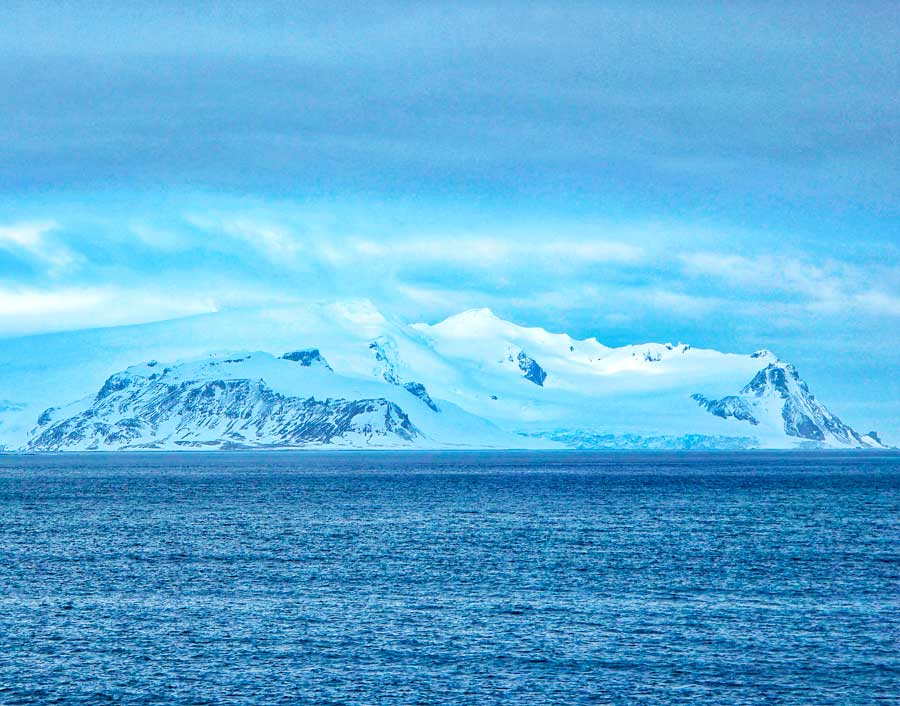
The crew explained that although the Drake had been rough, the wind had been in our favour and we’d arrived early. And we’d be landing today. Woohoo! Seriously? We were landing today.
But before you can step foot in Antarctica, we must attend the mandatory IAATO briefing. The two unlucky passengers who’d skipped this, sadly were not allowed ashore; there was no time and no crew member available to offer them the briefing. So be warned, you must hear the rules before you can go ashore.
The rules included:
After the briefing, we all dashed off to change into our warm and waterproof layers.
We learned the secret to staying warm, wasn’t specialist expensive expedition gear but layers. Yes, our hired coats and trousers were excellent, but we wore merino wool hiking clothes underneath. I’ve written an entire post on packing and layering, but for this first landing, the only part of us that really felt cold was our feet.
At the appointed hour we gathered at the boarding area. First, you wash your boots; step into one tray to scrub the soles on fixed brushes and then into a second to rinse.
Then join a line of eight passengers. Everyone has their own life jacket for the duration of the cruise, and you must wear it for every landing. Each jacket has a number (we were 71 and 72), and the crew tick you off as you board the zodiac and again when you return.
I was nervous about the zodiacs. We’ve climbed in and out of a few in the Galapagos and Indonesia and more than once my exit was less than elegant. I also had visions of accidentally rolling backwards into the water like a scuba diver.
Thankfully, there were steps and a small landing dock and a crew member on deck to help you in and another on the zodiac to steady you. Even I managed to look as though I’ knew what I was doing. And then we were off, crossing the Southern Ocean towards Yankee Harbour.
The landings are wet. This made me gulp the first time, but it was absolutely fine and not nearly as cold as I imagined, and the water never goes over your boots.
I cannot tell you how exciting this was. We’ve done many extraordinary things on our travels but taking our first steps on Antarctica, even though technically it was still the South Shetland Islands, felt genuinely special.

There were penguins everywhere. They may be cute and funny, but my goodness they are also smelly. Scattered around the beach were also seals, and plenty of seabirds. And on his own, away from the rest, one rather lonely elephant seal.
The Expedition Team is with us, ready to answer questions and ensure we followed IAATO rules and point out details we might otherwise have missed. You’re free to explore but they’re available if you need them.
We walked along the shore, chatted with other passengers, took a ridiculous number of photos and when our feet finally decided they were frozen enough, we headed back to the zodiac.
We were ticked off the returned list, washed our boots and headed straight to Cabin 633. We developed a system; boots off in the corridor, coats and hats off in seconds, and a dash upstairs for a hot chocolate before the next zodiac arrived.
And that was it. We had dinner, chatted with our fellow passengers, posted photos for family and friends, finally took a hot shower (not allowed during the crossing) and fell into bed.
The waters were calmer now but I kind of missed the rocking of the Drake. Gerry though slept soundly.


Day 4 – A Royal Surprise
Good morning, good morning, dear passengers it’s 6.30am…
Breakfast was at 7am, and our first landing of the day was at 8.30am. We were heading to Hydrurga Rocks, a little rocky outcrop within shouting distance of the Peninsula.
Top Tip : A fellow passenger told us to put the insole from our trainers into a sock or directly inside our boot as an extra layer of insulation. Oh my, this worked a treat.
Yesterday our feet had been cold, so today we wore all our socks. If you’re heading to Antarctica, bring thermal socks, liner socks, and a thermal insole. I tucked mine inside a thick pair of wool socks and it stayed nicely in place. And if you plan to do this, ask for a larger boot, your feet will need the space!
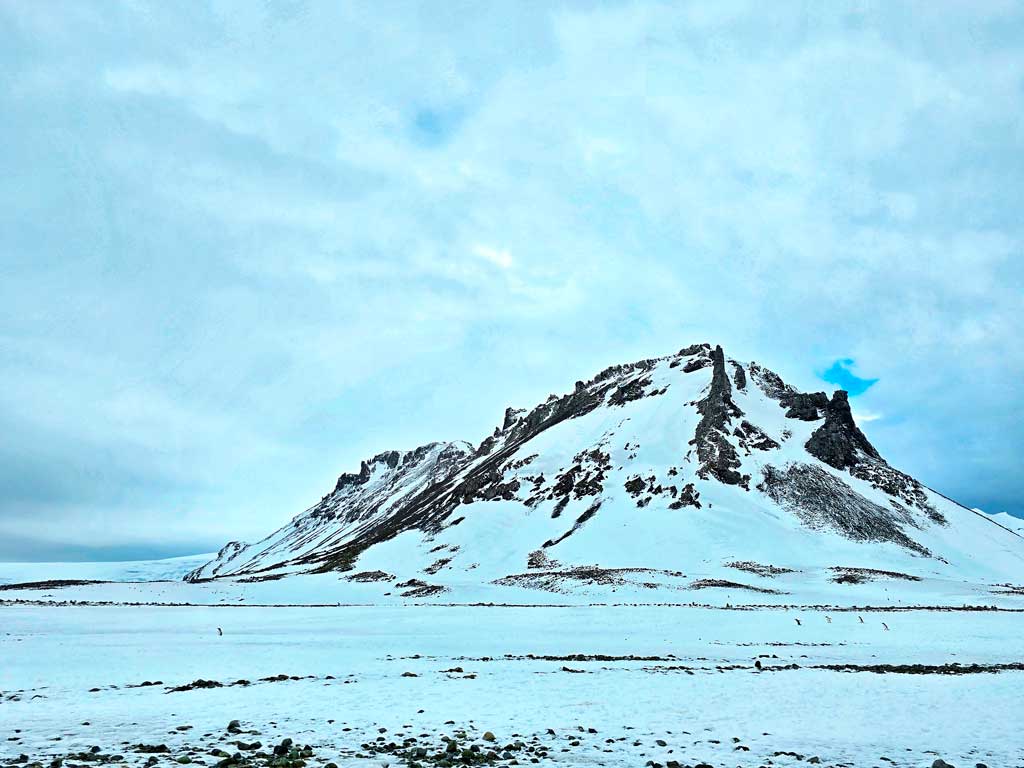
We queued for the zodiac, made another wet landing, and walked through snow far deeper than yesterday’s. When choosing when to visit Antarctica, we knew we had a choice:
We wanted snow. We wanted the Antarctica we’d pictured in our mind’s eye, with white landscapes and sea ice. November it was. And honestly, for us, it was the right choice.
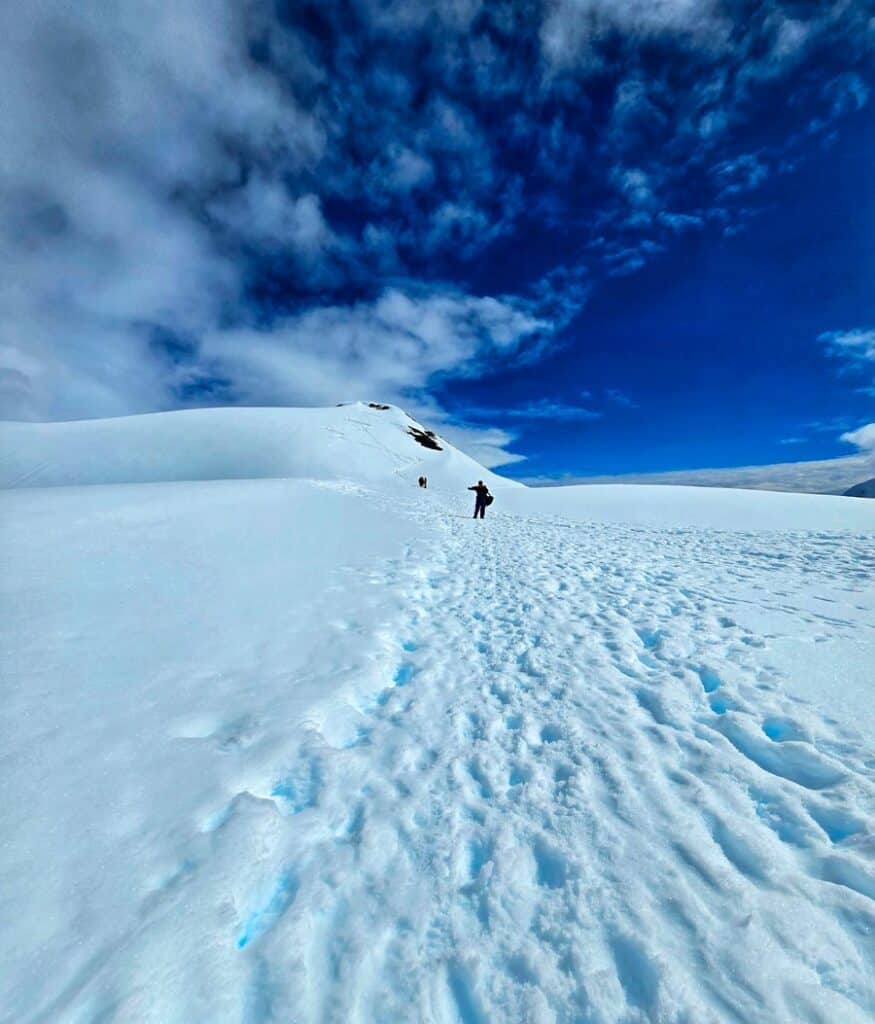
Walking on snow isn’t easy. Sometimes it’s firm and compact and relatively easy to walk across, then you hit a soft patch and drop ankle-deep or knee-deep; I really wished I’d hired hiking poles.
As with all landings, the team were already there when we arrived. They mark the trail, test the landing sites before we arrive and sometimes even cut steps into the snow to help us up from the water. They make everything safe and easy, keeping us on track, whilst protecting wildlife and the environment, and ensuring we give penguin highways a wide berth.
We followed their route, climbing over snowy rocks, watching Gentoo and Chinstrap penguins march to and from the water. Some were nesting, some were courting, and some seemed to be simply splashing about for the fun of it.
There were Weddell seals too. We gave them a plenty of room. We’d learned in the lecture that they can move surprisingly fast, and you should never stand between two.
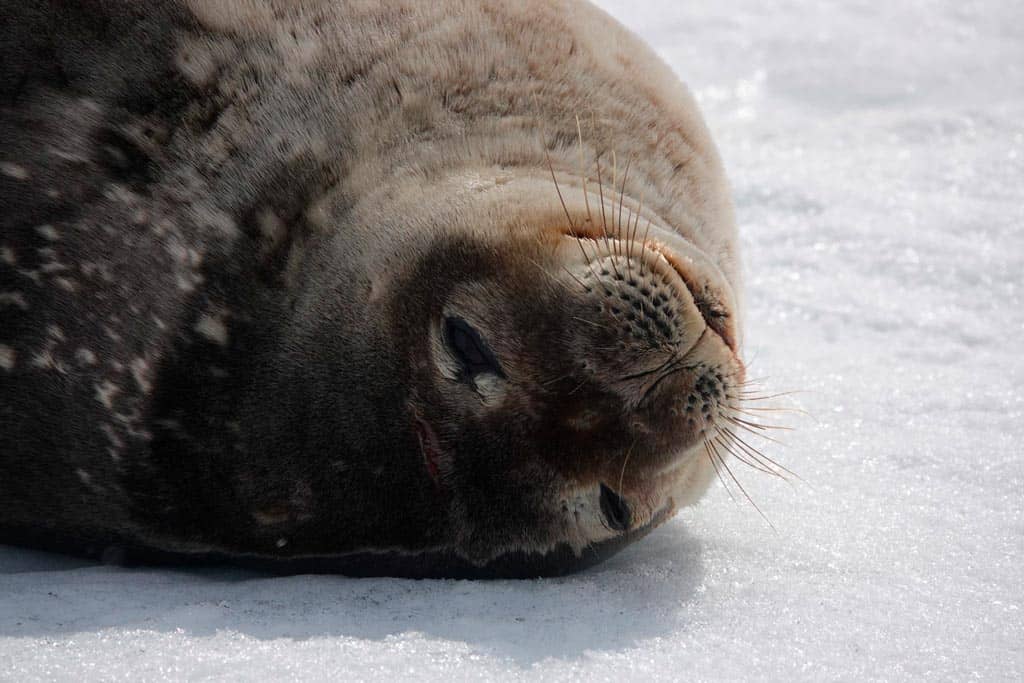
We had hoped to see Leopard Seals here, but none appeared. Still, today was my first proper glimpse of the blue, blue sea ice, I loved this and I took far too many photos. We’ve seen sea ice in Iceland but not like this. Glorious!
And once we’d seen everything and learned a little more from the team, we headed back to the zodiac. There’s no set order for the return journey; you hop aboard when you’re ready and the crew ensure everyone is safely collected. Back on board it was boots off, a quick change, hot chocolate and a pause before lunch.
I checked my photos and Gerry took his lookout post by the window and his vigilance was rewarded when a lone Leopard Seal drifting by on a chunk of ice. Yeah! We saw a Leopard Seal!
In the afternoon we were promised a zodiac cruise in Graham Passage. I’ll admit, I thought, “Mm… that’ll be nice, but how different can it be from the view off the deck?” Well. What do I know? It was amazing.
For zodiac cruises we were divided into two groups, White and Blue. Blue had the first hour; White the second and we swap order next time.
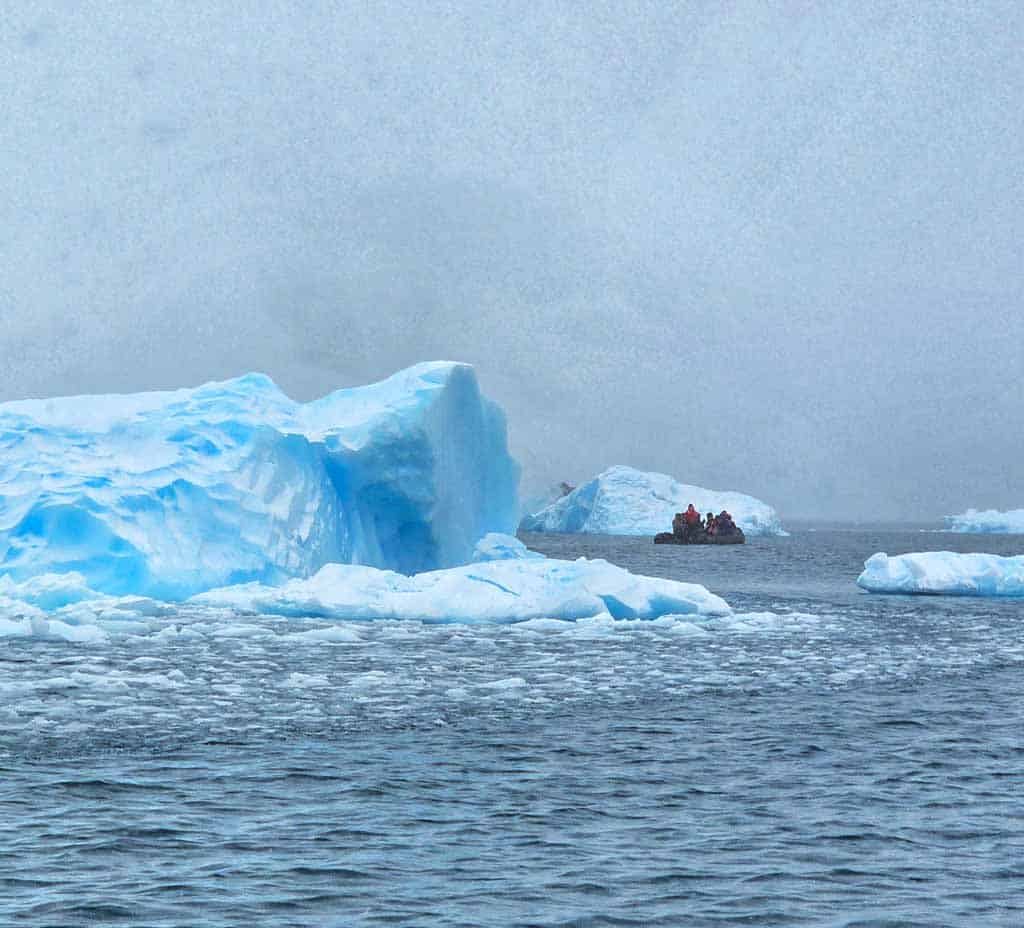
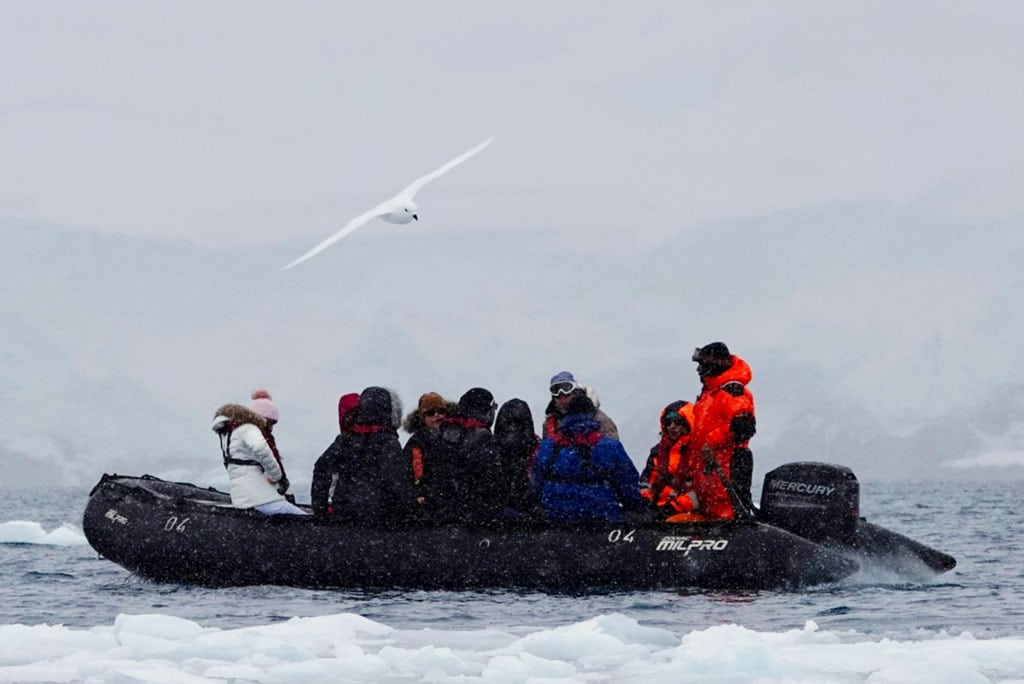
We gathered at the appropriate time; clean boots, tick off our numbers, and eight passengers per zodiac, perched on the rubber sides as we glided through icebergs and into sea ice.
Lucas, from the Expedition Team joined us, pointing out features as we went. All around us were glaciers, sea ice, and more of that incredible blue ice. Huge petrels and skuas swooped low overhead, giving us the chance to truly appreciate their enormous wingspans, bigger than we are tall which is hard to imagine. You simply don’t grasp it until you’re that close.
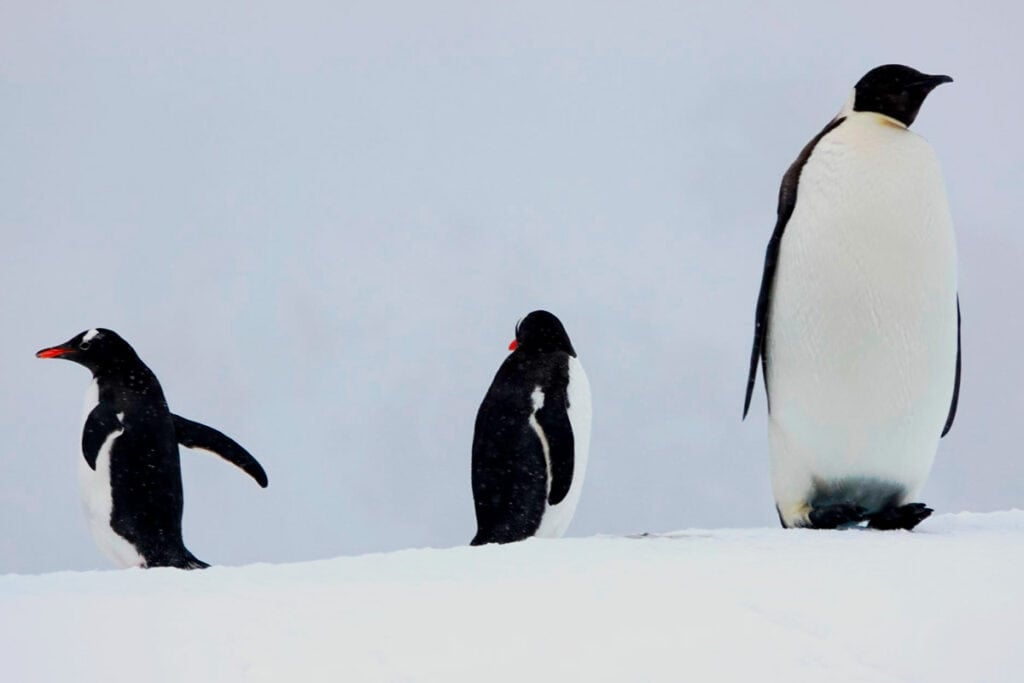
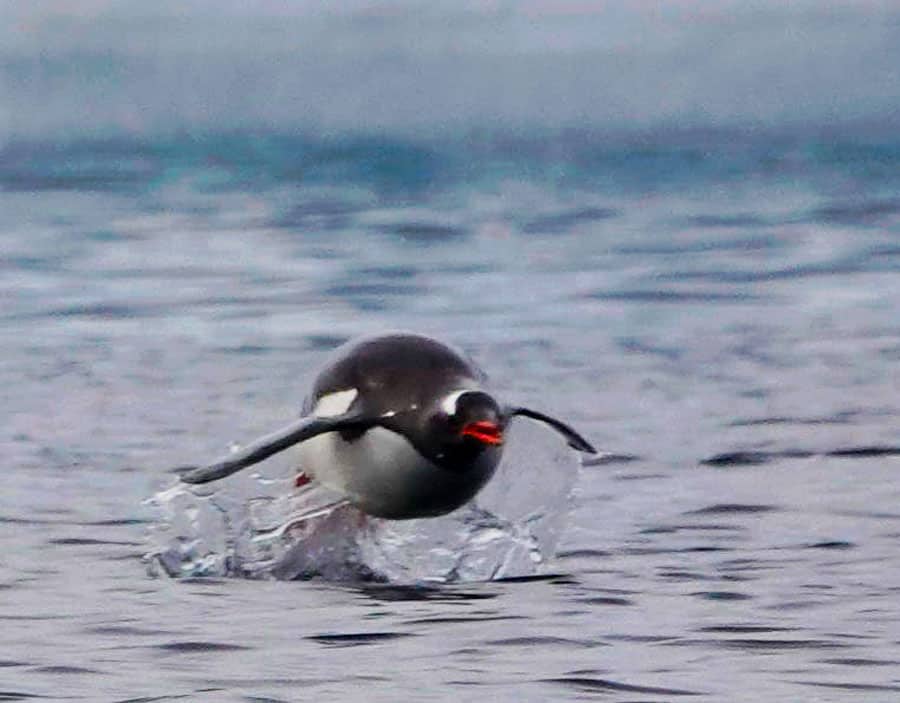
Penguins skimmed through the water beside us, popping up like little black-and-white dolphins. And then Lucas spotted something rather wonderful. Was it? No? Could it really be?
There, floating on a chunk of ice, stood a small cluster of Gentoo penguins and beside them, a young emperor penguin. These birds normally live deep in the interior, far from coastal ice. He shouldn’t have been there and yet he was. Lucas was thrilled. And we were thrilled. And extraordinarily lucky.
For a few minutes we floated in silence, watching. What a gift this cruise was.
It was snowing heavily now, but it didn’t matter. We were warm, the scenery was magical, and I didn’t want it to end. But the White group were waiting, and we had to return. Boots washed, quick change, hot chocolate. Oh my, what a day.
Back on board we enjoyed dinner with friends, wine of course, and for those who weren’t too exhausted there was part two of Shackleton.
Day 5 – Everything Antarctica
Good morning, good morning, dear passengers, it is 6am and…
Every evening before dinner, we attend a briefing. One in Spanish in the viewing room, and another for English speakers in the lounge. They include a recap of the day: maps, wildlife sightings, a bit of history and we also learn what is planned for the following day.
Yesterday Martin explained that overnight we would hopefully navigate the Gerlache Strait, and if sea ice and conditions permitted, we would enter the Lemaire Channel. The furthest south we would venture on this journey.
It’s beautiful they said. You will not want to miss this. But… we might miss it. The ship hadn’t been through the Channel so far this season, and everything depended on sea ice and conditions.
Martin woke us early. The captain had decided we were able to proceed through the Channel. The decks were open, as was the bridge, for anyone who wanted to watch the passage through this beautiful stretch of water.
As I lay in my warm little bed that morning, I was tempted to ignore Martin’s wake-up call but I didn’t. We dressed quickly and headed up to the top deck, and then stood there, watching, almost holding our breath, taking in the view.
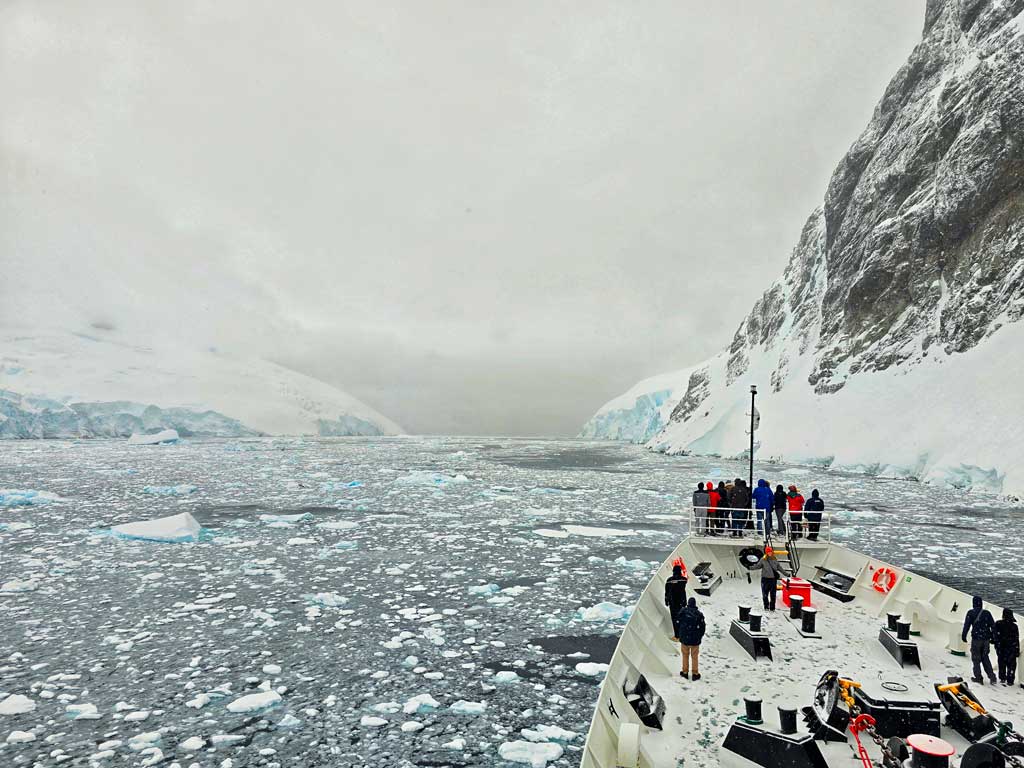
Overnight it had snowed, and in the early Antarctic spring light, mist rolled down the mountains and settled on water so still that the ship’s wake was the only ripple. I know I’m channelling my inner Thomas Hardy here, but it was beautiful. And utterly still.
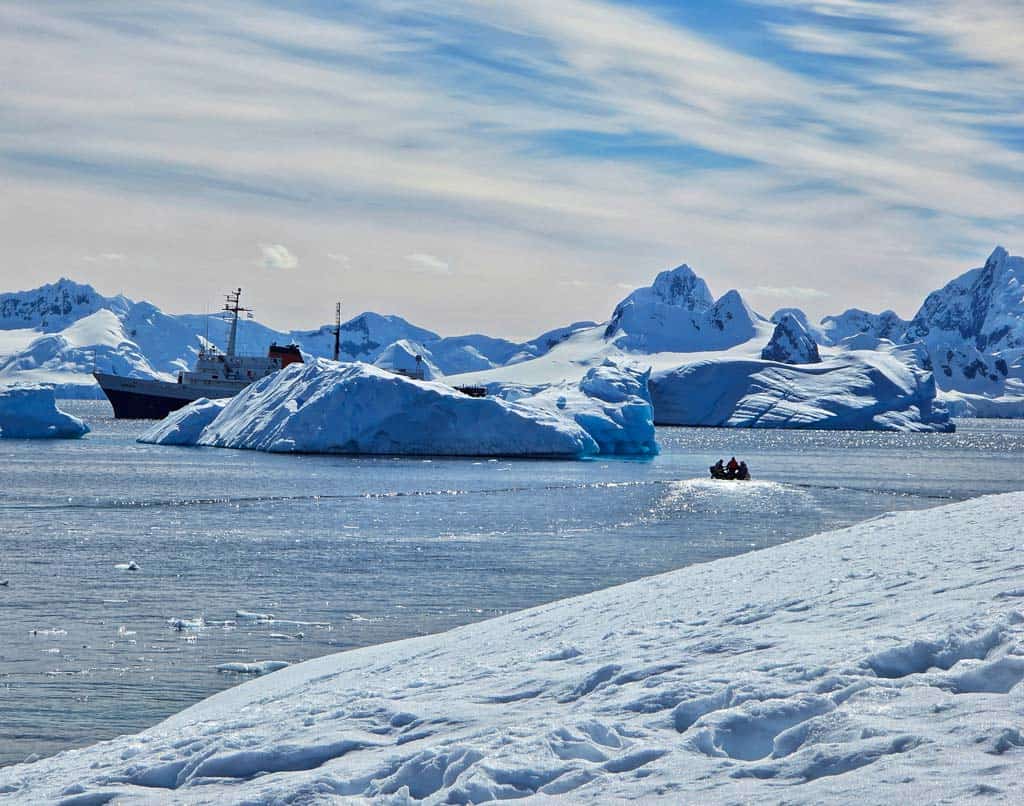
The Lemaire Channel is, in places, only 300 metres wide. The water was calm, coated in sea ice. The ship nudged aside brash ice as we moved through. Ice capped mountains rose steeply on either side, cloaked in fresh snow.
It was cold. I was cold. I should have gone back for another layer, but I couldn’t. I couldn’t bear to miss a second of this. Even breakfast was delayed by thirty minutes so we could stay outside and watch.

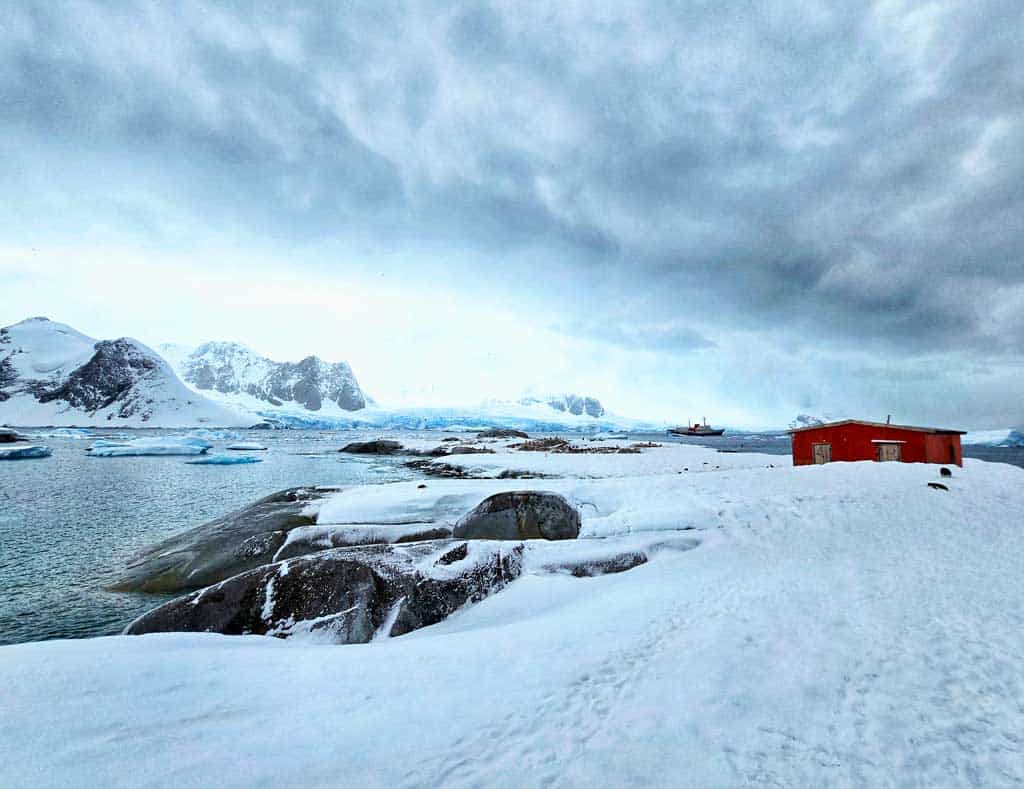
Afterwards we prepared for our first landing of the day, this time on Petermann Island. Here we met Adelie penguins, they’re quite different but not quite as cute as my jolly Chinstraps.
We walked first one way, up towards a colony, then over the hill and down the other side to watch enormous icebergs inch their way through the frozen sea beyond. We had about an hour of walking on what felt like virgin snow, glorious but tough in places.
Again views were impossibly beautiful. It looked like a painting. Too perfect. The light just right. Enough snow but not too much. A calm sea. It was as though we were Goldilocks and had discovered Baby Bear’s bed.
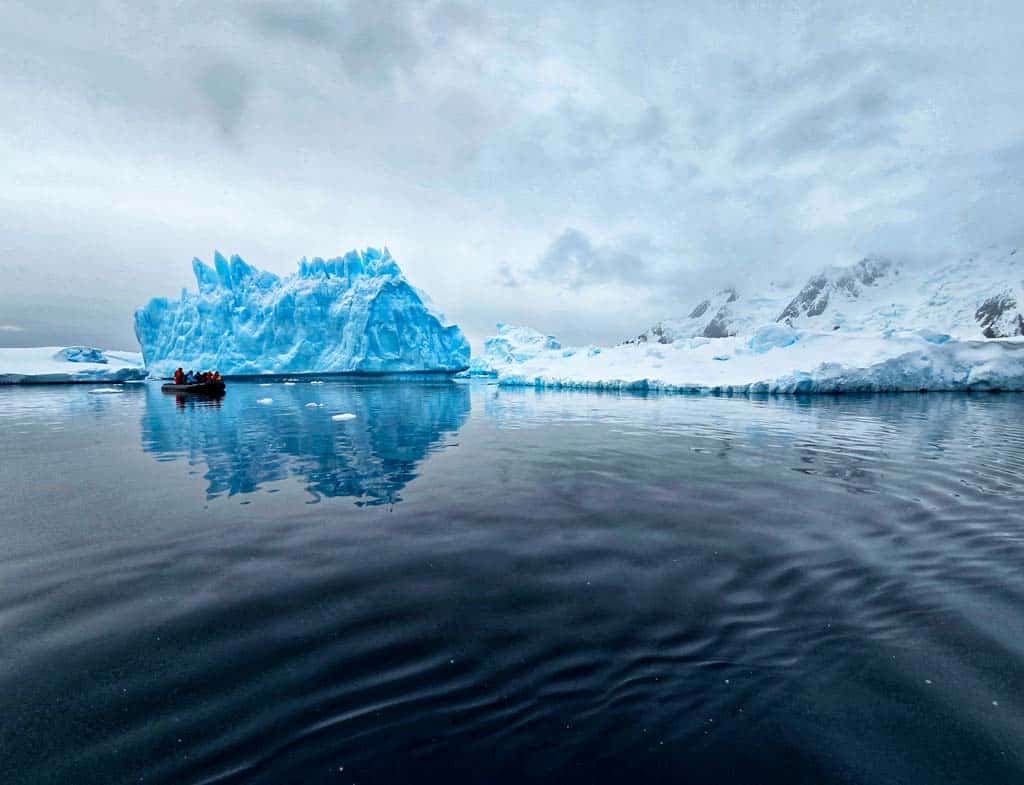
In the afternoon came another zodiac cruise, and this time I was more enthusiastic. We were heading into Salpetriere Bay, known as the place where icebergs go to die. The guides explained that bright white ice is young, deep blue glacial ice can be a hundred years old, and clear ice is older still. Its caused by compression and the gradual loss of oxygen over time.
The bay was full of these giants; some are stranded by sea ice, some freshly calved from nearby glaciers. I cannot tell you how huge they were. In Antarctica, scale seems impossible. There is nothing familiar to anchor your eye, but everything dwarfs you.
The water looked calm and benign, but it was moving. And so were the icebergs. On our return to the ship, we discovered that the channel we’d entered through had bern closed by ice. Two zodiacs travelled together to weave a new path, a reminder that nothing stays the same and that we were utterly reliant on our team of experts to keep us safe.
At dinner, we all agreed that today had been special.
For the young and energetic, tonight was the ship’s talent competition. But for us, the excitement and early morning, and our nighty glass of wine, got the better of us. We retired to our cabin and slept peacefully.
Day 6 – The Polar Plunge
Good morning, good morning dear passengers… it’s 6.30am…
The day started like every other. It was day 6 but it could be 16. We felt familiar with ship life and we’d learned that when Martin wakes us to say it’s worth going on deck, you go.
We were sailing back through the Gerlache Strait in a soft early morning light, with the mist still hanging low over the ice. There’s no real sunrise at this time of year, but at this hour everything feels muted, like a painting where someone has softened the colours. And there’s a silence.
This beautiful morning heralded the start of a special day. We were going to make our first landing on the actual continent of Antarctica. Woohoo indeed.
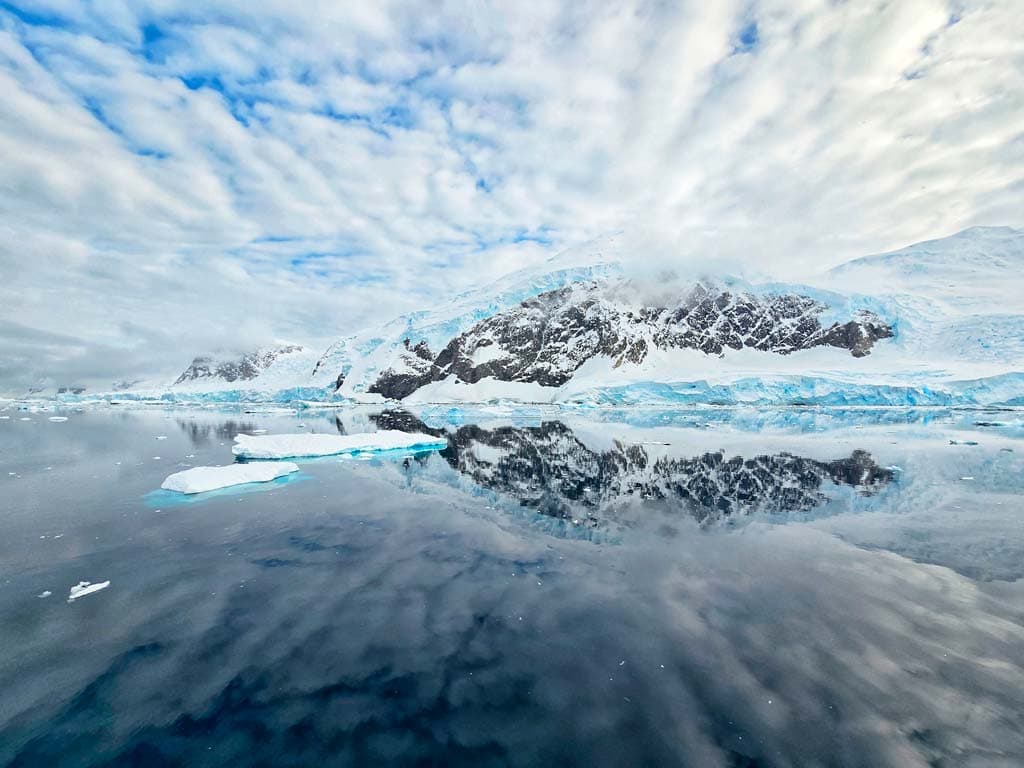
We had breakfast, made ready, climbed aboard the zodiacs again and headed for Neko Harbour, another wet landing on a stony beach. A trail had already been checked, marked and even cut for us in places to help get us up from the beach.
The hike today was tougher than yesterday and again I wished I’d brought hiking poles.
And again, the view was impossibly wonderful. The sort of scene that you see in a photograph and immediately assume has been enhanced. But this was real. The sky was almost too blue, the clouds too perfect.
And it was warm! Too warm.
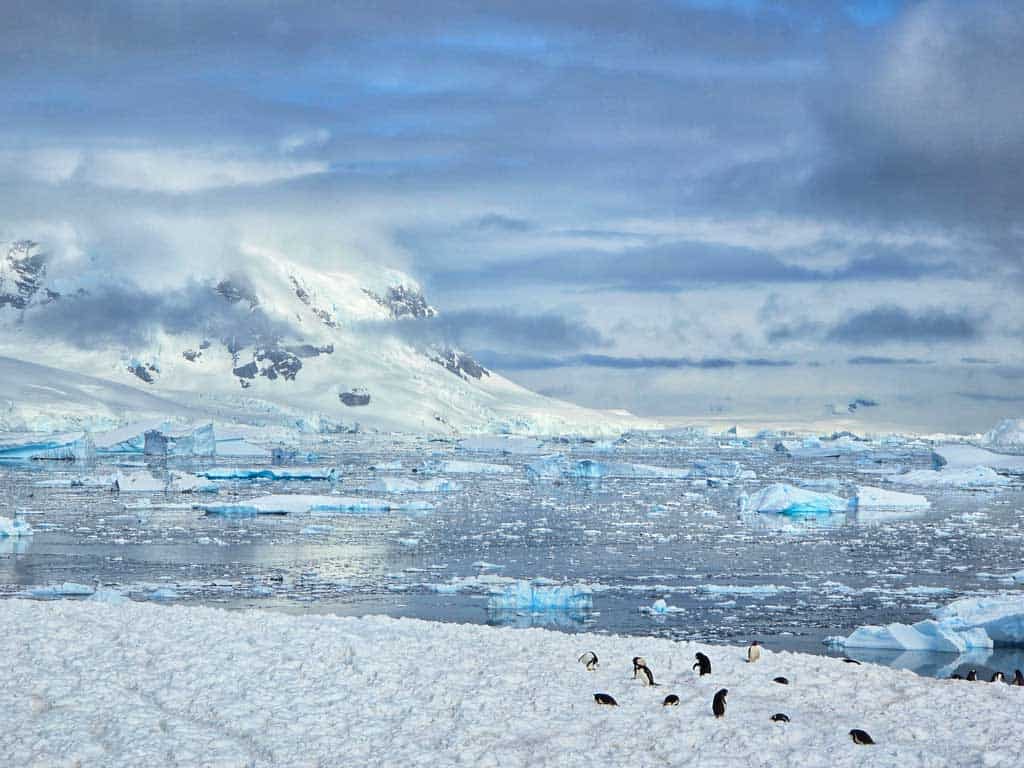
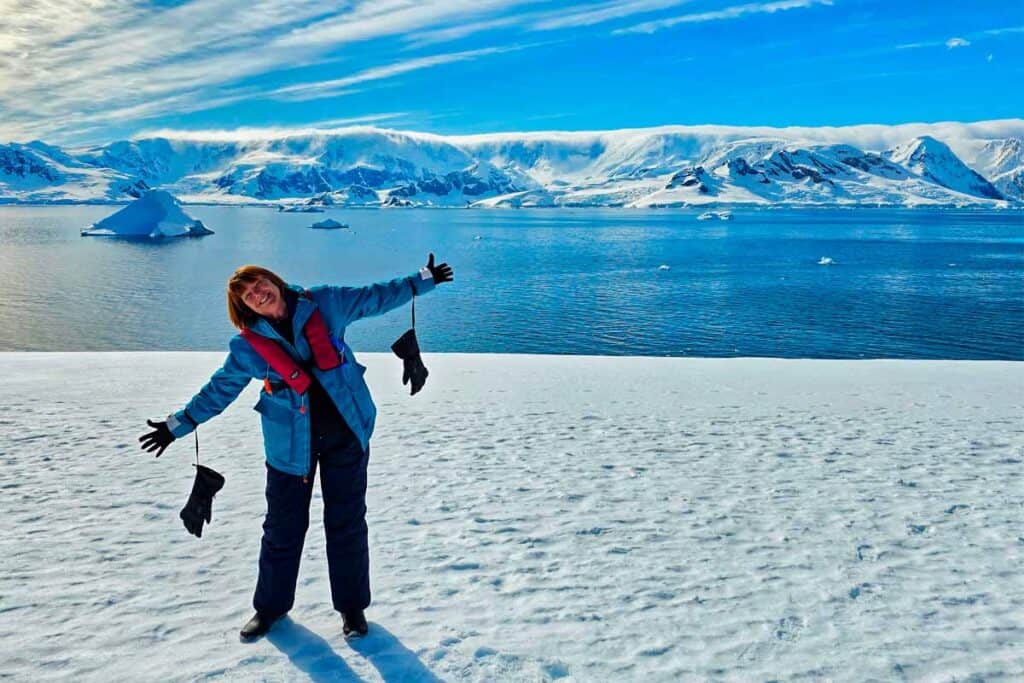
As we climbed higher, off came the buff, then the hat, then the gloves and eventually my coat. Without the icy wind and under a clear sky, the sun blazed. Thank goodness for sunscreen.
From the top we could see glaciers, distant peaks, and the Ushuaia looking tiny below us. All too perfect. All too wonderful.
In yesterday’s lecture we were warned about the dangers of seracs. Giant blocks of ice perched high up, creaking and groaning as the glacier shifted. If one falls, the wave it creates can be enormous. And the waves hit the beach very quickly.
As we reached the appointed viewing spot, and as if planned perfectly, A huge crack tore through the silence. A huge serac broke off and crashed into the sea. Wow. We were well out of danger, that was never an issue. But again, we were in the right place at the right time to see it with our own eyes.

Back on board, to top off an already perfect morning, the crew were setting up an Argentinian barbecue on deck. A proper beach day! And gluten free buns for me too! While they prepared lunch, we slipped up to the top deck. And for an hour we were lost in the glory of this landscape.
How can I truly explain the colour of the sky reflected in the water. Or 360 degrees of stunning views. Penguins following the ship, almost teasing us to dive in and play. Huge seabirds swooping around and to add to the magic? Whales. Lots of whales.
Gerry is an expert spotter and was in his element. Whales swam close to the ship, diving and playing solo and in groups of two or three. We had been gifted this perfect day. And it was only half way through.
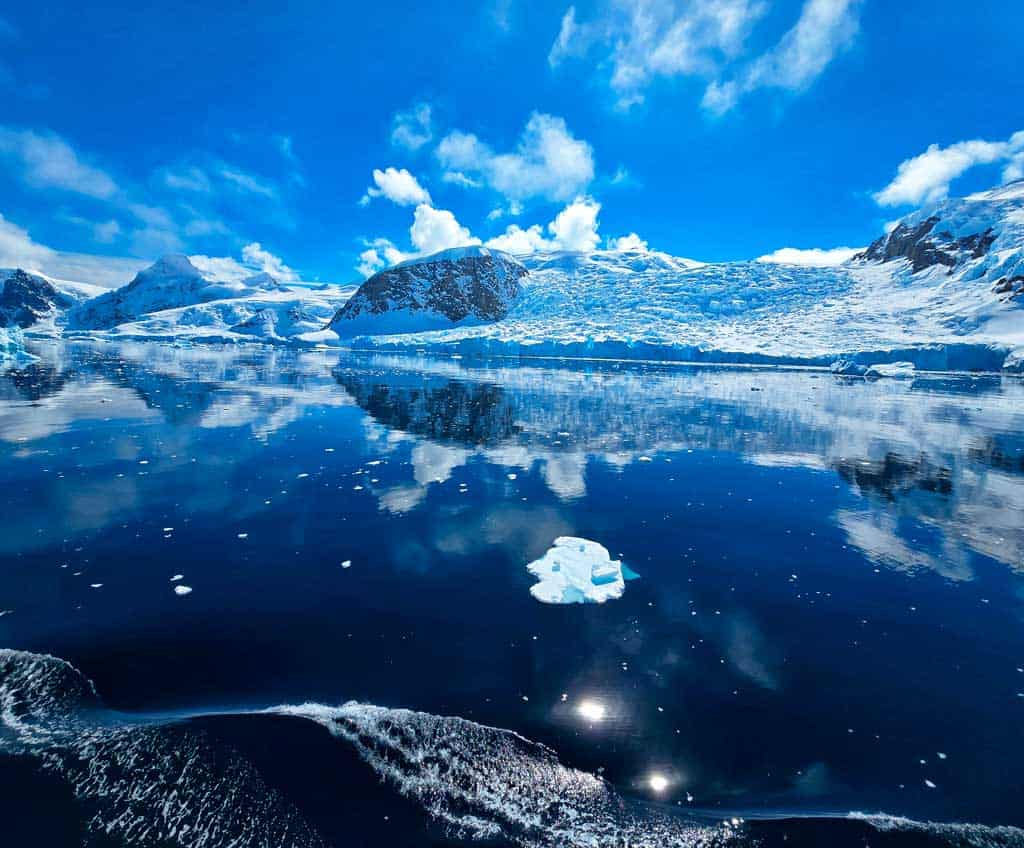
After lunch came our second continental landing, this time at Brown Research Station, which wasn’t yet in operation for the season, so we had it to ourselves. Another big hike, under bright blue skies and an Antarctic sun. And again, I wished I had hiking poles.
And if I was too hot, no matter. Because we were going swimming. But first we’d need another zodiac ride and another continental landing.
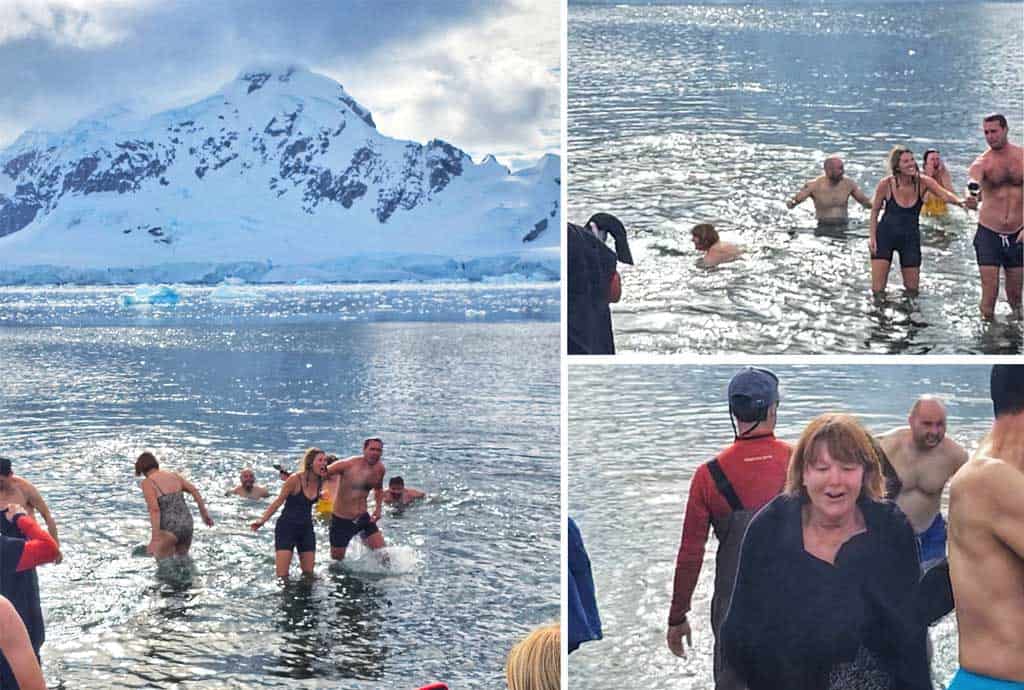
I’d imagined a plunge from the ship, but for us it meant walking into the sea from the beach, which somehow felt even more daunting. The crew had a system in place so we could have our fun while keeping strictly within IAATO rules.
All we had to do was strip to our bathing suits and get in. And I’m not sure what was worse; the sharp Antarctic stones under our feet or the freezing water. But I am sure that I wouldn’t have missed it for the world. If you get the chance, just do it.
As soon as the swimmers emerged from the sea, we were wrapped in towels and ushered back to the ship for showers — cool water first, gradually warming up.
If our trip had ended here, we would have been perfectly content. Turn the ship around, take us back to Ushuaia because today could not have been more perfect. And I will never tire of looking at these photos. Ever.
Day 7 – Our Last Day
Good morning, good morning dear passengers…
And just like that, it was here. After so long dreaming and hoping and wishing and planning, our last full day in Antarctic waters arrived. And we had one more continental landing at Portal Point before returning to our last landing on the south Shetland Islands at Palaver Point.
In the morning we went by zodiac for a landing with no penguins, but impossibly beautiful views. We hiked again, not as steep or slippery as yesterday’s, but still warm, still blue, still magnificent. And afterwards, returning to the ship for lunch we couldn’t help but think that it would be our last landing.
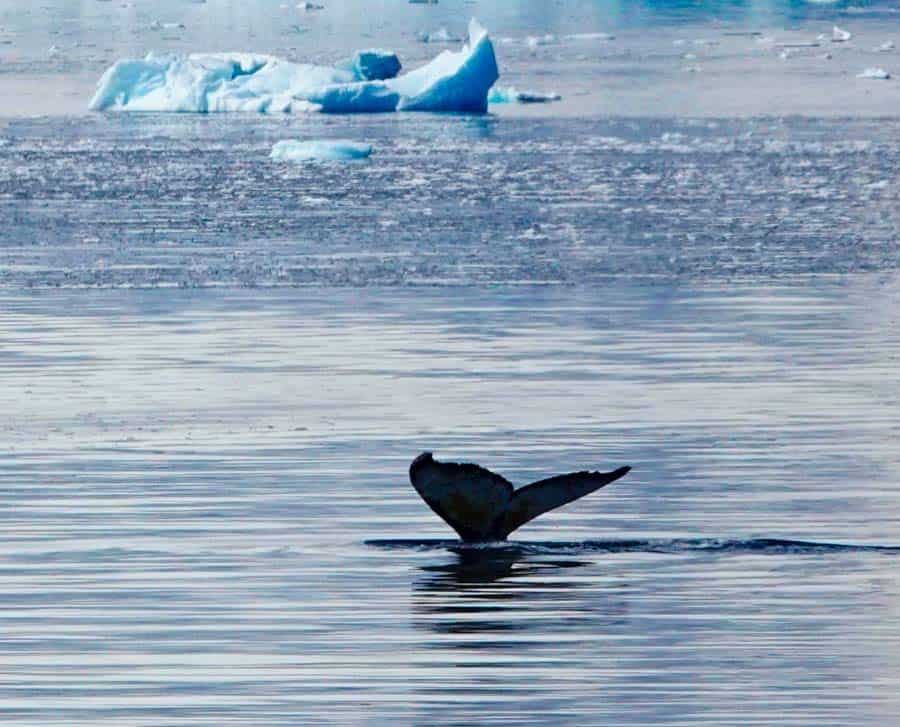
After lunch it was back to the South Shetland Islands and a chance to say goodbye to the blue ice, the penguins, and the seals. And as if Antarctica wanted to bid our journey a final perfect farewell, a young humpback breached near the zodiacs. Once, twice and again for luck.
We hiked and watched and soaked it all in. Looking back we could see the blue skies of the continent; ahead, the greyer clouds of the open sea. We posed for a group photo. We watched some more, trying to hold on to these views. But it was time to go.
Back on board and a different routine. We washed our boots, the crew jet washed them and we handed them back. Our lifejackets too. Who has number 72 now? And have they been as lucky as we were?
Dinner was jovial. We ordered another bottle of wine and toasted our luck. What a grand adventure. I didn’t want to leave. But the ship was already heading back to the high seas.


Days 8 & 9 – Return of the Drake
Good morning, good morning dear passengers…
We headed north, back into the Drake Passage. No need for an early start today the decks were closed, and all around was sea. This time we knew what to expect. A lively swell, but 4-metre waves rather than the 6 metres we had on the way over. Although the occasional aggressive surge reminded us that this was Drake and he was in charge.
As before, there were activities to keep us occupied:
On Day 8 there were fewer people around the ship. Breakfast was quiet, lunch much the same. A few more braved dinner, but it was subdued. We swapped photos, became Facebook friends, and talked about what comes next. Outside, the grey sea rolled on.
Day 9 was similar, but the sea calmed the closer we came to the Beagle Channel. And as we approached the end of our voyage, the crew held a farewell celebration. There was a quiz. Our team came second last, but I did win best joke: Why did the Gentoo not win a Grammy? Because Adelie did!
The entire crew came to take a bow. We watched a slideshow of photos from the voyage, received our certificates, cheered far too loudly and laughed at jokes that only made sense if you were there.
Music played, we sang, we paid our bar bill and left a generous tip (do this. Take cash and be generous too. The crew are simply amazing). We had dinner and more wine. Some of the young ones stayed up singing into the early hours, but we returned to 633 for one last peaceful sleep.

Day 10 – Ushuaia
Good morning, good morning dear passengers, it is 6.45am and we have docked in Ushuaia.
It was over. This journey. So extraordinary, so beautiful. writing this journal genuinely brings a lump to my throat. I am sitting now in an airport cafe in El Chalten, en route to Buenos Aires and fighting back tears as I read it back.
Our bags were taken ashore. We said our goodbyes, hugged everyone, thanked everyone, said goodbye again, hugged one more time, and then walked down the gangway and back into town. We had coffee in Marco Polo and waited for our flight. We met up with our new friends at the airport. We hugged again, said our goodbyes again. We shared something amazing and they will forever be part of our story.
If you ever have the opportunity to take this voyage, then take it.
Just as with our Africa overland adventure, we came away with a new respect for the fragile planet we inhabit. We are guardians. We have been privileged to see and do all that we have. We do not take this lightly.
If you ever have the chance. Go.
Would You Like More About Antarctica?
If you’d like to read more from this journey, I have other posts about our incredible 10 day journey to Antarctica and beyond of our journey through South America.
Don’t Forget Travel Insurance
Whenever you travel, you should have great travel and medical insurance. None of us expect anything bad to happen, but in the event of an incident, you want to be sure that your insurance will cover you.
I’ve ended up in hospital in Peru, Indonesia, Portugal, Japan and Ireland. Every time my insurance took care of everything. I would never leave home without full and comprehensive insurance.
MondialCare : Due to increasing limitations, mainly due to age, we have recently switched to MondialCare for our travel insurance. We have taken an annual policy at a very reasonable cost that includes medical and other travel cover. There are no trip length limits and the upper age for cover is 84. For Camino walkers and travel in Europe they have a low cost Schengen policy with no age limit.
TrueTraveller : We have used this policy and were very happy with the cover, especially considering our ages and pre-existing conditions.
Globelink: We have used and recommended Globelink for years and not heard of any issues. They are a great choice for European and UK Residents.
Genki : This is an EU based company offering long term policies for nomads and travellers. Their monthly rates are very competitive for longer trips too.
Try Our Trip Planning Tools
Start here to find the best accommodation
Start here to find flights for your adventure
Start here to find the best sightseeing tours

Hey I’m Colleen. I’m married to Gerry, we’ve three fabulous kids and been living in France for almost two decades. I fell in love with Spain in the 1980s and I’ve walked 1000s of miles along the Camino de Santiago. Now we’re exploring and walking the world and I can’t wait to share what we’ve learned!